
- News
- City News
- meerut News
- 1857 uprising: When peasants of warring communities united after 900yrs against Raj
Trending
This story is from May 11, 2024
1857 uprising: When peasants of warring communities united after 900yrs against Raj
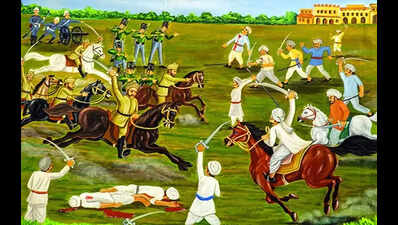
While the main action moved from Meerut to Delhi on the same night, battles for independence continued in the hinterland for months.

These battles were the direct confrontation between an army of farmers, and a military contingent of the army of the East India Company which had all the three arms of military -- cavalry, infantry and artillery.
“The type of solidarity and common purpose that Indians displayed at the time of the uprising had not been seen in nearly nine hundred years and has never been seen since then. It had something to do with the fire that was lit in the hearts of common Indians during the days that the battles of the uprising took place which allowed them to overcome their inherent differences to stand and fight as one,” says Amit Pathak, senior fellow at the Center for Military History and Conflict Studies, United Service Institution of India, and author of ‘1857 – A Living History’.
Social groups that participated in battle were peasants belonging to Jat, Gurjar, Rajput, Tyagi, Muslim, Baluchi communities, among others. A coalition army was created by these various groups during those days of the uprising, something which was unique to those times.
According to Dr KK Sharma, associate professor at department of history, Chaudhary Charan Singh University (CCSU): “The farmer army’s engagement with British forces continued post-May 10, 1857, and the whole of the land between rivers Yamuna and Hindon remained free till nearly the end of September of that year; the resistance collapsing in other parts of western UP, after the fall of Delhi. However, the resistance in the hinterland reflects a lot on the inherent character of these peasant fighters and the social organisation they belong to.”
For many European analysts, as well as for us Indians today, it is nearly impossible to imagine a combination involving these myriad social groups due to the inherent political rivalry among them.

About the Author
Sandeep RaiEnd of Article
FOLLOW US ON SOCIAL MEDIA









Photostories
Hot Picks
TOP TRENDING
Popular Categories
Hot on the Web
Top Trends
Shantanu NaiduRussell WilsonsTom BradyPakistan Cricket FanSuryakumar YadavNobel Peace PrizeMahadev Betting AppNew UPI Transaction LimitRatan Tata DiesPM ModiNarayana MurthyUGC NET Result 2024Management Colleges of IndiaTop Medical Colleges of IndiaTop Engineering Colleges of IndiaTop Pharmacy Colleges of IndiaLive Cricket Score
Trending Topics
Diwali WishesJigra ReviewDussehra WishesVettaiyan OTT ReleaseVettaiyan CollectionVettaiyan ReviewBlack Movie ReviewDevara CollectionBigg Boss 18Deepika PadukoneShraddha KapoorRatan Tata Passed AwayJigra Movie ReviewVettaiyan Movie ReviewSwatantrya Veer SavarkarDussehra 2024Elon MuskKing Legacy CodesUltimate Football Codes October 2024Wordle Answer
Living and entertainment
Latest News
Harris overtakes Trump among suburban voters: Reuters/Ipsos pollSamantha Ruth Prabhu shares playtime with Chinmayi Sripaada's daughter, says 'It took her 4.5 seconds to disown her parents'Dilip Kumar-Saira Banu wedding anniversary: How the legendary actor surprised all by marrying his belovedSpiritual fervour all around as Sun God steers Lord's chariot at TirumalaHappy Dussehra 2024: Images, Quotes, Wishes, Messages, Pictures and GreetingsInfosys to no longer send job offer letters and attachments, the company will ...Jaggery vs honey: Which one is better for weight loss?My mother would love to have a swayamwar for me: Raj AnadkatRanji Trophy: Focus on Shreyas Iyer as Mumbai begin title defenceHappy Dussehra 2024: Top 50+ Wishes, Messages, and Quotes to Share with Your Loved OnesBigg Boss 18: Karan Veer Mehra's comment on Arfeen Khan converting his wife's religion sparks anger; Arfeen says, "Agar ye ghar mein nahi hota main iski band baja deta"Happy Dussehra 202: Top 50 Wishes, Messages and Quotes to share with your loved onesAmitabh Bachchan turns 82: Priyanka Chopra, Prabhas, Kajol, and other celebs extend heartfelt birthday wishes to the legendary starPutin won't discuss Ukraine peace with Germany's Scholz, Berlin saysIndia's Steel City (Jamshedpur) mourns loss of iconic steel tycoon Ratan Tata“A fresh approach”: New York Jets' Interim Head Coach Jeff Ulbrich Replaced Nathaniel Hackett as Offensive Play Caller With Todd DowningKarnataka Congress faces backlash over case withdrawals linked to Hubballi riotsWomen's T20 World Cup: Don't need to be told about NRR, says Shafali Verma
Copyright © 2024 Bennett, Coleman & Co. Ltd. All rights reserved. For reprint rights: Times Syndication Service