
- News
- City News
- mangaluru News
- Rare lichen species found in Mullayanagiri, say researchers
Trending
This story is from February 28, 2023
Rare lichen species found in Mullayanagiri, say researchers
A team of researchers has recorded a rare species of lichen called ‘Usnea hirta’, belonging to family Parmeliaceae, at Mullayanagiri in Chikkamagaluru. The species was recorded for the first time in the country, they said.
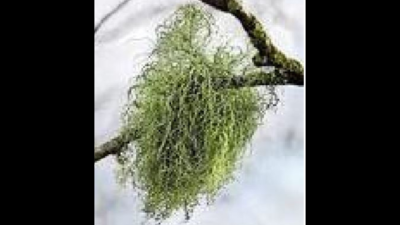
KS Vinayaka said that lichens are the first members to colonise barren rocks, and are good forest health indicators, in the tropical forest regions of the world
The team includes KS Vinayaka from the department of botany, Sri Venkataramana Swamy College, Bantwal and Archana R Mesta and N Rajeshwari from the department of botany, Sahyadri Science College, Shivamogga.

Vinayaka said that lichens are the first members to colonise barren rocks, and are good forest health indicators, in the tropical forest regions of the world.
“Usnea species is rare, and grows in higher altitudes in India. Western Himalayas and Western Ghats are lichen hotspots in the country. Usnea is one the largest fruticose genera of lichen, forming fungi around the world, within the family Parmeliaceae,” said Vinayaka.
“The new record of Usnea is differentiated on the basis of pigmentation, branching types, the density of branches, and different morphological parts,” he said, adding that the study was based on the lichens collected from different parts of Karnataka, during 2008–2020. The research work was published in the latest edition of the ‘Journal of Threatened Taxa’.
“The lichens were collected from different altitudes, and all types of substrata such as barks, twigs, and rocks in Mullayanagiri. The collected samples were taken to the laboratory, air-dried, and stored in the lichen herbarium of Kumadvathi First Grade College and Sri Venkataramana Swamy College. The voucher specimen was submitted to the National Botanical Research Institute (NBRI), Lucknow. The rare species was confirmed only after verifying with the NBRI. The paper has been published in a peer-reviewed journal,” he said.
End of Article
FOLLOW US ON SOCIAL MEDIA



Photostories

Hot Picks
TOP TRENDING
Popular Categories
Hot on the Web
Top Trends
Election Results 2024 LiveIsrael Hezbollah WarMohamed Muizzu India VisitTravis KelceAssembly Election Result 2024 DateENG vs SA HighlightsSunil GavaskarKayla NicoleDipa KarmakarHaryana Assembly Constituencies 2024Top Pharmacy Colleges of IndiaDiddyWomen's T20 World CupTop MBA Colleges of IndiaT20 WC ScheduleWomen T20 World Cup Points TableLive Cricket Score
Trending Topics
Bigg Boss 18 Launch LIVE UpdatesBigg Boss Tamil 8 Contestants ListBigg Boss Tamil 8 Launch LIVE UpdatesNavratri Colours 2024Navratri Day 2 ColourDurga Puja 2024Bigg Boss 18 House PhotoDevara CollectionNita AmbaniDeepika PadukoneGovindaDevaraGovinda NewsDevara Movie ReviewSwatantrya Veer SavarkarColdplay India tour 2025Watch NFL Live StreamDress To ImpressCall Of Duty Black Ops 6Wordle Answer
Living and entertainment
Latest News
Ranveer Singh: I have a man crush on Tiger ShroffUrban apathy drags voter turnout in HaryanaEr Rashid calls for keeping govt formation on hold to press for statehood restoration‘Ke Prothom Kachhe Eshechi’s Mihi aka Radhika Karmakar makes an appearance in ‘Rannaghar’ with her motherVaibhav & Athulya Ravi's 'Chennai City Gangsters' trailerBest Gaming Laptops Under 60000 That Deliver High Performance'Toolkit used to open trunk, paper scanned': CBI gives full details of how UG-NEET paper was leaked'Nervous Nineties': Sachin Tendulkar’s 'unwanted' record in international cricketHoroscope Today, October 8, 2024: Read your today's astrological predictionsBigg Boss 18: Chum Darang and Shehzada Dhami lock horns as the latter passes comments on her ethnicity; here’s how she reactedUS elections, and Kamala Harris, in eye of another storm: Hurricane Helene, make way for MiltonWhat Each Zodiac Sign Complains AboutHow this UN report may have just confirmed why it may not be wrong to ban TelegramWhen Amitabh Bachchan revealed he felt 'so bad' working in Aishwarya Rai-Vivek Oberoi starrer 'Kyun Ho Gaya Na' for THIS reasonRanveer Singh gets into Super-Dad mode, swoops in to protect child from crowd at 'Singham Again' trailer launchWhat is Respiratory Syncytial Virus (RSV)? How to tackle itExplained: Why Rajiv Gandhi National University of Law students have launched a hunger strike, demanding VC’s removalPost-chemo care: Things to do once done with chemotherapy
Copyright © 2024 Bennett, Coleman & Co. Ltd. All rights reserved. For reprint rights: Times Syndication Service