
- News
- City News
- madurai News
- High court flags unholy police-advocate alliance in narcotic drugs-related cases
Trending
High court flags unholy police-advocate alliance in narcotic drugs-related cases
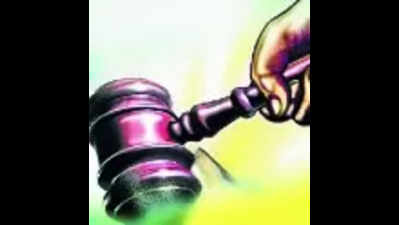
Underscoring the statutory responsibility of the state Bar council and the director-general of police to dismantle the unholy alliance, Justice B Pugalendhi likened it to ambulance-chasers, lawyers and police personnel involved in the motor accident related- cases, and said: “The Bar council and the DGP have to take a call on this issue and provide necessary instructions to their members and officials to protect and maintain the dignity of this institution.

Justice Pugalenthi took a serious view of advocates filing bail petitions without the knowledge of the accused persons, and recorded the court-appointed amicus curiae S Anantha Narayan’s submission that there was an unholy trinity – the court-duty policemen, advocate and the inspector of police concerned.
“The main culprit is the court-duty cop. Once a person is taken into custody in a narcotic drugs case, their relatives approach the police station, where the court-cop directly interacts with them. He appraises them about the case, gives the address and phone number of their advocate and directly informs the advocate. The court-cop fixes the fees in most cases, and it would be shared among them,” the amicus curiae told the court.
If the accused chooses his own advocate, the accused will face tough time as the case details would not be informed to his advocate and the inspector of police does not reply to the bail petition, he said. “If a surprise check is made in the police station, the visiting cards of those advocates who are having nexus with police officers, can be found,” he added.
Justice Pugalendhi said, “we are also witnessing the manner in which the Motor Accident Claims Original Petitions are filed and the quantum of fees charged in those cases. Those who are having nexus with police alone can practice before the Motor Accidents Claim Tribunals. Everyone, including the members of the Bar Council, is aware of this fact. However, we have no courage to correct this unhealthy system.”
The faith and confidence of a common man in this institution would be retained only when our system functions in the proper manner, the judge said, adding: “It is not the responsibility of the court alone, but also the members of the Bar.”
The court made the observations while granting bail to Tony alias Anto Varghese of Kerala, who was arrested by the Nagamalai Pudukottai police in Madurai, in connection with a narcotic drugs case. Earlier, the court took note of the fact that two counsel appeared for the petitioner. One of the two had filed the memo of appearance without the signature of the petitioner.
End of Article
FOLLOW US ON SOCIAL MEDIA





Hot Picks
TOP TRENDING
Trending Stories
In City
Entire Website
- Monster vs Monster: WWE announced massive match for this week's Monday Night Raw
- UPI transaction limit to change from September 16! Here are the new limits for various UPI payments
- File movement linked to weight of money: Nitin Gadkari
- Apple's biggest 'iPhone update' for year 2024, iOS 18, rollout starts today - September 16: India time and how to prepare your iPhone for iOS 18 download
- Arvind Kejriwal's resignation: Who will be next Delhi CM? Atishi seen as top choice
- UP medical aspirants converting religion to secure MBBS seats: A look at NEET UG admission criteria around minority reservation rules
- Protests against students wearing hijab in school play, principal forced to apologize for promoting religious harmony
- Pitru Paksha 2024 Date and Time: Know Significance of Shradh Paksha
- Andhra suspends 3 IPS officers for 'framing', arresting Mumbai actress
- The 3 Strongest Zodiac Signs: Powerhouses of the Zodiac Wheel
- After 2 hours, meeting between protesting Kolkata docs & CM Mamata concludes
- 'Crisis in Manipur due to ...': CM Biren Singh reiterates role of 'foreign hand'
- Will Atishi replace Arvind Kejriwal as Delhi CM?
- 'Be cautious': VP Dhankhar reacts to SC's 'caged parrot' remark on CBI
- 2 attempts to 'kill' Trump in 2 months: How it may impact US polls
- Kohli's jersey hogs limelight in Pakistan during Babar Azam's match
- Cow vigilantes killing a Brahmin is the wake-up call India needed
- Apple's biggest 'iPhone update' for year 2024 rollout starts today
- Make It Priceless: Gift them a customized TOI Front Page. Know More
- 'No talks with Pak till ...': Amit Shah accuses NC, Cong of 'nurturing' terrorism

Popular Categories
Hot on the Web
Top Trends
Who is Ryan RouthUPI Transaction LimitArvind Kejriwal ResignationNEET UG Admission CriteriaKolkata Doctor Rape CaseBorder Gavaskar TrophyRohit SharmaSports Stars Turned Power CouplesIBPS RRB Clark PO ResultDonald TrumpBianca Belair Net WorthIndia vs Korea LiveBMW Accident Madhya PradeshIndore BMW CrashPrince HarryMiami Dolphins OwnerLive Cricket Score
Trending Topics
Living and entertainment
Latest News
4 types of tea to improve gut health and ease digestive issuesWho was Illia 'Golem' Yefimchyk, the Belarusian bodybuilder who consumed 2.5 kg of meat and 108 sushi pieces daily before his death at 36?Vempalle Shareef's story is now a lesson for degree students in Andhra PradeshWhen Shah Rukh Khan performed 'Kanyadaan' at Farah Khan's wedding- See PICSBike rally held to raise voter awareness in Jammu and Kashmir's Doda ahead of assembly electionsFalcons' Predictable Offense and Cousins' Prime-Time Woes Spell Trouble in PhiladelphiaFather-son duo Eugene and Dan Levy's dazzling entrance at the EmmysLiza Colon becomes 1st Latina to win Best Supporting Emmy Award'Oh no!': Hilarious goof-up leads to missed catch, leaves bowler in smile. WatchJr NTR on shooting under water scene for 35 days in 'Devara Part 1': It is an important sequence!Last Lunar Eclipse of 2024: What it means for your zodiac signTop NFL Superstars Who Are Vegan: Derrick Morgan, David Carter, Theo Riddick and moreKSCA Invitational: Arjun Tendulkar takes match haul of 9 wickets in big Goa CA XI winAbhishek Kumar shares selfies with Alia Bhatt; recalls the time when he worked as a crowd artist in ‘Humpty Sharma Ki Dulhaniya’Jessica Gunning wins her 1st Primetime Emmy for 'Baby Reindeer'Shocking! Man celebrates birthday by lying among massive Pythons‘Stree 2’ star Shraddha Kapoor to reveal her character name! But there’s a catchSathiyan set to partner Sreeja in mixed doubles
Copyright © 2024 Bennett, Coleman & Co. Ltd. All rights reserved. For reprint rights: Times Syndication Service