
- News
- City News
- lucknow News
- With mehfils missing, sarod too fell silent like Nawabi era in Lucknow
Trending
This story is from February 8, 2023
With mehfils missing, sarod too fell silent like Nawabi era in Lucknow
The musical lineage of sarod in Awadh dates to 17th century when the art form flourished in the courts of Nawab Wajid Ali Shah. But with the exile of nawab to Kolkata after the first battle of independence in 1857, his court musician Niamatullah Khan too migrated and the art started to fade due to less number of 'mehfils', said Irfan Muhammad Khan, the last sarod player belonging to Lucknow-Shahjahanpur gharana.
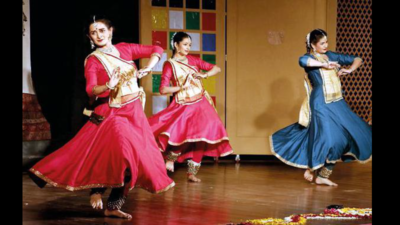
Kathak performance by Arshiya Sethi, Shama Bhate and Shilpa Bhide

Speaking on the decline of erstwhile mehfils in Awadh and beyond during the Sanatkada Festival on Tuesday, Khan said musical concerts slowly declined after the era of Nawabs ended. However, since a few patrons of art still resided in Awadh, the city witnessed some mehfils.
A certain shift came when musicologist Vishnu Narayan Bhatkhande (who founded the Bhatkhande Sanskrit Vishwavidyalaya) brought together over 400 musicians together and organised All India Music Conference in 1916 in Gujarat with an aim to discuss principles of Indian classical music.
"Later, the conference was held in Lucknow in 1925 where the conception of Marris College (Now Bhatkhande Sanskrit Vishwavidyalaya) was conceptualised," said Khan.
The Partition of India in 1947 again affected the different musical gharanas as several artistes migrated to newly formed Pakistan. A few handful of people tried to revive the essence of mehfils like earlier, but failed to do so, Khan added.
Sharing an anecdote from his days spent in Lucknow, Khan reminisced: "Daily I used to wake up at 5am for riyaz with my uncle Ilayas Khan, a renowned sitar player. Once I fell sick and couldn't attend the morning riyaz. However, later when I decided to practice my uncle told me to go to a hakim, who used to sit near Liberty Cinema here. When I went to the hakim, he gave me medicine for fever and asked me 'Jaunpuri seekhi hai?' (Have you learnt Jaunpuri raga?). When I replied in affirmative, he said, 'Jao Jaunpuri ka riyaz karo bukhar theek ho jaega (Go and practice Jaunpuri, you will get well)."
End of Article
FOLLOW US ON SOCIAL MEDIA





Hot Picks
TOP TRENDING
Trending Stories
In City
Entire Website
- Malaika Arora's father Anil Arora dies by suicide in Mumbai
- 7 Key Reasons Why UPSC is the Toughest Exam in India
- 9/11 Remembrance Day: Key moments from the deadliest attack on US
- Howard University: 10 landmark firsts of the institution that shaped Kamala Harris
- Earthquake of magnitude 5.8 strikes Pakistan, tremors felt in Delhi, neighbouring areas
- Who were Barack Obama's challengers in 2008 and 2012 US presidential elections?
- 'A in INDIA alliance': Rahul Gandhi's slip-up during address to Indian-Americans goes viral
- Trump vs Harris: Betting markets reveal who’s expected to win the US presidential debate
- IGNOU December 2024 Term-End Exam: Registration Details, Important Dates, and Fee Structure
- Top 10 TED Talks to Boost Confidence and Success for Female Students
- Bajaj Housing Finance's IPO gets record Rs 3.2 lakh crore demand
- 2 Army officers thrashed, their female friend gang-raped in Madhya Pradesh
- While Kamala focused on substance, Trump's lies had the final word
- Watch: Irked over snags in e-scooter, buyer torches Ola showroom
- Lucknow doctors remove brain tumour while patient fiddles with mobile
- 4,4,6,6,6,4: Travis Head smashes 30 runs off Sam Curran's over - Watch
- Kamala may have won debate. But election is still too close to call
- Apple iPhone 16 vs iPhone 15: Which iPhone to buy and why
- Times Top10: Why Manipur is back on the boil
- 16 fall ill at Jharkhand excise fitness test

Popular Categories
Hot on the Web
Top Trends
Trending Topics
Alia BhattMalaika Arora Father DeathArbaaz KhanNatasa StankovicMr Bachchan OTT ReleaseNational Parks In IndiaSelena GomezGOAT CollectionVikas Sethi DeathMalayalam ProducersIndia's Best Dancer 4Simi GarewalDilli BabuIndian National ParksLaung BenefitsVikas SethiiPhone 16Dubai Princess Sheikha MahraMG Windsor EvWordle Answer
Living and entertainment
Latest News
Kapil Sharma gives fans a peek into his Ganesh Chaturthi festivities with wife GinniNot MS Dhoni and Rohit Sharma, Gautam Gambhir calls this Indian player 'Shahenshah'. WatchPolice registered 10 cases against Ganapati mandals for using laser beam lightsThe Zodiac Signs Most Naturally Inclined to HealingTelangana government pushes for increased flood relief from CentrePolicy of 'Padak Lao, Pad Pao' will be implemented again for the sportspersons, says Deepender HoodaBest 20000mAh Power Banks To Power Your Devices Wherever You GoWalking dog in Goa? Mouth guard, leash soon to be mustKamala may have won debate. But election is still too close to callCommunal violence erupts in Karnataka during Ganpati Visarjan, section 144 imposed'On basis of fairness and equality': Bangladesh seeks good relations with India, says YunusMpox kills two, six other confirmed cases in Cameroon: GovernmentTrump's claim about sending Taliban leader Abdul his house photo fuels social media frenzyWWE Superstar Blames the Company for Failing to Utilize Omos’ PotentialFinding divinity in a world addicted to noiseOmar fighting for chair, I’m fighting for people of Kashmir, says Engineer Rashid after walking out of TiharTovino Thomas praises Prithviraj Sukumaran as director: "One of the brilliant directors I have ever worked with"Border Gavaskar Trophy: When Sourav Ganguly's Brisbane heroics set the tone for an enlivening series
Copyright © 2024 Bennett, Coleman & Co. Ltd. All rights reserved. For reprint rights: Times Syndication Service