
- News
- City News
- lucknow News
- Uttar Pradesh: Wasim Rizvi no longer Muslim, Shia Waqf Board to initiate sacking next week
Trending
This story is from December 8, 2021
Uttar Pradesh: Wasim Rizvi no longer Muslim, Shia Waqf Board to initiate sacking next week
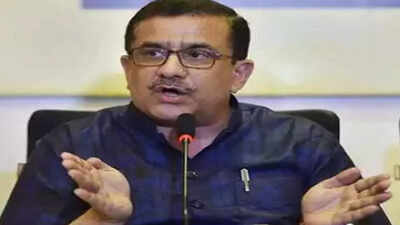
“Rizvi is no longer a Shia Muslim after he publicly renounced Islam. And his membership stands cancelled under Section 16(A) of Waqf Act, which clearly lays down that only a Shia Muslim is eligible to contest and remain a board member,” Board chairman Ali Zaidi told TOI.

Rizvi, who successfully contested and won membership of the Shia waqf board on the mutawalli quota in April this year, is embroiled in corruption and facing inquiry from various probe agencies, including Central Bureau of Investigation.
Talking to TOI, Maulana Syed Raza Hussain Rizvi, member of Shia Waqf Board, said, “The Waqf Act is very clear. You have to be a Muslim to retain membership of the board. The same condition applies to mutawallis of waqf properties.” Rizvi is currently the mutawalli of two prime waqf properties in Old Lucknow — Waqf Miyan Daraab Ali Khan and Waqf Malka Jahan Karbala. Sources told TOI, the Shia Board will also invoke the Waqf Act to disqualify Rizvi’s mutawalli status.
Talking to TOI, Board chairman Ali Zaidi, said, “We will give a representation to the state government to immediately annul Rizvi’s waqf board membership as the government is endowed with the power to appoint and sack a member. We are also seeking legal opinion to cancel his mutawalli status. We will discuss this issue threadbare at the Board meeting on December 14.”
The procedure to annul waqf board membership includes passage of a resolution at the board meeting and a representation to the government through the department of minorities affairs. The government may allow a hearing of the under-fire member before passing the sack order, said Zaidi.
Another elected board member, Faizi, said, “Wasim Rizvi under no circumstances can remain a mutawalli as he’s no longer a Shia Muslim. And the Waqf Act exemplifies this.”
End of Article
FOLLOW US ON SOCIAL MEDIA










Photostories

Hot Picks
TOP TRENDING
Popular Categories
Hot on the Web
Top Trends
Hurricane MiltonRatan Tata NewsNew UPI Transaction LimitRatan Tata DiesPM ModiRafael NadalShantanu NaiduTom BradyStock Market TodayNarayana MurthyIsrael Hezbollah WarRatan Tata Inspiring QuotesManagement Colleges of IndiaTop Medical Colleges of IndiaTop Engineering Colleges of IndiaTop Pharmacy Colleges of IndiaLive Cricket Score
Trending Topics
Diwali WishesBigg Boss Tamil 8 Contestants ListBhool Bhulaiyaa 3 TrailerVettaiyan Twitter ReviewSanjay Leela BhansaliVettaiyan ReviewSalman KhanDevara CollectionBigg Boss 18Deepika PadukoneShraddha KapoorRatan Tata Passed AwayColdplayVettaiyan Movie ReviewSwatantrya Veer SavarkarDussehra 2024Watch NFL Live StreamDress To ImpressRatan Tata DeathWordle Answer
Living and entertainment
Latest News
How Chennai Night Race swerved past challenges to zoom toward a brighter motorsports futureAll-Star Tower Defense (ASTD) Codes October 2024Ranveer Singh: I have a man crush on Tiger ShroffWho is Noel Tata? Meet Ratan Tata’s half-brother, who could be successor at Tata TrustsHow to make Ginger Turmeric Shots for seasonal changeWhen Amitabh Bachchan slept on Marine Drive with rats as neighbours: I didn’t have a place to stay'Stree 2' hits OTT after record-breaking box office success: Here’s where to watch!'Thalapathy 69': Here's how much Vijay will be earning in his last film!'You're drunk': Britons stunned by BBC app's shocking 18,995 mph wind forecast!Hanging Lights For Living Room: Transform and Illuminate Your SpaceICC Women's T20 World Cup: Harmanpreet Kaur, Smriti Mandhana, bowlers demolish Sri Lanka as India get NRR boostOnly a true creative genius can spot the odd unicorn in 12 seconds!Ratan Tata no more: When his throwback pic had netizens saying he looked like a Hollywood star'Vettaiyan' Twitter review: Rajinikanth shines in this investigative thriller'Vettaiyan' early and first review: Rajinikanth starrer has a good twist!CATS YouTube codes for October 10, 2024: Enhance your gameplay and know how to redeem the codesKarnataka BJP chief hints at CM Siddaramaiah’s possible exit amid 'fast-paced political changes'Bigg Boss 18: Karan Veer Mehra opens up about losing his father at the age of 10; says 'Main apne dad ki death par nahi roya'
Copyright © 2024 Bennett, Coleman & Co. Ltd. All rights reserved. For reprint rights: Times Syndication Service