
- News
- City News
- lucknow News
- Ram Temple a true amalgamation of India: Bits from all corners of India & abroad make it a national marvel
Trending
This story is from January 24, 2024
Ram Temple a true amalgamation of India: Bits from all corners of India & abroad make it a national marvel
The idol of Ram Lalla, carved by Arun Yogiraj from Mysuru, and the stone used for the idol from Mysuru, are part of the true amalgamation of India in the Ram Temple in Ayodhya.
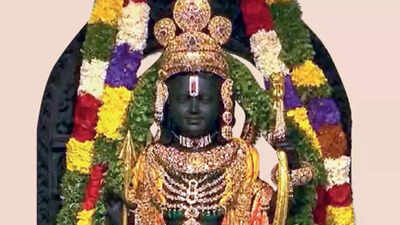
The idol of Ram Lalla for instance, has been carved by Arun Yogiraj, from Karnataka's Mysuru
The idol of Ram Lalla for instance, has been carved by Arun Yogiraj, from Karnataka's Mysuru. The stone used for the idol is also from Mysuru. Temple architect Chandrakant B Sompura belongs to Ahmedabad. The marble used for the temple was sourced from the renowned Makrana in Rajasthan, while its polished teakwood was brought from Maharashtra.
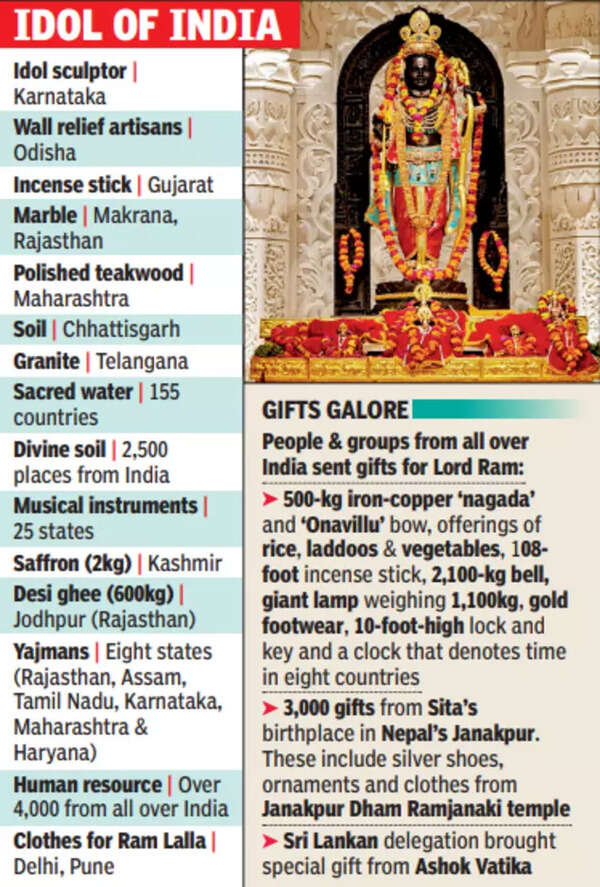
"Over a 100 construction agencies/firms from different parts of India have contributed to the making of the temple.

Earlier, sacred soil from over 2,500 places from all over India, including Jhansi, Bithoor, Haldighati, Yamunotri and Golden Temple was used in the making of the temple, besides Ayutthaya city in Thailand that connects itself with Ayodhya. Also, water from 155 countries, including Pakistan, Uzbekistan, China, Germany, Bangladesh and others was provided for jalabhishek (sacred bath) of the deity. The ceremony was attended by more than 6,500 people from different walks of life.
"Seers from 150 schools of thought and upasana paddhati (worship systems) were present along with exemplary persons from diverse fields, including science, sports, arts, music, dance, writing besides those from industry, government, and defence services," Rai said, adding, "the music instruments from every single state of India were being played on the temple premises for the ceremony".
Even the bhog offered to the deity included special prasadas from places like Mahakaal, Ujjain, Mehndipur Balaji, Dausa, Banke Bihari temple, Mathura, besides one prepared by the temple itself.
The "Indianness" has found its place at various levels of the making of the temple. For instance, in the final leg of preparations, work went on 24X7 to complete facilities in the city, prompting many visitors to comment that "Ayodhya was changing by the hour".
"One could not source ordinary labourers for specific requirements of Ayodhya. So, artisans and skilled workers from Rajasthan, Odisha and Bengal were hired especially for the artwork. I think the hands of these nameless and faceless craftsmen and artisans who put in their skills with all their hearts and souls must be counted," said an officer monitoring projects in Ayodhya.
The contributions of the people can't be forgotten, either. "Over 85% of the contributions was from the common people, in denominations of less than Rs 50," a trust member said.
"Ram in his entity is a true reflection of Indianness. It is for this that we commonly believe in the proverb 'sabke Ram and sab mein Ram' (Ram for all & Ram in all)," said Ayodhya mayor Mahant Girishpati Tripathi, who's also the head priest of Tewari Mandir.
Former vice-chancellor of Ram Manohar Lohia Avadh University Manoj Dixit asserted that the same holds true for Ayodhya. "Most people do not know that Ayodhya is the only city to have temples belonging to 64 castes and communities of India. Each worship Ram in their unique ways and share the joy," Dixit said.

About the Author
Shailvee ShardaEnd of Article
FOLLOW US ON SOCIAL MEDIA









Photostories
Hot Picks
TOP TRENDING
Popular Categories
Hot on the Web
Top Trends
Shantanu NaiduRussell WilsonsTom BradyAUS vs PAK Live ScorePakistan Cricket FanSuryakumar YadavNobel Peace PrizeMahadev Betting AppNew UPI Transaction LimitRatan Tata DiesPM ModiUGC NET Result 2024Management Colleges of IndiaTop Medical Colleges of IndiaTop Engineering Colleges of IndiaTop Pharmacy Colleges of IndiaLive Cricket Score
Trending Topics
Diwali WishesDussehra 2024 QuotesDussehra WishesVettaiyan OTT ReleaseVettaiyan CollectionVettaiyan ReviewBlack Movie ReviewDevara CollectionBigg Boss 18Deepika PadukoneShraddha KapoorRatan Tata Passed AwayJigra Movie ReviewVettaiyan Movie ReviewSwatantrya Veer SavarkarDussehra 2024Elon MuskKing Legacy CodesUltimate Football Codes October 2024Wordle Answer
Living and entertainment
Latest News
Internship scheme: 193 companies post over 90,000 slots on portalApplications for new power connections among services moved exclusively onlineSara Arfeen Khan opens up about converting to Islam; says, 'I read all holy books and attended a lot of religious debates before converting'Amitabh Bachchan, Rambha, Khushboo and others check in on Govinda after gun misfire incident - ExclusiveCops on unusual hunt: For denturesHappy Dussehra 2024: Top 50 Wishes, Messages, Images and Quotes to Share with Your Loved OnesDiscover 8 animals that suck blood for survivalFortified-food plan faces questions from two PM panel membersKrushna Abhishek shares a heartwarming post for mama Govinda; says 'jab body mein adha blood supremely talented actor Govinda ka ho...'Could Tyreek Hill Return to the Chiefs? Cryptic Posts Fuel Trade SpeculationWith special access card, disabled people can skip Exposition queuesForex reserves drop $3.7 billion in week, most since start of August'Jigra' box office collection day 1 early estimate: The Alia Bhatt starrer faces tough competition with Rajinikanth's starrer 'Vettitan' and Rajkummar Rao's Vicky Vidya Ka Woh Wala Video'Robert Gronkowski Reacts to His Hilarious Impression in FX's American Sports Story: Aaron HernandezIf Rahul Gandhi fails to deliver, INDIA bloc may make LoP post rotational: BJP‘Kallanum Bhagavathiyum’: The Vishnu Unnikrishnan and Mokksha starrer is set to get a sequelAlia Bhatt, Bipasha Basu, Rhea Chakraborty and others seek blessings at Kajol and Rani Mukerji's Durga Puja pandal - See photosTrapped leopard gasps to death as foresters wait 12 hours for darts
Copyright © 2024 Bennett, Coleman & Co. Ltd. All rights reserved. For reprint rights: Times Syndication Service