
- News
- City News
- lucknow News
- ‘Beat stress to avoid sudden cardiac arrest’
Trending
This story is from September 29, 2022
‘Beat stress to avoid sudden cardiac arrest’
Sudden cardiac arrests (SCA) that account for two million deaths in India can only be prevented by creating awareness among the people about cardiopulmonary resuscitation (CPR). Talking to Vivek Singh Chauhan during an interactive session organised by TOI ahead of the World Heart Day, head of cardiology department, SGPGIMS, professor Aditya Kapoor spoke about the steps to bring down SCA fatalities.
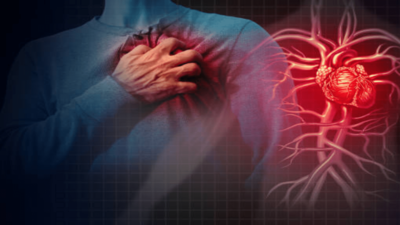
In cardiac arrest, the heart stops beating due to disruption in electrical impulses, while in a heart attack, the circulation of blood stops in the heart due to blockage in arteries

We often use the terms cardiac arrest and heart attack interchangeably. Is there any difference?
> In cardiac arrest, the heart stops beating due to disruption in electrical impulses, while in a heart attack, the circulation of blood stops in the heart due to blockage in arteries. If cardiac arrest happens suddenly, it is called sudden cardiac arrest (SCA).
How to recognise if a person has collapsed due to SCA and not by low blood pressure or diabetes, or any other condition?
> Every collapse is not due to sudden cardiac arrest. It could be due to dehydration, low BP, low blood sugar, fasting, seizures or intoxication. The first step to recognise SCA is to tap firmly on the patient’s face and shoulders to evoke a response. One should also ask loudly if he/she is fine. If there is no response, check the pulse by placing two fingers on the side of the neck or on the wrist where the thumb ends. Then, place the palm below the sternum to test breathing. If there is no pulse and breathing, it is SCA. In such a scenario, start CPR immediately.
What is the role of time in saving life?
> Without help, chances of survival become nearly zero within three minutes. Cardiac activity must be restarted within three minutes, otherwise the brain will get damaged. Delay of every on e minute in CPR decreases the chances of survival by 10%.
What steps should be followed before and during CPR?
> Place the patient on a firm and even surface. Put your palm at the centre of the chest and place fingers of other hands crossing those of the first hand. Make sure elbows are not bent. Start chest compressions of about 2 inches at the rate of 100-120 beats per minute. Ask someone to call an ambulance with cardiac facilities.
For how long should CPR be given?
> It should continue till medical help or automated external defibrillator (AED) machine arrives. If one person is exhausted, ask others to continue the procedure. If you stop, blood flow to the brain will be cut off.
Is mouth-to-mouth CPR more effective than hands-only CPR?
> Mouth-to-mouth CPR is more effective in case of drowning. In SCA, hands-only CPR is as effective as mouthto-mouth. It reduces the risk of Covid-19 infection also.
What should be the ideal position for giving CPR?
> We should be on the left side of the patient but being on the right side also gives the same result. Giving CPR from the head side should be avoided.
Who is prone to getting SCA? It can occur to anyone due to choking, electrocution, extreme physical exertion, obesity, drowning, and even a sudden blow to the chest (commotio cordis). People with a history of hear t attack, high BP, diabetes, genetic history of SCA are at higher risk.
Is there any medicine for SCA?
> We keep Sorbitrate and Aspirin for heart attack but there is no medicine for SCA.
What if a patient gets his/her ribs fractured during CPR?
> It’s better to live with fractured ribs rather than die with ribs intact.
What if someone from the crowd around stops us from doing CPR?
> Tell them firmly that you are a trained person and know what you are doing.
People hesitate in helping due to fear of police interrogation.
> The Good Samaritan law protects the responder. One can’t be forced to give details if one is trying to save an injured or a dying person.
How to perform CPR on the elderly, infants, children or a woman?
> There is no difference in performing CPR in adult persons or elderly. Less force should be applied in case of an elderly person to reach 2 inches of compression. In children, it should be done with one hand while with two fingers in infants (compression should be 1. 5 inches).
What to do if a woman gets SCA, because many would hesitate to expose her chest for using an AED machine? Can it be used over the clothes? > It has to be used on bare skin. One should not hesitate in doing so. One may seek help from any woman around. Manufacturers are also planning to give scissors so that AED can be used by removing a portion of the clothes.
End of Article
FOLLOW US ON SOCIAL MEDIA










Photostories

Hot Picks
TOP TRENDING
Popular Categories
Hot on the Web
Top Trends
Israel Hezbollah WarMost Runs in International CricketVirat KohliIND vs BAN Live ScoreRohit SharmaIndian Team Fastest Test FiftyMohammed SirajUGC NET Result 2024TS DSC Results 2024Women T20 World Cup Points TableWomen T20 World Cup ScheduleShane McMahon Net WorthHezbollah ChiefTourists Not AllowedDiddyTop Management Colleges of IndiaLive Cricket Score
Trending Topics
Devara CollectionMithun ChakrabortyKangana RanautNavratri WishesGandhi Jayanti WishesAnant AmbaniDevara CollectionGandhi Jayanti 2024Masala OmeletteEmergencyDevaraTaaza Khabar 2 Twitter ReviewDevara Movie ReviewHealthy RaitasSwatantrya Veer SavarkarColdplay India tour 2025Smartphone DealsApple Macbook Air M1Amazon SaleWordle Answer
Living and entertainment
Latest News
iVoomi S1 Lite e-scooter launched at Rs 84,999: 180 km range, three-year warranty!Tata Nexon turbo CNG: Variant-wise features with price explainedPMI in India intensifies efforts against Illicit Tobacco Trade to Safeguard Economic Interests and Consumer ProtectionBarbra Streisand pays tribute to late 'A Star Is Born' co-star Kris Kristofferson: 'He was something special'Mumbai vs Rest Of India: Irani Cup tie offers chance for hopefuls and rejects to impress selectorsOlivia Culpo and Christian McCaffrey buy George Clooney's mansion for $14.5 millionRG Kar case: Kolkata court extends judicial custody of ex-principal, suspended cop till October 4When Dikembe's shoe size astonished the Mumbai Temple guardHow can Ben Stokes and other overseas players avoid a two-year IPL ban?"Nothing he was doing was believable", Darby Allin picks names wrestler who benefited most from AEW All In 2023 backstage incidentColleagues remember braveheart Delhi Police constable Sandeep: 'Would rush to crime scene alone'Header: Kolkata metro conducts public awareness campaign at Dum Dum metro stationBengaluru resident exposes fake Flipkart agent attempting to deliver bogus iPhone 15; read online reactionsBihar and Jharkhand among top two states enrolling for contributory pension scheme for farmers"Tyler Huntley’s 'Snoop' Nickname: The Rapper Connection Explained”BTS star V crowned 'Most Handsome Man in the World 2024'Decoding a bowl of Idli Sambhar: From calories to nutrients4 members of notorious robbery gang held in crackdown by Ghaziabad police
Copyright © 2024 Bennett, Coleman & Co. Ltd. All rights reserved. For reprint rights: Times Syndication Service