
- News
- City News
- kolkata News
- Tanu-babu broke my glam image of a romantic hero: Biswajit
Trending
This story is from July 5, 2022
Tanu-babu broke my glam image of a romantic hero: Biswajit
Monday was one of the saddest days in actor Biswajit Chatterjee’s life. The news of the demise of longtime associate and friend – Tarun Mazumdar – was unsettling. It opened floodgates of memories from his real and reel lives. Describing Mazumdar as a “really competent director”, Biswajit said: “I have been keeping track of his health when he was in the intensive care unit... It was such a long association with him. I even attended his wedding with Sandhya.”
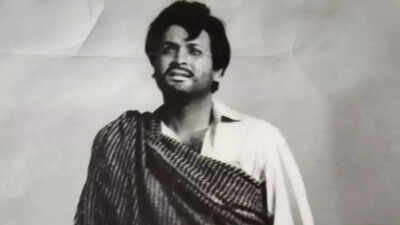
Biswajit Chatterjee in Tarun Mazumdar's 'Rahgir'
Describing Mazumdar as a “really competent director”, Biswajit said: “I have been keeping track of his health when he was in the intensive care unit...

The real-life association had resulted in some memorable collaborations on screen. “As a director, he was great. If I were to include my work both in Hindi and Bengali cinema, I must have done some five/six films with him. After a day’s work with him, I always felt very satisfied with myself as an actor. He knew how to extract 100% of what he wanted from an actor,” he said.
‘Palatak’ (1963), produced by V. Shantaram, was one of the memorable films of the Yatrik collective that Mazumdar had formed with Sachin Mukherji and Dilip Mukherji. The veteran director was hellbent on casting Anup Kumar, otherwise known for his comedies, as the hero of this Bengali film. The film was a huge success and ‘Palatak’ was remade in Hindi as ‘Rahgir’. It was for this film that Biswajit was cast to play the lead. A seven-year-old Prosenjit Chatterjee had then played Biswajit’s younger version.
Memories of shooting for this film haunt the actor till date. “When he cast me for ‘Rahgir’, I was a very busy actor shutting between Mumbai, Kolkata and Chennai. Back then, I was a romantic hero who wore fashionable clothes and would be seen swinging a guitar. Tanu-babu (as Tarun Mazumdar was called) agreed to break my glamorous image.”
Biswajit had agreed to the director’s condition. “He was ready to break my glamorous image provided I surrender to him. I knew it was a huge risk that he was taking. I had faith in him and agreed to it. I gave him my word that I would not give him any occasion to feel let down,” Biswajit said.
That meant being asked to sit outside in the heat so that he got a deep tan. “I had to keep long hair. My beard was unshaven. I was given shabby clothes,” he recalled. There was one dance number in the Bengali version of the film. “Ruma-di (Ruma Guhathakurta) had shot for it. In Hindi, it was done by Shashikala. My own shot was slotted for the evening on the day this dance number was being shot. But he called me in the morning and insisted that I get ready in a shabby look. Then he told me: ‘Don’t mind… We have already had a word on this’.”
That was a reminder of our talk about surrendering to the director’s vision. “He asked me to sit along with the extras who were supposed to watch the dance. The whole day I sat there in the heat, sweating profusely. He instructed the makeup artist to not retouch my face even if I asked for it. Tanu-babu wanted me to stay put in that atmosphere.”
By evening, the sophistication of Mumbai’s romantic hero was lost. “I started feeling like one of the villagers. That’s the way he transformed me both mentally and physically. I was nominated for a National Award for this role,” the actor recalled.
Mazumdar even acknowledged the efforts Biswajit took to get under the skin of the character. “He became confident about me. During the making of ‘Kuheli’, there was a point where I was supposed to wear my hair long and flaunt a beard. By then he was so confident about my abilities that he asked me to get my wigmaker to make the wig in Mumbai. ‘You have understood the character. Now you take a call about your look for the film’ – I remember his words. I did the sketch and got my wigmaker to do the needful. He okayed the look saying that I had understood what he needed. This understanding between a director and an actor always helps in creating a memorable piece of work.”
His "detailed planning" was another big asset. So was his ability to make great use of Rabindra Sangeet in his films. “He had a great musical sense and knew exactly where to use which song so much so that it seemed as if the song was composed for that particular scene,” he said.
A month back, Biswajit had called up the veteran director. “Someone told me that he was keen to talk to me. I called him up. He picked up the phone himself and said he was indeed looking for me." He then shared that a documentary (Shatarup Ghosh’s ‘Jibonpurer Pothik’) was being made on him and the team wanted the actor's comments for it. "I was more than willing to oblige. He told me that the team would come to Mumbai sometime in June to shoot for it.” That never happened. “Perhaps, his health was a reason. But if and when they get in touch with me, I will always be ready to cooperate.”

About the Author
Priyanka DasguptaEnd of Article
FOLLOW US ON SOCIAL MEDIA






Hot Picks
TOP TRENDING
Trending Stories
In City
Entire Website
- 'We were treated like slaves, made to work for 15 hours a day': Tricked into Ukraine war, 3 from Karnataka return home
- 'My father was on the flight': Jaishankar opens up about 1984 Air India hijack
- Airtel CEO Gopal Vittal sends letter to Reliance Jio, Vodafone-Idea, Tata Tele and BSNL CEOs; here's what he said
- Prince Harry to celebrate 40th birthday away from Meghan Markle
- Haitian immigrant pet-eating row: Ohio woman accused of eating cat is US citizen, video is not from Springfield
- Kejriwal out of jail; 'CBI arrest only to frustrate ED case bail': SC judge
- Donald Trump reveals what Laura Loomer is to his campaign: 'I don't control her'
- Hamster Kombat Daily Cipher Codes and Combo Cards for September 14, 2024: Unlock up to 1 million coins
- Laura Loomer's photo with Donald Trump viral. People ask where's Melania, where's wedding ring
- Garena Free Fire MAX redeem codes for September 13: Win in-game goodies and rewards
- Didi goes to protest site, doctors go to her house, but no talks
- Canada sees dip in post-secondary Indian students
- Is govt’s attempt to reverse Green Revolution a good idea?
- Neeraj finishes 2nd, misses title by 0.01 meters at DL Final
- 'Not eligible': Economist Ranade removed as VC of Gokhale Institute
- Trump defends 'loony' Laura Loomer amid MAGA meltdown
- Did doctors make a mistake in making Mamata wait for 2 hours?
- Bengaluru woman sparks controversy with comments about Swiggy delivery executive
- State's duty to compensate owners for land acquired: SC
- Doctor, aide swim across river in flood-hit Odisha to treat patients

Popular Categories
Hot on the Web
Top Trends
Trending Topics
World Largest HorseEID WishesGreen Apple BenefitsPriyanka Chopra TattooKottukkaali OTT ReleaseNarendra ModiGhaziabad Juice SellerHair LossSudha MurtyMalayalam ProducersIndia's Best Dancer 4Simi GarewalDilli BabuIndian National ParksLaung BenefitsVikas SethiApple iPhone 16Donald TrumpAadhar Card UpdateWordle Answer
Living and entertainment
Latest News
This Strange Eventful History: Claire Messud's Ambitious Novel Spanning Generations and ContinentsNew season begins with renewed hope for BlastersPremier League: Erling Haaland hits another two in Man City's come from behind win over BrentfordMeerut building collapse: 3 dead; rescue operations continuePeople offer food, umbrellas to agitating doctors; thousands treated at free 'Abhaya' clinicDon’t rethink pink. Plane truth is we need women-friendly seatsWWE NXT Star Reunites With Father At TNA Victory Road'Nafrat ki dukaan pe ...': PM Modi attacks Congress over 'brutality' in US‘There is no affordable transport currently, the biggest problem in Goa is taxis’IIM Jammu hosts 'Fostering Academia and Industry Partnerships' event at BengalaruMP Bharat, TDP Andhra President Srinivas promise action to safeguard protection of steel plant workersLiverpool slump to shock 1-0 home defeat by Nottingham ForestHimanta urges banned ULFA(I) chief not to indulge in activity jeopardising future of Assam's youthActivists complain as showroom burns old papers; NMMC penalizes Rs 250 onlyVinith Venkatesh scores in ISL debut as Bengaluru FC edge past East BengalJitendra Jorwal takes charge as new Ludhiana deputy commissioner, vows seamless delivery of servicesGeorge R.R. Martin praises 'A Knight of the Seven Kingdoms' spinoff after criticising 'House of the Dragon'Ananya Panday urges all industries to form Hema Committee': 'Clearly, no one else is doing it but women'
Copyright © 2024 Bennett, Coleman & Co. Ltd. All rights reserved. For reprint rights: Times Syndication Service