
- News
- City News
- kolkata News
- Female non-fiction directors break glass ceiling, win hearts & awards
Trending
This story is from March 8, 2022
Female non-fiction directors break glass ceiling, win hearts & awards
From Manjira Dutta’s ‘The Sacrifice of Babulal Bhuiya’ (1987) to Ranu Ghosh’s ‘Quarter No: 4/7’ (2012), women with Bengal connection have been quietly doing path-breaking work in the domain of non-fiction film-making.
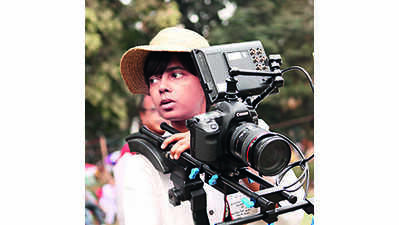
Debalina
Taking big strides in this world of non-fiction are veterans like Chandita Mukherjee, Madhusree Dutta, Vasudha Joshi, Paromita Vohra, Bishakha Dutta, Subha Das Mollick, Ananya Chakraborti and Gargi Sen.

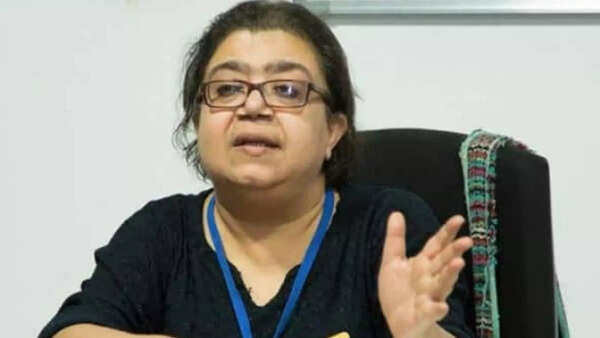
When Gargi decided to distribute documentaries in 2009, male directors dismissed her idea saying ‘it won’t happen’. “I had to hire a young male assistant. For five years, I needed him as a front,” she added. Perceptions of her detractors changed when the films she distributed started bringing in money.
When no camera caretaker agreed to work with cinematographer Ranu Ghosh in the mid-90s, she trained a production boy who served tea on sets to do the job. This problem no longer exists today. “Manjira Dutta paved the way for the surge of female docu practitioners. Her work has been truly hard-hitting and inspiring. It is a pity that she is no more,” said Ranu, who recently directed ‘Dare To Dream’ on the impact of early marriage on education of women from Rajasthan’s Rawari community. In Ranu’s career, the likes of Soumendu Roy and Ranjan Palit have been extremely supportive. "But I had to struggle hard to prove my competence both in the fiction and non-fiction world. I was threatened during the making of ‘Quarter No. 4/11’. There were attempts to limit its Kolkata screening too,” said Ranu, who has co-directed ‘The Magnificent Journey: Times and Tales of Democracy’ with Nobel laureate Abhijit Banerjee.
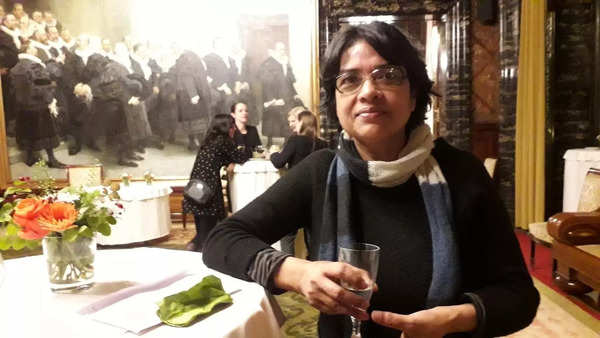
In 2022, she was the only Indian to be selected for the Film Independent & The US Department of state’s Bureau of Education & Cultural Affairs (ECA). Strangely, this recognition has also led to heartburns among some of her co-filmmakers. “Celebrating the success of a female film-maker is still not easy,” she said.

Others in the circuit including seniors and newcomers like Putul Mahmood, Madhabi Tangella, Debalina, Farha Khatun, Indrani Chakraborty, Kasturi Basu, Swapna Dutta, Sangeeta Dutta and Moupiya Mukherjee have had their share of interesting experiences. Contemporary makers feel the non-fiction world is now more gender-neutral than ever before. “I started very young. All I have personally experienced is love, protection and respect,” said Balaka Ghosh, who faced risks while filming a documentary on Bihar’s former chief minister Rabri Devi titled ‘A Mother, Media and Landmines’. Chutni Mahato, the protagonist of Balaka’s ‘Red Fairy n the Holy Ghost’ was once a victim of witch-hunting and now spreads awareness about witchcraft, received the Padma Shri in 2021.
According to Debalina, the director of ‘Gay India Matrimony’, ‘... And The Unclaimed’ and ‘Joy Run’, “As a photojournalist and mainstream filmmaker, I was subjected to gender discrimination. But my peers in the documentary fraternity never made me feel that I’m “inferior”. Sometimes people in the interiors assume that my male camera assistant was heading the unit while I was his assistant. But that was an impact of their years of social conditioning.”

The problem of the male gaze, however, remains. National Award-winning Farha Khatun, who made ‘I am Bonnie’, ‘The Jungle Man... Loiya’, ‘Holy Rights’ and ‘Ripples Under The Skin’, remembers how at a forum, someone had said she had made a good film and her “charm” had “flattered” everyone. “I didn’t understand the connection between making a good film and my charm. In friendly banter, someone patronizingly said: ‘you are an exception among beautiful women who are mostly brainless’. I’m tired of fighting this gaze. The situation will only change when the number of female film-makers increases,” she added.

About the Author
Priyanka DasguptaEnd of Article
FOLLOW US ON SOCIAL MEDIA





Hot Picks
TOP TRENDING
Trending Stories
In City
Entire Website
- Arvind Kejriwal Resignation News Live Updates: 'I don't have lust for power' Arvind Kejriwal to resign from the post of Delhi CM in two days
- Arvind Kejriwal Resign Live Updates: 'I don't have lust for power' Arvind Kejriwal to resign from the post of Delhi CM in two days
- Famous NFL Superstars Who Are Friends Of Taylor Swift
- GK for Students: Why is International Day Of Democracy celebrated on September 15?
- Kolkata rape-murder case: Ex-principal Sandip Ghosh, policeman arrested for destruction of evidence
- Bengaluru woman sparks controversy with comments about Swiggy delivery executive, internet reacts
- 'Nafrat ki dukaan pe ...': PM Modi attacks Congress over 'brutality' in US
- Top 10 sports stars turned power couples: From Agassi-Graf to Conner-Comaneci
- Hamster Kombat Daily Cipher Codes and Combo Cards for September 15, 2024: Unlock up to 1 million coins
- Neeraj Chopra finishes second, misses out on title by 0.01 meters at Brussels Diamond League Final
- 'Don't have lust for power': Kejriwal to resign from Delhi CM post in two days
- Hindus should only engage with Hindus in property deals: BJP MLA Nitesh Rane
- Hum do hamare chaar: Why is south India junking population control?
- It took 'Didi', not CM Mamata to get junior doctors to Kalighat
- 'Its just hot water': Tea for Rs 340 at airport shocks Chidambaram, travelers
- 'Virat Kohli played under my captaincy': Tejashwi Yadav
- Will Germany’s suspension of Schengen entry end the Europe dream?
- Melinda Gates reveals the 'best part' of not working with ex-husband Bill Gates
- Woman visits Delhi's Vasant Kunj flat for job ‘interview’, gets raped
- Chris Gayle: The man who scored first-ever T20I ton

Popular Categories
Hot on the Web
Top Trends
Trending Topics
World Largest HorseEID WishesOnam WishesPriyanka Chopra TattooKottukkaali OTT ReleaseEngineers Day WishesGoat CollectionHair LossSudha MurtyMalayalam ProducersIndia's Best Dancer 4Simi GarewalDilli BabuIndian National ParksLaung BenefitsVikas SethiApple iPhone 16Donald TrumpAadhar Card UpdateWordle Answer
Living and entertainment
Latest News
PM Modi's Sunday roadshow in Jamshedpur cancelled due to heavy rainHow to identify a real friendTCS teams up with Tata Electronics for ‘made-in-India’ chips4 types of tea to improve gut health and ease digestive issuesKashmir will soon get a government, but those blinkers are going to stayNetflix denies filmmaker Soham Shah’s plagiarism allegations over Squid Games, says claim holds 'no merit'Weekly Career Horoscope, September 15 to September 21, 2024: Read your weekly astrological work predictions for all zodiac signsZodiac Signs That Crave a Luxurious LifestyleMegha Akash marries Saai Vishnu, celebrities and fans extend their wishesRajkummar Rao hails Kareena Kapoor Khan's The Buckingham Murders as a 'gripping thriller'Coin Master free spins and coins for 15 September, 2024: Earn 7 million coins using today’s linksOnam 2024: Pearle Maaney, Sajan Surya, Malayalam TV celebs send warm wishesISL: Odisha's home run broken as Chennaiyin script 3-2 comeback win in season opener at KalingaHow to set up partner sharing in Google PhotosMassachusetts state police recruit dies during boxing training exerciseDeepika Padukone gets discharged from the hospital, twins with Ranveer Singh in white as they bring home their newborn baby girl37 year old beats fatty liver condition with unbelievable weight lossWhat You’re Always Doing, According to Your Zodiac Sign
Copyright © 2024 Bennett, Coleman & Co. Ltd. All rights reserved. For reprint rights: Times Syndication Service