
- News
- City News
- kolkata News
- Directors’ Cut: How far is Cannes, Berlin, Venice from Tollywood?
Trending
This story is from December 30, 2017
Directors’ Cut: How far is Cannes, Berlin, Venice from Tollywood?
When Michael Haneke’s ‘Amour’ won the 2012 Palme d’Or at the Cannes Film Festival and Best Foreign Language Film at the 85th Academy Awards, many were overwhelmed by the way the film had delved deep into the psyche of an elderly couple.

Manas Mukul Pal
Back in Tollywood’s backyard, ‘Amour’ also became a favourite for Haneke’s directorial excellence and Jean-Louis Trintignant and Emmanuelle Riva’s stellar performances.

This year, Tollywood has produced films that have done good business. One in particular – ‘Amazon Obhijaan’ – has smashed all box-office records. ‘Bibaho Diaries’, ‘Asamapto’, ‘Bilu Rakkhosh’, ‘Byomkesh O Agnibaan’, ‘Chitrakor’, ‘Raktokorobi’ and ‘Projapoti Biscuit’ were talked about. Few also made critics happy. But none of them left a mark on the international map.
Despite the rich legacy of Ray, Sen and Ghatak, the conspicuous absence of contemporary Bengali films from A-list festivals like Cannes, Venice and Berlin has become a concern. Many feel Tollywood should stop resting on the laurels of having bagged Indian Panorama selections and National Awards and aspire to turn at least few among the countless films made into great cinema that will be talked about 50 years from now. Here’s a look at what cinema lovers would expect from some of Tollywood’s directors who created a buzz this year.
If Aditya Vikram Sengupta’s ‘Asha Jawar Majhe’ had impressed many with his cinematic language, Manas Mukul Pal’s ‘Sohoj Pather Golpo’ too has been lauded by many. Simply speaking, this ‘small’ film had created a big impact on cine-goers. Supratim Bhol and Mrinmoy Mondal’s cinematography, Chandradip Goswami and Indraadip Dasgupta’s haunting music and the endearing performances by Nur Islam and Samiul Alam have impressed many. Unfortunately, a film that was a critics’ favourite, got the cash registers jingling didn’t feature at any A-list film festivals. Some also spotted a Ray hangover.
Said Moinak Biswas, professor of Jadavpur University’s Film Studies department, “Authenticity of the performance, speech and actors is laudable. But this isn’t enough. As a viewer, I am still waiting for the moment when makers from Bengal will explore the language and form of cinema in a way, say, the directors of ‘Tithi’, ‘Chauthi Koot’, ‘An Off-Day Game’ and ‘Court’, are doing.”
The next film that Manas makes will be his litmus test. If he can manage to offer a new cinematic language, Tollywood can feel reassured.
Atanu Ghosh
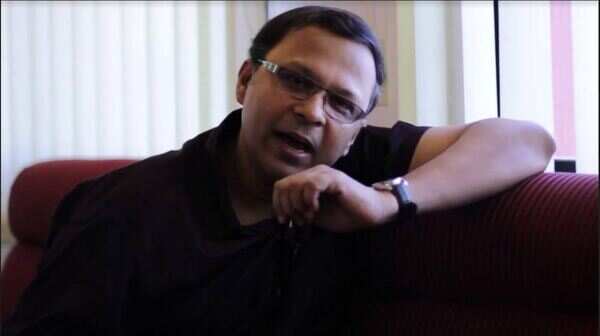
Atanu Ghosh
When Atanu chose the subject of ‘Mayurakshi’, it came as a welcome breeze in an industry. His film isn’t about stylistic adventures but more about offering a palette of complex emotions in a changing world of values, acute loneliness, helplessness and existential crisis. Just when it is about to slip into a precariously morbid space, it bounces back with the famous ‘Gone With The Wind’ line – ‘After all… tomorrow is another day’.
An ageing father grappling with memory loss and a son accepting this reality is a narrative that plays out in many of our urban households. Unlike international cinema that often weaves stories with protagonists suffering from dementia and Alzheimer’s disease, Tollywood has kept it aside as a taboo.
With Soumitra Chatterjee’s haunting performance that is bound to trigger personal resonances for most viewers and Prosenjit coming up with an act at par with his works in ‘Dosar’, ‘Clerk’ and ‘Houseful’, ‘Mayurakshi’ gives hope. Said noted film scholar Samik Bandopadhyay, who is happy that the film operates at various levels, “Ray had once penned a letter to Chidananda Dasgupta saying: ‘After all, a film-maker has to tell a story and the density should be in the story.’ In this film, every character is so richly endowed and delicately etched out.”
What does Atanu need to do to surpass ‘Mayurakshi’? Take more risks like he did for the ending of this film. Resist the temptation of making compromises for the sake of box-office numbers in Bengal. Bandopadhyay would like Atanu’s screenplay to make departures from the confines of the home and have more references to the larger world outside. “Perhaps, he can attempt films that talk about different kinds of displacements,” he suggested.
Kaushik Ganguly

It’s difficult to choose a favourite between Kaushik Ganguly the director and Kaushik Ganguly the actor in ‘Bisorjon’. And then, there is Jaya Ahsaan – who is currently Bangladesh’s best gift to Indian cinema. ‘Bisorjon’ was the dark horse that galloped straight to the Indian Panorama.
But those who want Kaushik to surpass his ‘Bisorjon’ act are pinning their hopes on his films next year. Will he make films that bridge the masses and the classes? Or he will make movies that leave a deeper impact than ‘Bisorjon’ and go beyond the premise of National Awards and Indian Panorama nominations?
His well-wishers say the attempt for the latter has begun. Those in the know are already speaking in superlative terms about the kind of performance he has got Riddhi Sen to give in ‘Nagerkirtan’.
According to film scholar Sanjoy Mukhopadhyay, “Kaushik is a good story-teller. But in the ultimate analysis, he follows the path set by Tapan Sinha. I would want his cinema to have other elements of mise en scène. His films suffer from flat story-telling. The linear narrative of his films can be bolstered by changing compositional values and alternative framings. I’d also want him to make films with greater pictorial emphasis.”
Nandita Roy and Shiboprosad Mukherjee
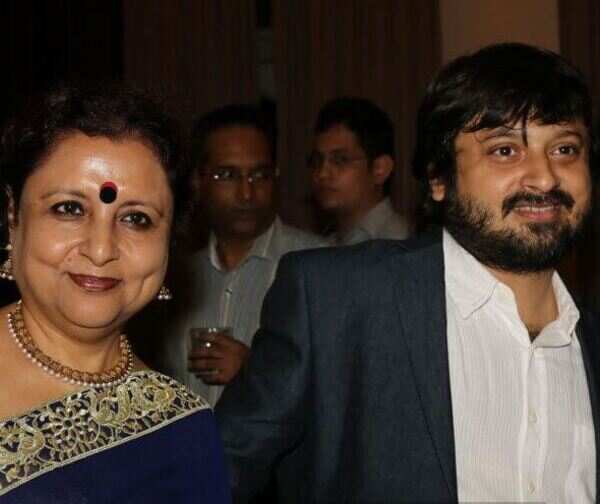
Nandita Roy and Shiboprosad Mukherjee
Nothing talks like box-office success. This director duo has had a big contribution in getting viewers of Bengali cinema back to the theatres. Their latest – ‘Posto’ – has continued that tradition. When numbers speak, there are few in Tollywood who can beat them. This is the same director-duo who had the sensitivity to offer Bengali cinema a gem of a performance from Soumitra Chatterjee in a tiny role in ‘Alik Sukh’. Why would they make films that give cynics the scope to criticise them for their regressive plots or level plagiarism charges? The asking rate for the director-duo who started off with ‘Ichche’ is higher. For a good actor like Shiboprosad (check him out in ‘Ekti Nadir Naam’), it’s only fair to expect him to generate more than just business for the film industry. “Their films remind me of Aesop’s Fables. They are always giving sermons about what is to be done and to be avoided. Art should have a kind of an autonomy of its own. When cinema becomes a message-carrier, it might get box-office returns. But in the long run, this cinema is stale and lifeless. One can’t make an artistic journey to communicate morals. They should refrain from tutoring life,” Sanjoy Mukhopadhyay said.
One experiment is all that is going to take for this director-duo to silence their critics.
Srijit Mukherji

Srijit Mukherji
After ‘Begum Jaan’, Srijit held Kakababu’s hand to return to Tollywood with his ‘Yeti Obhijaan’. Those into number-crunching will admit that the film did good business. The courage of a producer like SVF to mount a Bengali film at such dizzying heights was commendable. When Soumik Haldar’s camera followed Prosenjit against the glaciers, it spoke volumes not just of Soumik’s own technical brilliance but of the way movies are being shot in Tollywood now.
Houseful boards are bound to make Srijit a favourite with his producers. But cinema isn’t only about commerce. For a director who came as a breath of fresh air in Tollywood with ‘Autograph’, who like a Pied Piper got everyone humming to Anupam Roy’s ‘Aamake Amar Moto Thaakte Dao’, the expectations are not just about numbers.
According to director Manas Mukul Pal of ‘Sahoj Pather Golpo’, Srijit’s recent films are different from what the director used to make earlier. “I was very motivated by some of Srijit-da’s original works, including ‘Hemlock Society’, ‘Nirbaak’, ‘Jatiswar’ and ‘Baishe Srabon’. However, his recent films are very different from these works. I miss the class of those earlier films. I feel, he is trying to make cinema that attracts the masses. I saw that happen with ‘Zulfiqar’. In 2018, I would want him to make cinema that also appeals to the classes.”
Another movie-buff Sugato Guha added, “Srijit chooses brilliant concepts, but their execution in a lot of cases leaves something to be desired. In some of his biggest movies, the lack of attention to detail is mystifying. He may also like to take a fresh look at the background score of his films, an important part of the overall experience.”
Kamaleswar Mukherjee
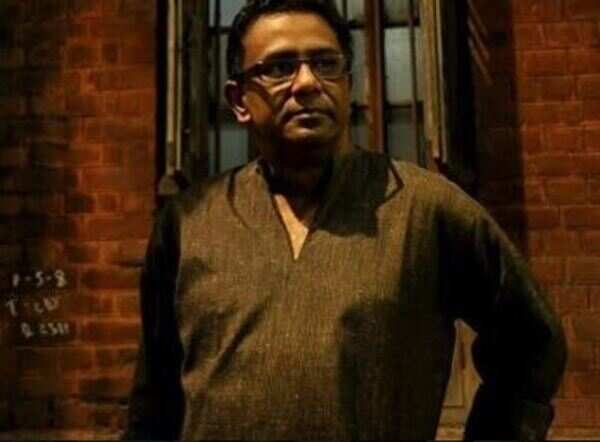
When Kamaleswar soar with ‘Cockpit’ this year, his directorial skill came as a surprise to many. Weaving so many narratives within the framework of a thriller wasn’t easy. Dev-Rukmini delivered when they promised adrenalin-rush to the audience. But the film didn’t promise to airdrop Team ‘Cockpit’ to Cannes and Berlin.
Just before Christmas, Kamaleswar took Shankar to the Amazon basins. The sheer courage of SVF to move mountains and take a unit of a Bengali film to Amazon is praiseworthy. Even single screens are minting money and Tollywood couldn’t have been happier with any other Christmas gift. But can an ‘Amazon Obhijaan’ truly transport Tollywood to any festival of repute? It will be difficult to find an optimist who will have faith in the strength of this screenplay and reply in the affirmative. “If someone ventures to make an adventure, he should be prepared to have the technical competence required for the game. Kamaleswar’s script suffers from the imaginative risks required to undertake such journeys,” Sanjoy Mukhopadhyay said.
Anik Dutta
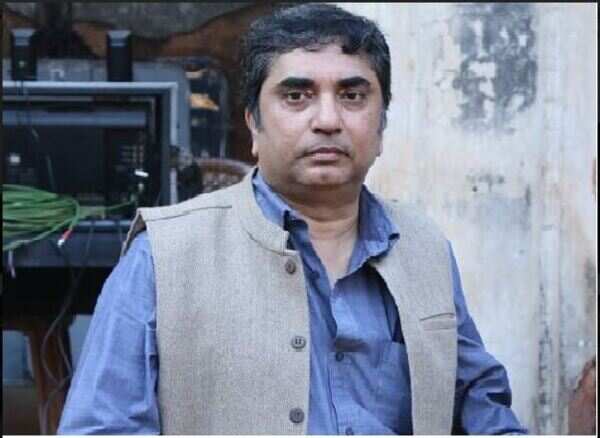
This modern-day interpretation of Meghbodh Kavya in a thriller format warmed up at the box-office. ‘Meghnad Badh Rahasya’ made it to the Indian Panorama section in the mainstream section. Pratim D Gupta, whose ‘Macher Jhol’ was also in the Indian Panorama, noticed an “air of pseudo-intellectuality” throughout the film. “The kind of tribute and references in this film were not organic and seemed more of name-dropping. It was not expected for someone who has made a modern-day classic like ‘Bhooter Bhobisyot’,” Pratim said.
Yet, he acknowledges the director’s unique concepts. But the problem is that under the current eco-system in which Tollywood operates, every director is too box-office centric. “Sadly, we can’t become Buddhadeb Dasgupta who doesn’t give a damn about the local box-office figures. I don’t have that guts yet. Anik Dutta’s one-liners and comic jives in the film are entirely targeted to the gallery and not a festival crowd at all. But his concepts a re unique. That might work at the festival circuit,” he added.
Pratim D Gupta

Pratim D Gupta
Bengali cine-goers loved the taste of his ‘Macher Jhol’ and though the film didn’t get a Nandan release, it still managed to keep the cash registers jingling. National Award winner Amartya Bhattacharyya, whose film was selected for the Indian Panorama segment of the International Film Festival of India (IFFI), has watched ‘Macher Jhol’ and is optimistic. “It had an interesting plot, but there was too much of emotion-drawing intent. The film was done with certain calculations. A piece of art should do away with all calculated approach and flow spontaneously. I missed the spontaneity in ‘Macher Jhol’. It would have been better to avoid the conversational overtones which are often too melodramatic. I would love to see more characterizations like Paoli Dam’s role in ‘Macher Jhol’ or Anjan Dutta’s role in ‘Saheb-Bibi-Golam’ where there are finer elements of subtlety coupled with the narrative,” Amartya said.
Arindam Sil
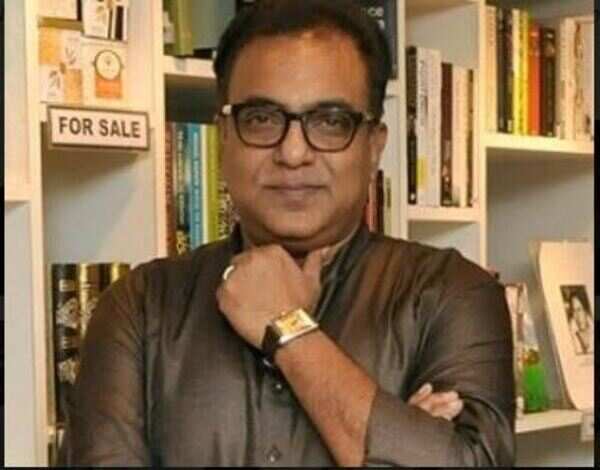
Arindam made two films this year. ‘Durga Sohay’ and ‘Dhananjoy’. Both films were as different as chalk and cheese. Smart making, brave choices, good casting and getting actors to leave behind some stellar performances have helped Arindam create a mark for himself as a director. But ‘Dhananjoy’, which is supposedly fictional while retaining real names as well as a confusing disclaimer, has left behind many unanswered questions. According to writer-lyricist Sugato Guha, who has worked with Arindam since ‘Aborto’, “Cinema is a powerful medium and great social responsibility. It has impact that resonates beyond the turnstiles. Hopefully, Arindam had that in mind while making ‘Dhananjoy’.”
To make a real international mark, Sugato feels that Arindam should move beyond “his comfort genre” and “commercial intent”. “He needs to choose subjects that highlight the human document. There are enough stories in our literature for that. With a well thought out screenplay, solid cast and Arindam’s superb instincts as a director, I don’t see why he can’t reach far greater heights,” Sugato said.

About the Author
Priyanka DasguptaEnd of Article
FOLLOW US ON SOCIAL MEDIA










Photostories
Hot Picks
TOP TRENDING
Popular Categories
Hot on the Web
Top Trends
World First Top 10 TrillionairesVinesh Phogat Election ResultTravis KelceElection Results 2024Haryana Election ResultJason KelceJammu Kashmir Election Result 2024Israel Hezbollah WarHardik SinghAakash ChopraAssembly ElectionJammu Kashmir Election Winners ListGurgaon Election ResultHaryana Election Winners ListLive Election ResultFaridabad Election ResultLive Cricket Score
Trending Topics
Tulsi KumarBigg Boss Tamil 8 Contestants ListAjay DevgnNavratri Colours 2024Sanjay Leela BhansaliDurga Puja 2024Bigg Boss 18 House PhotoDevara CollectionBigg Boss 18Deepika PadukoneShailesh LodhaDevaraGovinda NewsNational Film Awards 2024Swatantrya Veer SavarkarColdplay India tour 2025Watch NFL Live StreamDress To ImpressCall Of Duty Black Ops 6Wordle Answer
Living and entertainment
Latest News
Corporate Eldercare Support: A Win-Win for Employees & EmployerAfter crackdown, Hyderabad’s infamous ‘bride bazaar’ moves onlineEthereum Whales on buying spree - Plus Wallet eyes to be the top wallet for EthereumFoxconn building world's largest chip factory for NvidiaAdnaan Shaikh's father Abdul Mabood Shaikh makes a shocking revelation amid the ongoing feud with his sister Iffat; says 'My daughter's in-laws are forcing her to do this'This is the stock trading app linked to Rs 500 crore investment fraud; YouTubers Elvish Yadav, Bharti Singh among 5 summonedLibra, Daily Horoscope Today, October 09, 2024: Today is a test of your resilienceWrestler-turned-politician Vinesh Phogat's educational qualifications and net worthHarmanpreet Kaur fit for Sri Lanka match, conditions have been different from expectations: Mandhana2024 Haryana assembly election result: 5 reasons why BJP's victory is significantKathua (SC) Assembly Election Result 2024: BJP's Dr Bharat Bhushan wins by 12,177 votesHappy Durga Puja 2024: Best Messages, Quotes, Wishes, and Images to Share on Durga PujaTaylor Swift surpasses Rihanna in Music Rich list: A look at her impressive net worthShweta Bachchan Nanda reveals Amitabh Bachchan and Jaya Bachchan's great skin is due to mustard oil: 'They never had cosmetic treatments or procedures done'Alexander Zverev scrapes through, set to face David Goffin at Shanghai Masters pre-quartersRoh Yoon Seo shines as a supportive sister in 'Hear Me: Our Summer'US judge allows FTC’s antitrust suit against Amazon, but there's this 'positive' for the companyBest TVs Of 2024 In India: Top Picks For Every Budget
Copyright © 2024 Bennett, Coleman & Co. Ltd. All rights reserved. For reprint rights: Times Syndication Service