
- News
- City News
- kolkata News
- Demonetisation brings windfall for unemployed youths in Kolkata
Trending
This story is from November 21, 2016
Demonetisation brings windfall for unemployed youths in Kolkata
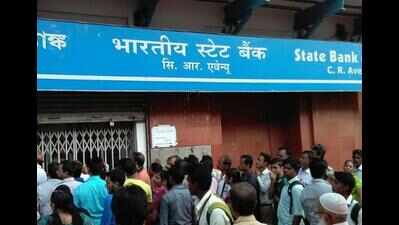
Several people who are unable to --- or do not want to --- visit the banks and post offices to exchange their Rs 500 and Rs 1000 notes are seeking help of the enterprising members of this workforce that has propped up after the high denomination currency notes were withdrawn from the system.

Their services, which of course come at a price, include standing in long serpentine queues outside the banks to exchange your demonetised currency notes, deposit them into your bank account and also share intelligence inputs on which branch has the smallest queue. TOI spotted a few such “do-gooders” in a queue outside a bank on Ganesh Chandra Avenue on Friday afternoon. How did we spot them? Among all the dejected faces and drooping shoulders, they had a broad smile on their face and spring in their feet.
“The business is good. Several assignments are coming our way. There is hardly any time to waste. It is a different bank every day,” said a 20-something deepak Sharma while urging people ahead of him in the queue to keep moving. The unemployed youth searches for jobs in the morning and gives private tuition in the evening. “I have lot of time. I am using it fruitfully.” Since November 10, he has earned up to s 16,000.
One of his other colleague was stationed at the fag end of the queue at another bank. “I may miss the opportunity today. But I will get some compensation for coming and waiting here. Otherwise I will refuse the job tomorrow,” he said. Their services come with a price. The compensation is a percentage of the total amount exchanged influenced by other factors like the length of the queue and the number of trips to the bank to exchange notes.
“We are charging flat rate of 10 per cent of the total exchangeable amount. But it may vary if the queue is very big and the businessman wants us to make multiple trips,” said another person who has even hired other youths in the locality to do this job. In the business belt of Burrabazar, Posta and Jorabagan, demonetisation has put a brakes on the business and the worse affected are the daily wage labourers, van pullers, goods vehicles drivers and porters. They have also been drawn into the workforce of “money exchangers”.
Several businessmen in the trading hub cancelled the leaves of all their employees. When the shocked workers approached their master, they were told that a special assignment waited them. “Bhaiya (the owner) said that all of us will have to queue up outside the banks and post offices to exchange the old notes for new ones. We were absolved from all our duties at the shop for the next few days,” said a young salesman at the sari shop. Clusters of such “do-gooders” have cropped up in several neighbourhoods in the city. You may even place “bulk orders” with them. Wondering what that is? Well, if you have a big stash of demonetised notes, you can get hire the services of these “do-gooders” for a longer period.
“We have a group of around 12 boys. We are providing a range of services from standing in the queue only once to getting into a contract for multiple exchanges. Our boys will go and queue up outside several banks and post offices and exchange the notes for the clients. Our remuneration depends on the amount that needs to be exchanged and the situation of the queues and the availability of cash in the banks,” said Mohammed Irshad in Mominpore in Port area.
But banks are struggling to cope with them so they introduced the indelible ink. “The same person was coming every day to exchange notes and sometimes even twice a day. We had to oblige because there was no rule to restrict them. That was till we started marking them with indelible ink,” said a teller in a private bank on Ganesh Chandra Avenue.
But this has only provided an impetus to their business. The rates have gone up. But how are they circumventing the indelible ink rule? “Simple. We have introduced more people into the system. There is no dearth of people to do the work specially when other businesses have come to a grinding halt,” said a head hunter.
One man’s poison is another man’s meat. While the entire country and the government are praying that the “cash crises” gets over soon and the queues disappear from outside the bank, the foot soldiers are praying that the agony prolongs. “The entire crisis is generating good business for us. If this stops we will have to think of other means to earn money. It is better if this continues for some more weeks,” said Adarsh, a youth in Posta who otherwise drives a small goods vehicle.
End of Article
FOLLOW US ON SOCIAL MEDIA









Photostories

Hot Picks
TOP TRENDING
Popular Categories
Hot on the Web
Top Trends
IND vs AUS Live ScoreBaba Siddique NewsVirat KohliRussell WilsonsSpacex StarshipRahul DravidWho was Baba SiddiqueBabar AzamNTA SWAYAM July RegistrationLawrence BishnoiAmazon LayoffsTaylor SwiftManagement Colleges of IndiaTop Medical Colleges of IndiaTop Engineering Colleges of IndiaTop Pharmacy Colleges of IndiaLive Cricket Score
Trending Topics
Diwali WishesDussehra 2024 QuotesDussehra WishesVettaiyan OTT ReleaseVettaiyan CollectionVettaiyan ReviewNatasa StankovicDevara CollectionBigg Boss 18Deepika PadukoneShraddha KapoorRatan Tata Passed AwayJigra Movie ReviewVettaiyan Movie ReviewSwatantrya Veer SavarkarDussehra 2024Star Health Hacker DemandedViral MemesUltimate Football Codes October 2024Wordle Answer
Living and entertainment
Latest News
How each zodiac sign handles emotional distance in relationshipsBook review: 'The Scientist Entrepreneur' by Dr Kalpana Sankar is a nuclear scientist’s inspiring journey of women’s empowermentDid BTS' V get promoted to corporal in the South Korean military? recent appearance at an orchestra event has fans speculatingParas Mhambrey joins Mumbai Indians as bowling coachSalman Khan’s security beefed up after Baba Siddiqui’s murder; ‘Sultan’ star looked uncomfortable after visiting the late politician’s family at 3 amBaba Siddique may have died prior to hospitalisation, says doctorsRanji Trophy: Thriller in the making as Krunal Pandya fifty helps Baroda lead by 226 runs vs MumbaiReading the Stars and Your Hands: How Astrology and Palmistry Complement Each OtherSpaceX's fifth Starship test flight achieves historic booster catchKrushna Abhishek shares a heartwarming post for mama Govinda; says 'jab body mein adha blood supremely talented actor Govinda ka ho...'News brief: 'Who is listening? Modi?': Kapil Sibal takes a dig at RSS chief Mohan BhagwatKenya's Ruth Chepngetich breaks women's world record at Chicago MarathonZodiac signs likely to have soul connectionsAI’S Oppenheimer'Points towards failure of CM': Sanjay Raut slams Maharashtra govt over Baba Siddiqui's killingMahela Jayawardene returns as Mumbai Indians head coachMidnight queues, long waits, bad advice: It's not easy getting therapy in IndiaAshton Kutcher and Mila Kunis consider leaving Hollywood amid Sean 'Diddy’ Combs' arrest fallout: Report
Copyright © 2024 Bennett, Coleman & Co. Ltd. All rights reserved. For reprint rights: Times Syndication Service