
- News
- City News
- kolkata News
- Death stream: Is online streaming killing single screen theatres, multiplexes?
Trending
This story is from September 1, 2018
Death stream: Is online streaming killing single screen theatres, multiplexes?
High-speed internet and easy access to content on smartphones has dealt a killer blow to not only single-screen theatres, but even multiplexes. The rules of the entertainment game have c completely changed, writes Priyanka Dasgupta

High-speed internet and easy access to content on smartphones has dealt a killer blow to not only single-screen theatres, but even multiplexes. The rules of the entertainment game have c completely changed, writes Priyanka Dasgupta

PIRATES OF BENGAL
The first video hall in eastern India to be converted into a theatre has plastic chairs, air-conditioning, clean washrooms and even sells popcorn, which villagers call “bhaja khoi”. There are no box facilities. But it’s a far cry from the theatre that once had wooden chairs, with rugs on the floor to accommodate more viewers.
The problem is that some viewers try to record the films on their smartphones. “We have tried numerous ways to keep such malpractices at bay. But, practically, there’s hardly any foolproof solution, since we cannot ask patrons to submit their phones at the security desk,” said an SVF Cinemas spokesperson.

These pirates might not be the ones who have turned Radhika Apte into an overnight web series star or Netflix, Amazon Prime Video, Hoichoi, Addatimes, Hotstar and Zee5 subscribers, but the thrill of possessing movie clips of favourite stars is not lost on them. Thanks to uninterrupted network connectivity, availability of smartphone at dirt-cheap rates, access to movies on-the-go, streaming content-on-demand trends have spiked up. Getting those subscribers back to theatres might be a challenge in the near future.
SWANSONG OF SINGLE SCREENS
Subrata Dey, the owner of Talkie Show House on 13A Shibdas Bhaduri Street, understands this well enough. The oldest existing single screen theatre of eastern India — initially called Show House — was established by his grandfather Nilmani Dey in 1930 with the silent movie ‘Across to Singapore’. In 1935, it was christened Talkie Show House after the advent of talkies. On August 29 this year, Jeet’s ‘Sultan’ was being screened at this 634-seater theatre. The cash registers revealed that noon, matinee and evening shows had 13, 23 and 13 viewers respectively. The night show was cancelled. Dey says he hasn’t been able to pay salaries for two months. “Even the crowd that earlier came for Hindi releases at my theatre isn’t enthusiastic. The step-motherly attitude of distributors towards single-screen theatre owners, and our inability to keep up with the times have hit us hard. Smartphones did further damage,” Dey says.
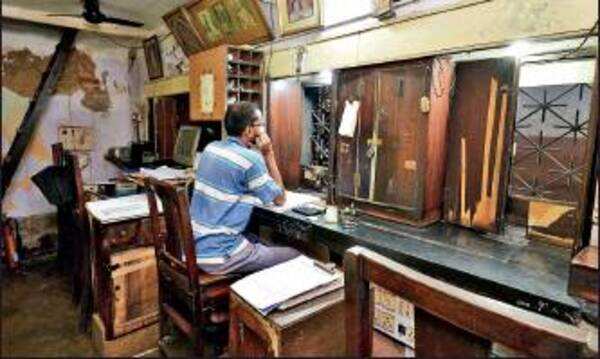
Movie buff Tumpa Mukherjee, assistant professor of sociology at Women’s Christian College, points out that the concept of 800 people watching one film together has become obsolete. “The lower middle-class is now empowered with smartphones and have moved away from theatres. Social network connects us and yet we are socially isolated. This generation accepts movie-watching as a personal experience, not a social event,” Mukherjee says.
Suranjan Paul, the owner of the 864-seater Minar, says smartphone movie-viewing have drilled the last nail on the coffin of theatres. His cinema was established in 1948 and shut in 2016. After an eight-month hiatus, it reopened in May last year. On August 29, the noon and evening show of ‘Drishtantor’ had 6 and 15 viewers respectively. The matinee and night shows of ‘Genius’ had 29 and 5 viewers. “Even multiplexes are feeling the heat. A hawker in front of my theatre now has a big-screen smartphone and a pair of earphones. Seventy rupees, the price of a ticket, gets him a month-long entertainment package on his mobile. Only superb movies and 3D experiences can attract cine-goers,” Paul says.
It’s the same sad story at Bhowanipore’s Indira theatre. Established in 1947, the 824-seater often gets only 10-12 viewers for a show. According to owner Rajendra Bagadia, “Our sales surge only on weekends. Besides piracy, films are being screened on television within four/five weeks of their theatrical release.”
ENTERTAINMENT ON THE PALM
According to filmmaker Q, who has embraced digital release for his films, “The idea of a collective cinema-viewing experience has definitely been hampered by the emergence of the phone culture. People are now totally and completely on their own.”
Amitabh Chakraborty’s 2014 film ‘Cosmic Sex’ still makes money from online streaming platforms. “But I didn’t make any money from theatrical release,” the director says.
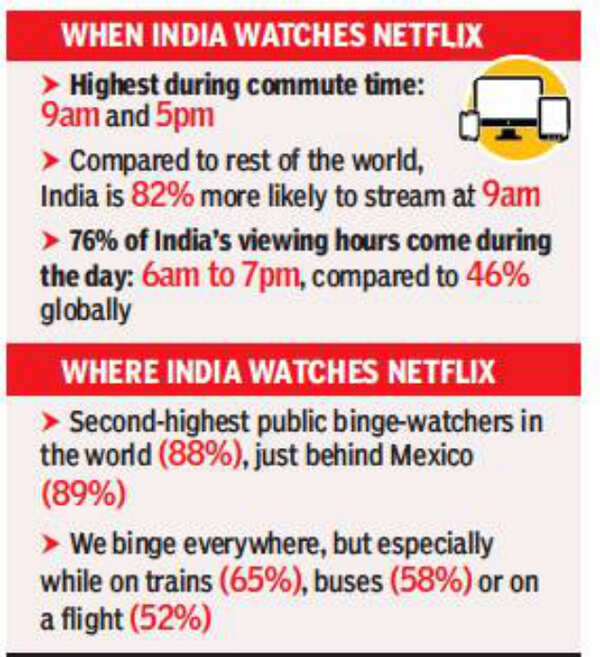
According to data shared by Amazon Prime Video that has been sourced from the Ernst & Young report on re-imagining India’s Monitoring and Evaluation sector, online viewing increased by 64% over 2016, with 250 million viewers consuming online videos in 2017. Around 40% of total mobile traffic came from consumption of video services in 2015, and this is expected to reach 72% by 2020.
Indians are amongst the top mobile downloaders in the world for Netflix content.
Actor Prosenjit Chatterjee insists that producers have now become content-providers. “My son, who stays in a hostel, has watched 80% of the movies I mention to him. I need to accept this change in viewing pattern,” he says. Some films with lukewarm box-office response have got good response digitally. Chatterjee’s ‘Khwato’, which didn’t do well at the box office, got one of the highest clicks on YouTube, Hoichoi and the Bengali slate of Amazon.
On being asked whether this was a threat to multiplexes, he says: “It is a threat to everything, including the television industry.”
However, multiplex authorities aren’t yet ready to acknowledge the impact of over-thetop (OTT) content that delivers audio, video and other multimedia content over the internet. “The target audience for an OTT platform and us are very different. Watching a film in a cinema is like a social gathering in India. It is a family outing and that will never go out of fashion. A hard-core movie fanatic will always want the large-screen experience,” says Rajeev Patni, vice-president, operations, INOX Leisure Ltd. But doesn’t the youth hooked to OTT overlap with the multiplex clientele? “Youth are drawn to good content, on any medium. We haven’t observed any dip in footfall because of the advent of OTT platforms,” Patni says.
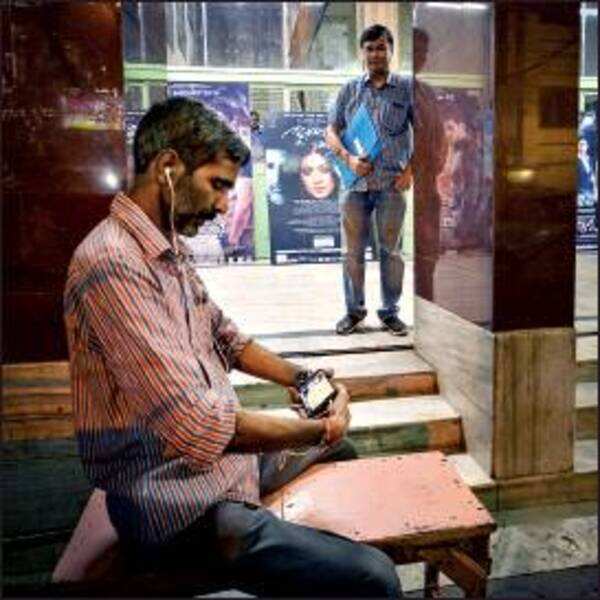
Rajiv Mehra, owner of the year-and-a-half-old addatimes, begs to differ. With 300 daily movie shows at multiplexes across Kolkata, audiences have reached saturation point, he feels. “Multiplexes might not admit that fact, but there has been a dip in viewership. Unless it is a larger than life movie, ticket-booking patterns reveal that multiplexes don’t have more than 25% occupancy on weekdays. There are hardly any 100% occupancy figures,” Mehra says.
GROWING DEMAND
With 11 months of their launch in August, Hoichoi has already met the target set till December 2018. “People don’t think about cost of data any more today. Spending Rs 399 a year to become a Hoichoi subscriber is the price a person pays for one movie ticket and a popcorn. There is a mental block for some who think transacting on the internet is more expensive,” says Vishnu Mohta, the co-founder of Hoichoi and executive director of SVF. On a daily basis, a subscriber spends 45 minutes on Hoichoi. “We hope to break even within the next 3-4 years,” Mohta says.
Vijay Subramaniam, director and head, content, Amazon Prime Video, India, says the customers’ ability to place emphasis on “convenience” has left an impact. “The ability of audiences to become their own programmers and wanting to decide on when, what, where and how to watch is here to stay. It is important to embrace this change.” Amazon Prime’s multi-genre bouquet — available for a yearly membership of Rs 999 — includes films, international shows and series that customers can watch at their convenience without resorting to illegal downloads. For the regional slate, Amazon wants to create a “catalogue of latest movies and titles from the past that have continued to resonate”.
CONTENT IS KING
However, filmmakers need not press the panic button as long as the content is great. Alokananda Dasgupta, music composer for highly acclaimed Netflix Original ‘Sacred Games’, says: “Digital or web series is like great cinema, but of the kind that you can indulge in for multiple hours without interruption or commercials. There will be takers if brilliant content is available anytime anywhere without censorship and commercial breaks. But if Netflix and Amazon start offering bad content, it will lose its audience as quickly as it gained them.”
“The thrill of out-of-home experience will always be there,” says Mohta, adding that fooddelivery apps haven’t impacted the restaurant business. “Live-streaming is never a threat for Navina, but movie-experience and going-out-ofhome experience will always have takers. If we give a minimum level of comfort and programming they want to see, cinemas will remain a better option for price-conscious viewers,” says Navin Choukhani, owner of Navina cinemas.
Out of frustration at not getting good show timings in theatres or censorship issues, some might want to make films for digital distribution platform. But those like ‘Pupa’ director Indrasis Acharya will still want to make movies for the big screen. There is already a buzz for the theatrical Durga Puja releases of Kaushik Ganguly’s ‘Kishore Kumar Junior’, Srijit Mukherji’s ‘Ek Je Chhilo Raja’, Arindam Sil’s ‘Byomkesh Gowtro’, Dev’s ‘Hoichoi Unlimited’ and Ankush’s ‘Villain’. SVF Cinemas Nowapara is eyeing big numbers for the pre-Puja release of Shakib Khan’s ‘Nawab’.
In some cases, the screen size will make a difference. “I will never watch something like, say, ‘War of the Worlds’ on my laptop if I have a chance to watch it in a theatre,” Dasgupta adds.

THE WAY FORWARD
The pie has just grown bigger, says SVF spokesperson. Subramaniam points out that spectacle and great stories are still celebrated in cinema. After online streaming raised the “creative bar”, Subramaniam feels the response to the expectations that customers have out of the creative output is going to change. “This is not just for cinema, but across the board and for great cinematic level content that we produce as well,” says Subramaniam, insisting that creators are re-examining what makes for great theatrical experience. “Producers will come up with really interesting stories that reinvents the theatrical experience.”
That, according to Chatterjee, is healthy for all. “I too am ready to experiment in this new medium. Opportunities of actors and technicians are increasing. New talents will come up. However, nobody is sure about the economics and how much is worth spending to create and commission content on this new media.” He is ready to wait for a few more years for online streaming platforms to calibrate their business model.

About the Author
Priyanka DasguptaEnd of Article
FOLLOW US ON SOCIAL MEDIA










Hot Picks
TOP TRENDING
Trending Stories
In City
Entire Website
- Early-century Lord Ganesha, Buddha statues: Images of stolen antiquities US handed over to India during PM Modi's visit
- 'My daughter would have been dead by now': When a ‘monkey attack’ in UP foiled man’s bid to rape 6-year old girl
- 'Will kill them and ...': Israel, Hezbollah vow to intensify cross-border attacks
- Ex-Google employee looking for job in Canada: “I've been reducing my India experience on my resume because …”
- How India prices of iPhone 16 series compare with that in the US, Canada, Singapore and Dubai
- 'Detonators' put on way of Army train set off alarm
- Garena Free Fire MAX redeem codes for September 21, 2024: Win free pets and vouchers today
- Intel's biggest-ever restructuring: Read the complete memo sent by CEO Pat Gelsinger to employees
- US Space Force to help set up semiconductor plant in India
- 'Apna jisko, jitne run banane, dekh lo': Rishabh Pant reveals Rohit Sharma's message before declaration
- Eye on aggressive China, US 'welcomes' progress on $3.9bn predator drones deal
- PM Modi expresses 'deep concern' on humanitarian situation in Gaza
- Delhi CM’s statement highlights loyalty dilemma in Indian parties
- 'Sab fake hai .. ': Shubman Gill trolls Siraj
- When a ‘monkey attack’ in UP foiled man’s bid to rape 6-year old girl
- 17th century Ganesha statue & more: Pics of antiquities US handed over to India
- Rahul has reopened the wounds of 1984 instead of healing them
- iPhone 16 series record sales on Day 1 in India, could help Apple to set milestone
- SP MP’s son booked for kidnapping, robbing, threatening to kill realtor
- 'All good here': Last messages from Titan Submersible revealed before tragic end

Popular Categories
Hot on the Web
Top Trends
WWE KaneShubman GillAll Time Goal Scorers in UEFA CampionsIsrael Hezbollah WarPakistan Bomb BlastAnura Kumara DissanayakeJey USOPM Modi with Tech CEORohit SharmaShubhman GillAnura Kumara DissanayakeCBSE NotificationStolen Antiquities USRandy Orton WifeTirupati Prasadam ControversyPM Modi US VisitLive Cricket Score
Trending Topics
Aishwarya RaiZodiac SignsBigg Boss 18 PromoThe Great Indian Kapil ShowChia SeedS ShankarOptical IllusionSharp Eye TestVaazha OTT ReviewKozhipannai Chelladurai ReviewCheetahsKangana RanautAditi Rao HydariHealthy RaitasNatural WondersColdplay India tour 2025Best Selling Earbuds Under 1000Apple iPhone 16 ProVirat KohliWordle Answer
Living and entertainment
Latest News
What is the 30-30-30 weight loss method? How to do it for maximum benefits?Why Rahul Gandhi is off the mark when it comes to Sikhs'I will come to any of your houses and start living with you': Arvind Kejriwal tells Delhi people at Janta Ki AdalatGemini, Daily Horoscope Today, September 23, 2024: Face financial strain today with expenses outpacing incomeAmerica-India is the AI power of the new world: PM ModiAishwarya Rai set to take the Paris Fashion Week by storm; reaches the venue with daughter Aaradhya Bachchan - WATCH videosPisces, Daily Horoscope Today, September 23, 2024: Day marked by restlessness and a need for changeNolan Gould would make personalized ornaments for Modern Family castmates and crew each ChristmasBest i5 12th Generation Laptops: Best Picks For Performance & ValueJey Uso Takes a Shot at Goldberg and Bron Breakker Over Their Recent PictureImran Khan should get to next level: Khalid Jamil'Sab fake hai .. ': Shubman Gill trolls Mohammed Siraj during Chennai TestMom seeks votes for son in Uchana, resumed Hari Chunri Chaupal eventWhen Deepika Padukone and Ranveer Singh took on the viral 'silhouette challenge'; shared a fun video - WATCHFrom Bibles to Sneakers: The unusual Trump merch you can buy nowDating scam: How a woman lost Rs 3.37 lakh in 'friendship fraud' on Tinder and was saved from further lossiPhone 16 series hits record sales on Day 1 in India, could help Apple to set new milestonePM Modi expresses 'deep concern' on humanitarian situation in Gaza
Copyright © 2024 Bennett, Coleman & Co. Ltd. All rights reserved. For reprint rights: Times Syndication Service