
- News
- City News
- kolkata News
- Birds of paradise
Trending
This story is from August 2, 2023
Birds of paradise
At the Great Backyard Bird Count 2023 held between February 17 and 20 across 35 states and Union Territories in India earlier this year, West Bengal recorded 489 bird species, the highest in the country.
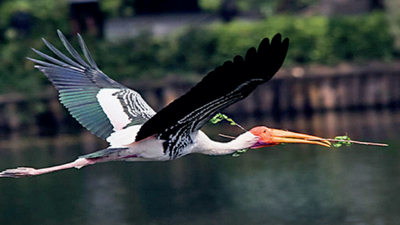
<p>Painted stork<br></p>
During the even t, over 100 bird species were spotted in Kolkata.

While Bengal does host and attract a variety of birds due to its geographically diverse habitat that ranges from the Himalayas in the north to the Gangetic plains in the middle and the Bay of Bengal in the south, the reason behind the state’s and the city’s impressive tally, say ornithologists, is the large number of ears and eyes on the ground. “Had this count happened a decade-and-a-half ago, the figure would have been a lot lower, not because there were less birds but because there were fewer birders and bird-spotting was not as organised as it is now. I am certain there are more bird species in Assam but they don’t get recorded because birding activity is not as vibrant the re as it is here,” said ornithologist Sumit Sen. Birdwatching in Kolkata began in 1978 when Prakriti Sansad was formed by pioneers like Kushal Mukherjee and Kalyan Dey. While they h ad a band of followers, the limitations in bird watching aids and literature meant that it did not gain mass acceptance till over two decades later when access to good binoculars followed by digital cameras and finally the advent of social media led to a boom in bird photography.
“Suddenly, connectivity, visibility, sharing of information and appreciation of photographs zoomed. It acted as a bait to hook more people into the birding movement. The checklist is becoming larger at a rapid pace. On an average winter day, more than 100 species of birds can be spotted in Kolkata,” said Bird Watchers’ Society secretary Sujan Chatterjee.
It was around 2004 that communications professional Sudipto
Roy got interested. “I saw a website by Sumit Sen on Kolkata’s birds and was astounded by the sheer variety of birds that were there in the city that I had no knowledge of. The interest that was sparked around two decades ago continues to fuel me,” said Roy. After the ban on photography at Rabindra Sarobar was lifted in 2011, infotech professional Sudip Ghosh and physician Sumit Sengupta took to birding , somewhat out of curiosity but primarily to check out digital cameras with zoom lenses that they had purchased. “We had bumped into each other. Sengupta was walking around Sarobar with a fancy camera and I was also pottering around as I live in an apartment on Southern Avenue. After a brief introduction, we decided to go around looking for birds. We spotted quite a few. Since then, we haven’t stopped looking around for more,” recounted Ghosh.
The duo is credited with turning Rabindra Sarobar into a birding hot spot. They have inspired several 100 youths to take up birding. After an initial clash of words with the management of Lions’ Safari Park at Sarobar in 2013, the two managed to convince them to also join the movement and contribute by just leaving a section unattended. Now, that thicket with wild overgrowth is perhaps the city’s most prized bird habitat. “Over the years, there have been over 130 species of birds at Rabindra Sarobar. Other than water birds like painted stork, cormorants and black crowned night heron, over 100 species can be spotted through the year at Safari Park alone,” said Sengupta.
The respiratory medicine consultant said bird-watching was not just a peaceful, non-competitive sport that allowed one to 9 meet and bond with people from diverse fields, it also had a great therapeutic value as it led to an improvement of physical and mental health. “Birding is a great stress buster a s it is an activity that takes place in the lap of nature,” he pointed out.
Over the years, increase in birding activities has also led to conservation of some urban bird habitats. “Whenever we go out in the field we not only click pictures but also keep an eye on whether the birds’ habitats are safe and secure. The moment we find any discrepancy, we report it to the authorities concerned. For example, the issue of stubble-burning leading to habitat destruction in Rajarhat has been highlighted several times by birder s like us. Similarly, we alerted the forest department a few years ago on protecting a wetland habitat at Gocharan near Joynagar that offers a good scope to sight yellow bittern, a species which was once common in urban wetlands but is now hard to find,” said photographer and an avid birder, Siddhartha Dey, who’s also a member of city-based birding community LensnWings. “Birding also results in awareness among locals. During field trips, we disseminate knowledge among locals about a species — like how a species like open-billed stork, which is common in Rajarhat, helps in agriculture,” added Dey.
The first step towards birding, according to experts, is to start learning about local birds. “Connect with local birding groups or clubs to meet experienced birdwatchers, participate in group outings and learn from their expertise,” added Sengupta.
A steep fee on cameras imposed by the state forest department at Central Park has come as a damper. Birder and businessman Navin Agarwal, who took to photography at Central Par k after his interest was piqued by the numerous bird calls during morning walk, hopes foresters will see reason sooner than later and allow birding activity to resume unhindered.

About the Author
Subhro NiyogiEnd of Article
FOLLOW US ON SOCIAL MEDIA





Hot Picks
TOP TRENDING
Trending Stories
In City
Entire Website
- Amid Shannon Sharpe Viral Video, Former ESPN Host Michelle Beadle Reacts Claiming It Was Not Her
- 2 Army officers thrashed, their female friend gang-raped in Madhya Pradesh
- Ayushman Bharat insurance scheme expanded to cover elderly above 70
- 'Will be demolished if... ': Himachal minister's assurance amid Shimla mosque row
- Mumbai's Haji Ali and Mahim dargahs cancel Eid shamiana
- Garena Free Fire MAX redeem codes for September 11, 2024: Win free room cards, skins, diamonds, pet skins, and more rewards today
- GK for students: Top 8 Largest Mammals in the World
- Glut in milk production leaves Karnataka govt in spot of bother
- A tiny flower nearly killed a tiger habitat, until a snip in time saved it
- 6 failed attempts later, Assam boy cracks CDS; posted in Siachen
- Veteran CPM leader Sitaram Yechury dies at 72 after prolonged illness
- Protesting doctors arrive at Nabanna Bhawan to meet CM Mamata Banerjee
- Why this Kerala beach is divers’ envy, drivers’ pride
- Watch: SpaceX conducts first private spacewalk; key details
- From student politics to veteran communist leader: The life of Sitaram Yechury
- When Rohit became second fastest batter after Kohli to achieve this feat
- Actor dies in his sleep. Why sudden heart attacks are killing Indians
- What Airtel CEO Gopal Vittal wrote in letter to Jio, Vi, Tata Tele and BSNL CEOs
- August CPI inflation rises marginally to 3.65%; second lowest in last 5 years
- Why Sensex saw record rally today: Top reasons

Popular Categories
Hot on the Web
Top Trends
Trending Topics
Alia BhattMalaika Arora Father DeathArbaaz KhanNatasa StankovicMr Bachchan OTT ReleaseNational Parks In IndiaSelena GomezGOAT CollectionVikas Sethi DeathMalayalam ProducersIndia's Best Dancer 4Simi GarewalDilli BabuIndian National ParksLaung BenefitsVikas SethiiPhone 16Dubai Princess Sheikha MahraMG Windsor EvWordle Answer
Living and entertainment
Latest News
Epilepsy medication shows promise of treating sleep apnoea symptoms: StudyDigest this: Unhealthy gut may be linked to Parkinson’s disease'Played a big role in turning the cricket around': Ricky Ponting applauds Virat Kohli’s brilliance as India’s former captainAadhaar card update: Do you have to compulsorily update details on your Aadhaar every 10 years?Single Indians are now choosing slow, meaningful dates over-elaborate outings, reveals an online dating platform’s surveyExclusive- Saurabh Gumber reveals joining a new show during Ganeshotsav says, "I consider it as Bappa's small gift and believe he has great plans for me ahead"Pakistan: Bilawal cautions Shehbaz govt against political victimisation, points to Imran Khan's caseMahindra Thar Roxx with VIN 0001 to be auctiond for charity: How to registerVijay Sathya-starrer 'Dhil Raja' to release in SeptemberHarvard University Sees Drop in Black Freshman Enrollment Post-Supreme Court Ruling on Affirmative ActionFinding divinity in a world addicted to noiseTovino Thomas praises Prithviraj Sukumaran as director: "One of the brilliant directors I have ever worked with"Border Gavaskar Trophy: When Sourav Ganguly's Brisbane heroics set the tone for an enlivening seriesNTR Jr’s Devara crosses US $1 million mark for its premiere shows in USA with 15 days to release8 animals that reproduce without matingIt will take time to get back to the top: Pakistan coach ZamanThe Luckiest Zodiac Signs: Who's Got the Midas Touch?EXPLAINED: What India need to do in next 10 Tests to qualify for World Test Championship final
Copyright © 2024 Bennett, Coleman & Co. Ltd. All rights reserved. For reprint rights: Times Syndication Service