
- News
- City News
- kolkata News
- Bengali film on Rohingya refugees screened at KIFF
Trending
This story is from January 11, 2021
Bengali film on Rohingya refugees screened at KIFF

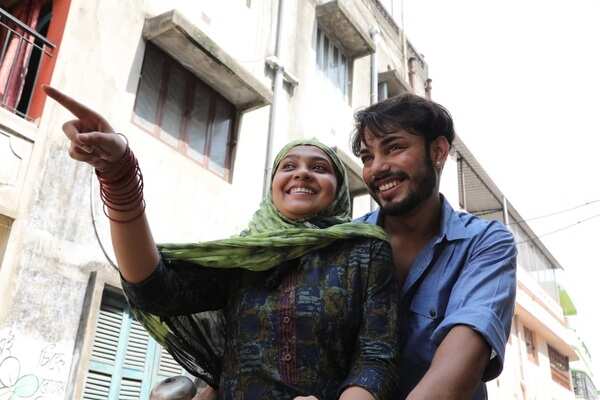
A still from ‘Priyo Chinar Pata, Iti Segun...’

This film starring Piyali Samanta, Aarman Shaw and Iqbal Sultan is in competition at KIFF’s Asian Select category. Chowdhury, who has acted in 60 serials, including ‘Mahaprabhu’, ‘Kiranmala’ and ‘Sati’, and over 35 feature films, including ‘Pendulum’, ‘Houseful’ and ‘Megh Roddur’, and who has directed a dozen telefilms, had been moved by the photo of Aylan Kurdi — the Syrian boy of Kurdish background whose image made global headlines. A chance reading of a Bangladeshi author’s book on Rohingyas sparked his interest. “From 2012, I started my research on the conflicts in Myanmar between Buddhists and Muslims. I met a woman from Tekna in Bangladesh who had come to Kolkata. She helped me with the research on the language used by Rohingyas,” he said.
‘Priyo Chinar Pata, Iti Segun...’ is loosely based on a girl whose story had been reported in a magazine. “I had accompanied the person who wrote the piece and even met her in a home in South 24 Parganas. Later, I went to homes across the state to hear more real-life stories,” Chowdhury said.
Funding was difficult and Chowdhury had to take out personal loans, sell off family jewellery and then go for crowd-funding to raise the Rs 20 lakh required to make it. “During Amphan, the post-production got stalled because of funds crunch. As a last resort, I sold my personal belongings to raise money,” he said.
Chowdhury’s film is about a Rohingya girl who has no idea of where her parents and grandmother are. She meets a Kashmiri shawl-seller and his son at a home and a bond develops between her and the youth, who then tries, in his personal capacity, to trace her family. “It is difficult for anyone to randomly meet a Rohingya girl lodged in a home. But I have seen shawl sellers enter homes and interact with the staff. The love story in the film is a creative liberty I took,” he said.
In the process, he has also brought up crucial discussions regarding the difference between refugees and immigrants and how locals want them to return to their homeland. “While the Rohingya girl had to escape from her homeland, the Kashmiri youth is treated as an outsider in his own country. However, during shooting, I never shared my story with anyone because of its sensitivity. Not everyone is empathetic and I wanted to avoid any attempt to stall a film connecting Rohingyas and Kashmiris,” he said.
But his film is not just about focusing on the trials of the Rohingya refugees. Throughout the film, Chowdhury uses a radio as a prop to share happenings concerning refugees in the world to connect the dots and tell the tales of global loss.

About the Author
Priyanka DasguptaEnd of Article
FOLLOW US ON SOCIAL MEDIA









Photostories
Hot Picks
TOP TRENDING
Popular Categories
Hot on the Web
Top Trends
Israel Hezbollah WarTirupati Laddu Case HearingVirat KohliIND vs BAN Live ScoreRohit SharmaIndian Team Fastest Test FiftyMohammed SirajUGC NET Result 2024TS DSC Results 2024Women T20 World Cup Points TableWomen T20 World Cup ScheduleShane McMahon Net WorthHezbollah ChiefEarth Mini MoonDiddyTop Management Colleges of IndiaLive Cricket Score
Trending Topics
Devara CollectionMithun ChakrabortyKangana RanautPark Ji AhStree 2 OTT ReleaseAnant AmbaniDevara CollectionGandhi Jayanti 2024Masala OmeletteEmergencyDevaraTaaza Khabar 2 Twitter ReviewDevara Movie ReviewHealthy RaitasSwatantrya Veer SavarkarColdplay India tour 2025Smartphone DealsApple Macbook Air M1Amazon SaleWordle Answer
Living and entertainment
Latest News
iVoomi S1 Lite e-scooter launched at Rs 84,999: 180 km range, three-year warranty!Tata Nexon turbo CNG: Variant-wise features with price explainedThe Power of Color: Zodiac Signs and Their Energetic HuesPMI in India intensifies efforts against Illicit Tobacco Trade to Safeguard Economic Interests and Consumer Protection'For the next 10 years, we've got players who will make our country proud' says VVS Laxman on bench strengthBarbra Streisand pays tribute to late 'A Star Is Born' co-star Kris Kristofferson: 'He was something special'Sasikumar and Simran join hands for a feel-good, city-based entertainerCovid lockdown on earth led to dip in Moon's temperature: StudyQueen Camilla does not want King Charles to meet Prince Harry because...From A.R. Rahman to Satyajit Ray: Indian Oscar winners who made historyWatch: Jasprit Bumrah’s lethal inswinger shatters Mushfiqur Rahim’s off stumpPaul Heyman opens up on declining TNA offer after leaving WWEColleagues remember braveheart Delhi Police constable Sandeep: 'Would rush to crime scene alone'Header: Kolkata metro conducts public awareness campaign at Dum Dum metro station"Tyler Huntley’s 'Snoop' Nickname: The Rapper Connection Explained”BCCI's Centre of Excellence opens up new possibilitiesBigg Boss 18 Promo: Salman Khan reveals the theme of the season by predicting the contestants' future in the houseBTS star V crowned 'Most Handsome Man in the World 2024'
Copyright © 2024 Bennett, Coleman & Co. Ltd. All rights reserved. For reprint rights: Times Syndication Service