
- News
- City News
- kolkata News
- Bengali film on lockdown life to compete in Busan film fest
Trending
This story is from September 2, 2021
Bengali film on lockdown life to compete in Busan film fest

A still from 'House of Time' (‘Kalkokkho’)

The Bengali film is one of the 11 selected works in the New Currents section. It is a main competition section at BIFF and has become an entry point for capable directors over the past 25 years in the discovery of new Asian films. It is nominated for the New Currents Awards, the New Currents Audience Award, the NETPAC award and the FIPRESCI Award. The other Indian film that is competing in this section is titled ‘Pedro’.
According to Anjan Bose, the managing director of the 115-year-old Aurora Film Corporation, this selection will give a boost to young filmmakers trying to “find a new language in Bengali cinema”. “Through mythological allegory and spiritual subtext, I’m glad these two youngsters made a film that explored themes like reality and illusion, instinct and morality, love, loneliness and grief in the times of pandemic,” Bose said.
‘Kalkokkho’, starring Tannistha Biswas, Sreelekha Mukherji, Janardan Ghosh, Amit Saha, Ahana Karmakar and Deep Sarkar, traces what happens when a doctor is locked in a house inhabited by three women from different age groups during the pandemic. So, there is a paranoid young woman, an old lady suffering from amnesia and a lonely girl. Dialogues highlight various facets of the pandemic, including the angst of migrant workers and why they walked miles to return home, the pangs of families of frontline workers distanced from home and the plight of poor children who have no access to online education.
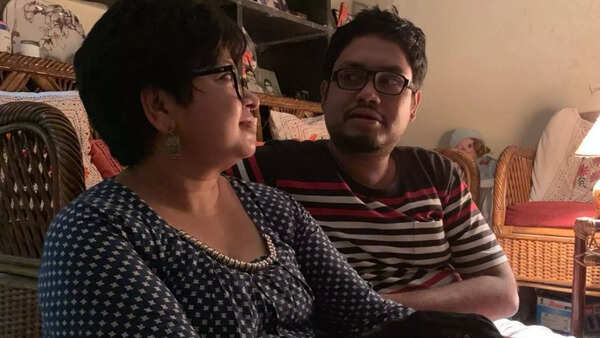
According to Paul, the concept of social isolation is alien for senior citizens. “In the beginning of the lockdown, everyone was panic-stricken. Viral videos of ill-equipped hospitals played in our mind and many of us had a feeling that our lives would be safer if we had a doctor at home,” he said. That became the genesis of their script. “The doctor became a metaphor in our film for our urge to cling on to a saviour,” he added.
During the lockdown, Maiti realized that unlike movies, apocalypse in real life is “boring” and resembles a “slow-paced art film”. “On top of that is the paranoia. The life of my seven-year-old daughter got locked during the lockdown. The physical presence of her friend circle disappeared and everything became virtual for her. While writing the script, I wanted to weave in this perspective,” she said.
Maiti and Paul are double-vaccinated and are awaiting the clearance of Korean norms before they can finalise if physical visit to the festival will support their logistics.

About the Author
Priyanka DasguptaEnd of Article
FOLLOW US ON SOCIAL MEDIA





Hot Picks
TOP TRENDING
Trending Stories
In City
Entire Website
- 'We were treated like slaves, made to work for 15 hours a day': Tricked into Ukraine war, 3 from Karnataka return home
- 'My father was on the flight': Jaishankar opens up about 1984 Air India hijack
- Airtel CEO Gopal Vittal sends letter to Reliance Jio, Vodafone-Idea, Tata Tele and BSNL CEOs; here's what he said
- Prince Harry to celebrate 40th birthday away from Meghan Markle
- Haitian immigrant pet-eating row: Ohio woman accused of eating cat is US citizen, video is not from Springfield
- Kejriwal out of jail; 'CBI arrest only to frustrate ED case bail': SC judge
- Donald Trump reveals what Laura Loomer is to his campaign: 'I don't control her'
- Hamster Kombat Daily Cipher Codes and Combo Cards for September 14, 2024: Unlock up to 1 million coins
- Laura Loomer's photo with Donald Trump viral. People ask where's Melania, where's wedding ring
- Garena Free Fire MAX redeem codes for September 13: Win in-game goodies and rewards
- 'We were treated like slaves': Tricked into Ukraine war, 3 from Karnataka return home
- Ind vs Pak Hockey Live: India lead 2-1 with Harman's brace
- Five things to keep in mind before betting on Bajaj Housing Finance
- Yechury's mortal remains in CPI office: Sonia, Sisodia, Pawar pay last tribute
- Came to meet as your 'didi': Mamata on 'last attempt' to resolve doctors crisis
- 'Three families destroyed ... ': PM Modi attacks Cong-PDP-NC in J&K' Doda
- People will now elect judges in Mexico: Mistake or a masterstroke?
- Sexual harassment probe opened against SAP CTO: What the company said
- Watch: PM Modi welcomes birth of calf 'Deepjyoti' at residence
- Army man demands sexual favours to pass student in NCC test

Popular Categories
Hot on the Web
Top Trends
Trending Topics
Korean TeaSector 36 ReviewGreen Apple BenefitsPriyanka Chopra TattooKottukkaali OTT ReleaseNational Parks In IndiaGhaziabad Juice SellerGOAT CollectionVikas Sethi DeathMalayalam ProducersIndia's Best Dancer 4Simi GarewalDilli BabuIndian National ParksLaung BenefitsVikas SethiApple iPhone 16Donald TrumpAadhar Card Update By Sept 14Wordle Answer
Living and entertainment
Latest News
Kaun Banega Crorepati 16: Can you guess the answer for this Rs 3,20,000 question on Navy, which contestant Naman Jain incorrectly answered?Exclusive - Has Palak Sindhwani aka Sonu from Taarak Mehta Ka Ooltah Chashmah breached her contract; Neela Film Productions to issue a legal notice to the actress?Ford drives into India for 3rd timePIL: Publicise laws, penalties to curb crimes against womenGrowth potential 7.5% or more: RBI governorHindus take to Bangladesh streets to stop attacks and demand justiceE-commerce speeds up to catch up with Quick commerce'Will take digital public infrastructure stack to 50 nations'Justin Timberlake faces DWI charges: Court-ordered apology, fine and community serviceDonald Trump on another debate with Kamala Harris: 'Maybe, if I got in the right mood ... 'Border Gavaskar Trophy: When Ricky Ponting's on-air analysis of Prithvi Shaw turned into match realitySebi gives clean chit to NSE, ex-executives in co-location caseRusty or Ready? Falcons' Cousins Falls Flat in $180M NFL DebutEdible oil import duty hiked by 20%Lucky houseplants for each Zodiac, as per a renowned astrologerOnam is a time when everyone comes together to celebrate: Manju Warrier'Calling all Swifties for Trump': Donald's new campaign merch imitates Eras Tour shirtsTovino on training for Kalaripayattu in ‘ARM’: I practiced every single day, even if I had a hectic day on set
Copyright © 2024 Bennett, Coleman & Co. Ltd. All rights reserved. For reprint rights: Times Syndication Service