
- News
- City News
- kolkata News
- Ashes to Ashes
Trending
This story is from August 11, 2018
Ashes to Ashes
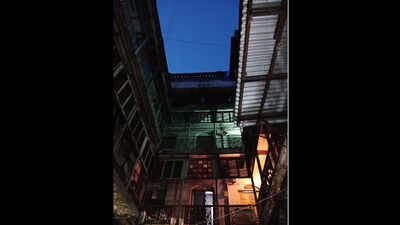
The premises on Ezra Street, which used to be the address for Gerasim Stepanovich Lebedev’s ‘Bengalee theatre’, the first European-style proscenium theatre later got burnt, probably set on fire by the British

Pics: Kamalendu Bhadra, Amit Moullick Biplab Bhattacharjee and courtesy of New Theatres and Arora Film Corporation
FROM RUSSIA, WITH LOVE
A memorial plaque dedicated to Gerasim Stepanovich Lebedev, the founder of ‘Bengalee Theatre’, stands mute testimony to that historic period. Lebedev was a Russian linguist, musician and Indologist. He rented a place to open a theatre with “the assistance of intellectuals” at 25, Domtolla (now, 37 Ezra Street) which could accommodate 200 viewers.
Bengali actors and actresses were cast in his Bengali translations of Richard Paul Jodrell’s The Disguise and Moliere’s Love is the Best Doctor. The first show was held on November 27, 1795. Once the local audience started making a beeline for it, it posed a threat to the two existing halls staging English plays. Even today, it is alleged that the British had conspired to burn down Lebedev’s rented premises.
Of course, there is no proof of this. After the fire, Lebedev left Kolkata with a broken heart. Today, the address of his theatre is home to Baijnath Choubey & Co. One can stand inside the courtyard, trying to reimagine how the place would have looked more than two centuries ago. An advertisement of the first show of the play at this theatre, “decorated in the Bengallie style”, has survived the test of time. But tenants stare with wide-eyed wonder when told about the historical importance of this address. “How will I know? I wasn’t around then,” one of them defends himself.
THE BURNING THEATRES OF CHOWRINGHEE
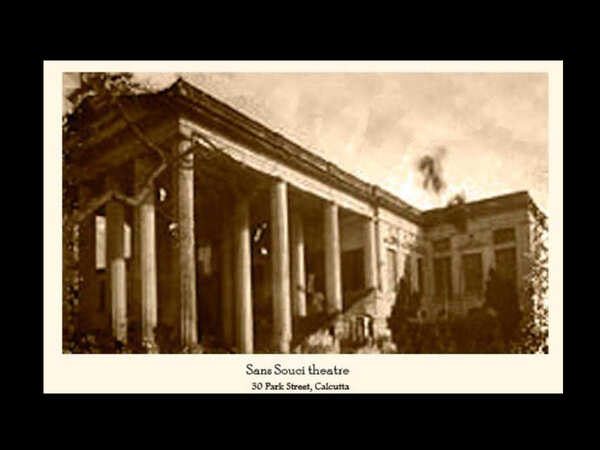
In the first half of the 19th century, Kolkata witnessed another devastating fire. This time, it was at the all-wood Chowringhee Theatre, which had been inaugurated on November 25, 1813 with the tragedy Castle Spectre. One of the most popular theatre actors of that time, Esther Leach, had made her debut at this theatre on July 27, 1836. Unfortunately, in 1839, the Chowringhee Theatre — at the present-day Shakespeare Sarani crossing, and which gave it its old name, Theatre Road — was completely devastated by fire. Leach’s second attempt at reviving the Kolkata stage also ended on a fiery note. She first started the Sans Souci theatre inside a godown on Waterloo Street before shifting to 30 Park Street, where St Xavier’s College now stands. This theatre resembled the Greek Parthenon, with six Doric columns. Stories abound about Sans Souci staging Othello, where Othello was played by Bengali actor Baishnav Chandra Adhya and Desdemona by Leach’s daughter. While staging the play Handsome Husband, Leach’s gown caught fire, kept to light the backstage. Eleven days later, on November 18, 1843, she succumbed to her burns.
Multiple records claim Leach was buried at the Bhowanipore cemetery alongside her husband, Sergeant John Leach, who was once posted at Fort William. But the search for her tombstone at the cemetery yields no result. The gardeners there haven’t heard her name. The register at the Commonwealth War Graves, which also has some earlier burials of service personnel and their dependants being made from the nearby garrison at Fort William, doesn’t mention her either.
STAGE ON FIRE
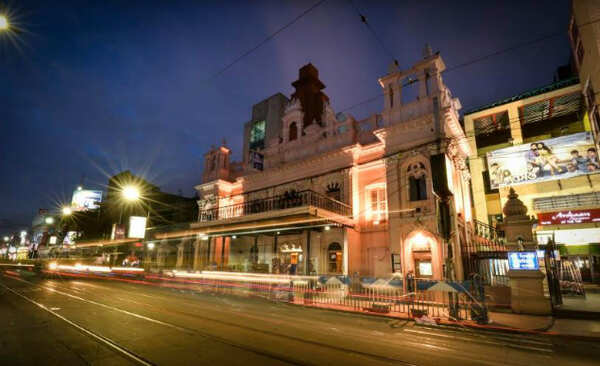
According to theatre archivist Kamal Saha, who is the founder of Bangla Natyakosh Parishad, most of the stage fires were either due to jealousy, or the handiwork of land sharks eyeing the properties. The Great National Theatre, which had Girish Ghosh as its manager, had also caught fire on its inaugural date. “There was a temporary pandal, where Amritalal Basu’s play Kamya Kanon was to be staged. A fire broke out on December 31, 1873. On October 18, 1922, a fire had erupted at Minerva. The probable cause cited was a short circuit. Minerva reopened a few years later. Interestingly, most of the fires broke out during the Pujas,” Saha mentions.
On October 14, 1964, Tarun Roy’s Theatre Centre at Chakraberia caught fire when Nishachor was being staged. “On November 14, 1965, the theatre reopened with a new production called Pureo Ja Pore Na,” Saha says. “On May 22, 1966, Muktangan caught fire when Soubhonik was staging Ghare Baire. On February 10, 1976, there was a fire at the University Institute Hall while Anup Kumar was acting in Samragni Noorjahan.”
The more recent fire was when the 1883-established Star Theatre on Bidhan Sarani got burnt on a Panchami night nearly 30 years ago. On the night of October 13, 1991, Soumitra Chatterjee and Madhabi Mukherjee were acting in Ghatak Biday. “Nobody was injured, though the entire theatre was burnt. There was talk of land sharks being involved. But there was no proof,” says actor-director-playwright Bratya Basu. But on October 13, 2004, the Kolkata Municipal Corporation reopened Star. Even more recently, on August 7, 2014, a small fire broke out at the Academy of Fine Arts while Suman Mukhopadhyay’s Shunyo Theke Shunyo Noy was being staged. The curtain had caught fire and there was panic during evacuation.
GONE FOREVER
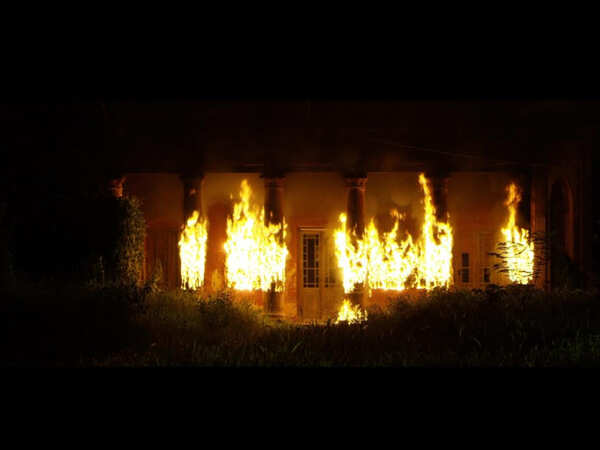
The biggest fire that left a permanent vacuum was when all films made by Hiralal Sen, the uncrowned prince of Indian cinema, got burnt at his Black Square godown. Sen ran a successful photography business and in 1898, saw a film presentation that featured alongside the stage show The Flower of Persia at Star Theatre. He got interested and made his first film out of scenes from The Flower of Persia. In 1899, along with brother Motilal Sen, he had formed the Royal Bioscope Company. Most of his films had scenes from stage productions at Amarendranath Dutta’s Classic Theatre.
His longest film — Alibaba and the Forty Thieves (1903) — was based on Dutta’s play Alibaba, starring Dutta and Kusumkumari. “In 1904, he directed the first Indian advertisement. That was for Jabakusum hair oil. In 1905, he shot India’s first documentary when he filmed the Banga Bhanga Andolan and Surendranath Banerjee’s town hall lecture,” says director Arun Roy, who is directing a feature film titled Hiralal. According to film scholar Sanjay Mukhopadhyay, the fire erupted two days before Sen died. “I found that in Kalish Mukhopadhyay’s account of the history of Indian cinema,” Mukhopadhyay says.
Scholars are divided over whether it was sabotage or accident that caused the 1917 fire. “Motilal’s daughter died in that fire. Hiralal, who was fighting cancer, was grief-stricken. He died soon after on October 26, 1917,” says director Sekhar Das.
TAGORE TOO DIDN’T ESCAPE
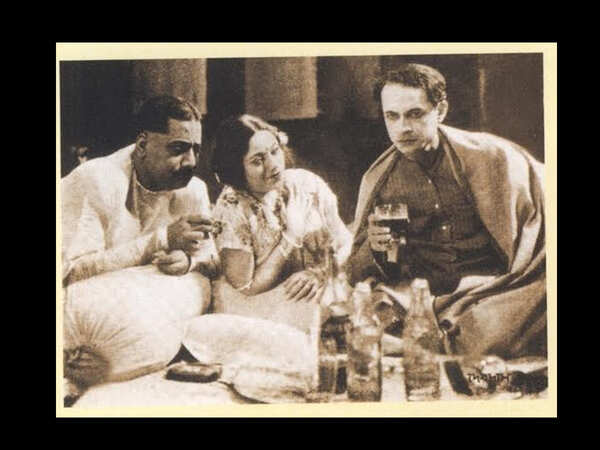
The two fires of 1940 and 1942 at New Theatres destroyed some landmark works. According to Pinaki Chakraborty, the director of New Theatres, prints of some 30 films made in Bengali, Hindi, Urdu, Tamil and Telugu between 1931 and 1940 were burnt in the first fire. Among them was Pramathesh Baruah’s 1935 film Devdas, a print of which now exists only in Bangladesh and a DVD copy at the National Film Archives in Pune. “Tagore had filmed his Natir Puja in 1932. Shooting was held during the summers and Tagore would step out and sit under a mango tree. Seeing that, B N Sircar, the owner of New Theatres, constructed a thatched hut for Tagore,” Chakrborty says.
Neither a single reel of the film nor that thatched hut, called Golghar, has survived. “But we have the making of Natir Puja by Nitin Bose. We could retrieve hall prints of some productions including Chandidas and Bidyapati. In the 1942 fire caused by a short circuit, 20 prints were burnt. From them, we could later retrieve K L Saigal’s Street Singer and Baruah’s Rajat Jayanti,” Chakraborty says. However, other films like K C Dey’s Andhi, Saigal’s Parichay and Parajay, Pahari Sanyal-Kanan Devi’s Abhinetri and Bhanu Banerjee’s Shodh Bodh are gone forever.
LOST AND FOUND
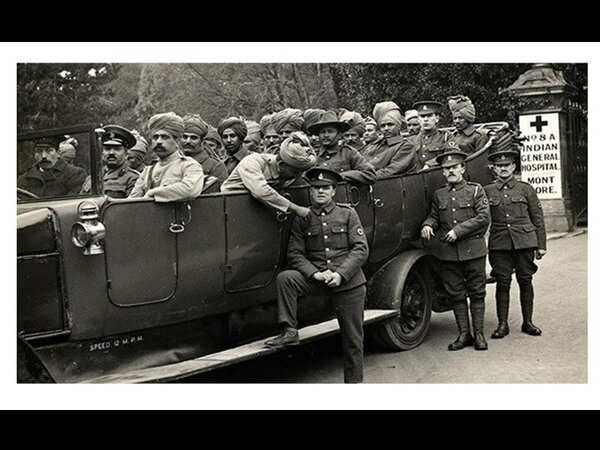
Anjan Bose, the owner of Arora Film Corporation, still can’t get over the loss caused by the 1946 fire at the vault of their premises on 106 D Narkaldanga North Road. It haunts him every day when he walks into the Lenin Sarani office of Arora Studio, where his grandfather Anadinath Bose used to conduct his film business. His voice quivers when he talks about how all feature films made by the unit of Arora Film Corporation, including Ratnakar (1921), Bidyasundar (1922), Kelor Kirti (1924), Krishna Sakha (1926), Krishnakanter Will, Pujari (1931) and Niyati (1934), some 150 documentaries and 100 news reels that were made between 1913 and 1946 were burnt. The fire is an important part of Bose’s award-winning documentary titled Arora Bioscope that was recently screened at the Asiatic Society. Speaking about that loss, Bose says: “During Durga Puja in 1946, the self-combustible nitrate films kept at the vault caught fire due to friction. Our family residence was at Kumurtali. The fire was so huge that my grandfather saw the flames and asked: ‘Who has got doomed during the Pujas?’ Later, we learnt that the fire was at our studios. Dadu couldn’t take the shock and expired in September that year.”
In 1915, the British government had issued a tender to make entertainment for Indian soldiers in World War I. “We had got the contract. All those documentaries got burnt. Only the stills are available. Interestingly, my grandfather had also gone undercover to shoot revolutionaries including Barin Ghosh, Aurobindo Ghosh and Lokmanya Tilak. These, along with his films on all Congress meetings in Kolkata, Gandhiji’s fast at Beliaghata, are lost forever. I approached the British Film Institute to check if they had any prints of those works. I paid Rs 34,000 to get a digitised print of Gorbeta Agricultural Fair that we had made in 1933,” Bose says.
Fortunately, two documentaries that were kept in the laboratory have survived. They include a documentary on Tagore, which has clippings of his last journey on August 7, 1941 and Tagore’s voice recording of Banglar Mati Banglar Jol at Mahajati Sadan.
FIRE ALARM AT MAJESTIC, JYOTI AND BHARAT LAKSHMI
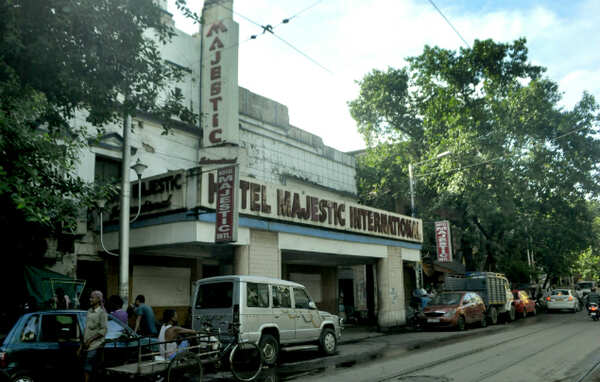
In between, there hasn’t been any fire in existing cinemas. In April 1994, a fire had broken out at the Majestic Cinema on Rafi Ahmed Kidwai Lane. A hotel has been built on the property. A midnight blaze on October 2, 2016, had gutted down Jyoti cinema on Lenin Sarani. The theatre had been shut since 2008. Nobody is clear on what the fate of the property is. In July 2011, a floor of Bharat Lakshmi studio was burnt during the shoot of the serial ‘Megher Palok’. The studio was shut for some months and the entire fire arrangement system was revamped. Forensic reports have been submitted to the court and shooting is on full swing there.
Arijit Dutta, the owner of Priya, where fire broke out on last Sunday, is trying to “complete all necessary formalities and guidelines as stipulated by the fire department” before re-opening the cinema. “Though we are unable to give a specific time or date for the reopening, we are trying our best to speed up the process,” says Dutta.
For the tenants at Ezra Street who know nothing about Lebedev and all about Priya, this certainly is good news.

About the Author
Priyanka DasguptaEnd of Article
FOLLOW US ON SOCIAL MEDIA









Photostories
Hot Picks
TOP TRENDING
Popular Categories
Hot on the Web
Top Trends
Israel Hezbollah WarTirupati Laddu Case HearingVirat KohliIND vs BAN Live ScoreRohit SharmaIndian Team Fastest Test FiftyMohammed SirajUGC NET Result 2024TS DSC Results 2024Women T20 World Cup Points TableWomen T20 World Cup ScheduleShane McMahon Net WorthHezbollah ChiefEarth Mini MoonDiddyTop Management Colleges of IndiaLive Cricket Score
Trending Topics
Devara CollectionMithun ChakrabortyKangana RanautPark Ji AhStree 2 OTT ReleaseAnant AmbaniDevara CollectionGandhi Jayanti 2024Masala OmeletteEmergencyDevaraTaaza Khabar 2 Twitter ReviewDevara Movie ReviewHealthy RaitasSwatantrya Veer SavarkarColdplay India tour 2025Smartphone DealsApple Macbook Air M1Amazon SaleWordle Answer
Living and entertainment
Latest News
iVoomi S1 Lite e-scooter launched at Rs 84,999: 180 km range, three-year warranty!The Power of Color: Zodiac Signs and Their Energetic HuesPMI in India intensifies efforts against Illicit Tobacco Trade to Safeguard Economic Interests and Consumer Protection'For the next 10 years, we've got players who will make our country proud' says VVS Laxman on bench strengthBarbra Streisand pays tribute to late 'A Star Is Born' co-star Kris Kristofferson: 'He was something special'Sasikumar and Simran join hands for a feel-good, city-based entertainerCovid lockdown on earth led to dip in Moon's temperature: StudyQueen Camilla does not want King Charles to meet Prince Harry because...From A.R. Rahman to Satyajit Ray: Indian Oscar winners who made historyWatch: Jasprit Bumrah’s lethal inswinger shatters Mushfiqur Rahim’s off stumpPaul Heyman opens up on declining TNA offer after leaving WWEColleagues remember braveheart Delhi Police constable Sandeep: 'Would rush to crime scene alone'Header: Kolkata metro conducts public awareness campaign at Dum Dum metro station"Tyler Huntley’s 'Snoop' Nickname: The Rapper Connection Explained”BCCI's Centre of Excellence opens up new possibilitiesBigg Boss 18 Promo: Salman Khan reveals the theme of the season by predicting the contestants' future in the houseBTS star V crowned 'Most Handsome Man in the World 2024'Decoding a bowl of Idli Sambhar: From calories to nutrients
Copyright © 2024 Bennett, Coleman & Co. Ltd. All rights reserved. For reprint rights: Times Syndication Service