
- News
- City News
- kolkata News
- 28% street children in Kolkata studying, nursing a dream
Trending
This story is from June 21, 2018
28% street children in Kolkata studying, nursing a dream
children — lost, abandoned and homeless — in Howrah and Sealdah.
Like Saroo, there are hundreds of children — lost, abandoned and homeless — in Howrah and Sealdah.

These voiceless, defenceless and often invisible kids spend the day picking rags, begging and lifting heavy loads and spend the nights on pavements in unhygienic and unsafe conditions.
While Sealdah and Howrah stations account for the highest number of street children in the city, Lebutala, Gobra, Natun Pally, Phool Bagan, Jorabagan bus stand, Dhakuria and Park Circus account for 85% of street kids in Kolkata.
A study conducted by child welfare organisation, Save the Children, revealed that 84% street kids in the city are from a different city, town or village.
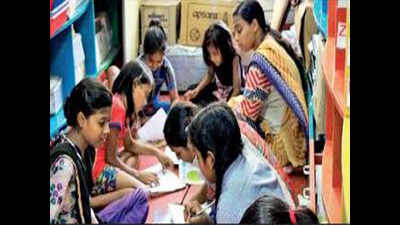
What is heart-warming though, is that nearly half of them are literate. Despite the hard life, nearly 28% street kids are still studying, nursing a dream for a better future. While most of them are engaged in domestic work, many are also involved in selling products ranging from toys to newspapers. Many are also working on roadside eateries, small restaurants and teastalls.
Only 6% spend the night in a facility meant for children, while some 46% of children sleep on streets and pavements. This leaves them vulnerable to physical abuse and sexual exploitation.
On Wednesday, Save the Children and several other NGOs discussed the application of standard operating procedures (SOPs) for protection of street kids.
Controller of vagrancy Biswanath Chakraborty pointed out that since different kids face different kinds of situations on the street, SOPs must provide different intervention plans for the various situations. The meeting also stressed on the creation of proper identity documents for such kids as without one they will not be able to demand their rights and opportunities.
West Bengal Commission for Protection of Child Rights chairperson Ananya Chakraborti said that routinely allocating children to institutionalised homes was not a solution. “Most children don’t want institutional care. They want security but no curbs on their freedom,” she said.
End of Article
FOLLOW US ON SOCIAL MEDIA






Hot Picks
TOP TRENDING
Trending Stories
In City
Entire Website
- Centre seeks review of SC's mineral royalty judgment
- 'At 2:30 in the night, Rohit Sharma texted me and asked...'
- Schools closed across various states till 16th September: Here’s why
- Live wire snaps, boy recalls science lesson, saves lives with sister
- Many parts of Chennai face power supply disruption due to fire at Manali substation
- Aadhaar card update: Do you have to compulsorily update details on your Aadhaar every 10 years?
- Kevin Spacey allegedly demands $100,000 to vacate Baltimore residence, new owner says actor tries to 'paint himself as victim’
- Who is Jared Isaacman? Billionaire who stepped out of SpaceX capsule for first private spacewalk
- NMC approves expansion: GMC to offer 200 MBBS seats and more PG seats in 2024-25
- Veteran CPM leader Sitaram Yechury passes away
- Delhi court issues release order for Delhi CM Arvind Kejriwal in excise case
- 'Can't attend office': SC's bail conditions for Delhi CM Kejriwal
- Five things to keep in mind before betting on Bajaj Housing Finance
- Haryana: It’s Bhupinder Singh Hooda way or the highway in Congress
- Shreyas Iyer bats wearing sunglasses, falls for duck
- Vande Metro launch date, schedule: New Indian Railways train is here!
- ‘Old Boys Club promotes men over women who aren’t part of it’
- Refund on iPhone 15 & 14: Apple's policy says conditions applied
- Ford to restart manufacturing of vehicles in Chennai plant after 3 years
- Virat Kohli slogs it out, Jasprit Bumrah goes full throttle

Popular Categories
Hot on the Web
Top Trends
Trending Topics
Alia BhattMalaika Arora Father DeathArbaaz KhanNatasa StankovicMr Bachchan OTT ReleaseNational Parks In IndiaSelena GomezGOAT CollectionVikas Sethi DeathMalayalam ProducersIndia's Best Dancer 4Simi GarewalDilli BabuIndian National ParksLaung BenefitsVikas SethiApple iPhone 16SpaceXAadhar Card Update By Sept 14Wordle Answer
Living and entertainment
Latest News
Salman Khan surrounded by bodyguards as he arrives at Malaika Arora's mother's house to offer his condolences - WATCHJulie Chen to miss Big Brother live eviction for first time, taps Jerry O'Connell to hostBonedi baris hope for a peaceful start to PujoNIA raids pro-Khalistan preacher Amritpal Singh's relative's house in AmritsarA vision unfolds: How Levitation is crafting tomorrow’s enterprise solutionsTovino Thomas praises Prithviraj Sukumaran as director: "One of the brilliant directors I have ever worked with"Tragedy strikes at fundraiser: Mother of two dies after marshmallow-eating competitionMan shot near Delhi's Greater Kailash-I gym, gang war suspected8 animals that reproduce without matingHow a balanced pH helps maintain your skin’s youthful appearanceStree 2 box office collection: Shraddha Kapoor and Rajkummar Rao starrer clocks Rs 539 croreISL-11 opener: Familiar foes back in businessFatal crash in Australia's Netherby claims life of ToddlerBiden to host fourth quad summit with PM Modi, Albanese, and Kishida in Delaware on September 21: White HouseSanthy Balachandran turns screenwriter for Kalyani Priyadarshan and Naslen starrerDivya Bansal explores themes of human resilience, love and positive transformation in debut poetry bookFinancial graft probe against Sandip Ghosh: ED raids in Chinar Park, Tala & Kalindi in Kolkata‘Ajayante Randam Moshanam’ actor Tovino Thomas gets emotional: We faced numerous challenges
Copyright © 2024 Bennett, Coleman & Co. Ltd. All rights reserved. For reprint rights: Times Syndication Service