
- News
- City News
- kolhapur News
- Kolhapur wrestlers pinned down by Covid restrictions
Trending
This story is from May 6, 2021
Kolhapur wrestlers pinned down by Covid restrictions
The lockdown-like situation due to the second wave of Covid-19 has led to the closure of ‘talims’ and village fairs in western Maharashtra, leaving wrestlers struggling to maintain their fitness or make ends meet, let alone have proper ‘khuraq’ or diet .
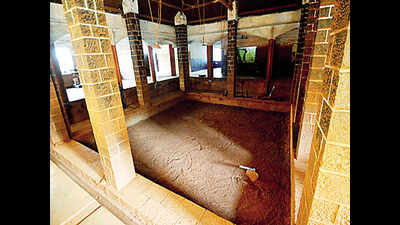
Though talims in Kolhapur city have been shut due to the lockdown, a few odd wrestlers have stayed back and practice on a regular basis.
Talims are places where the grapplers practise and exercise while village fairs are a source of income in the form of cash prizes for winners and also runners-up.

“There are 25 talims in Kolhapur district and five to six in Kolhapur city alone. Each talim has 100 to 150 wrestlers. These talims were shut in April, once again forcing the wrestlers to return to their hometowns, resulting in lack of physical fitness,” said Prakash Khot, secretary of Talim Sangh in Kolhapur.
“Just think how much these wrestlers are suffering in terms of skills and physical fitness. The fitness and trial rounds for the ‘Maharashtra Kesari’ tournament have already been conducted, but the selected wrestlers will have to start from scratch when the talims reopen in June, hopefully,” he said.
‘Hind Kesari’ wrestler Vinod Chougule of Motibaug Talim in the city said the wrestlers have gone back home and are unable to maintain fitness. “One wrestler needs around Rs 15,000 per month for khuraq, which has become unaffordable.”
Sachin Jamdar, a wrestler from Shahu Vijayi Gangawesh Talim in Kolhapur, said village-level ‘Jatra Kusti’ or ‘Dangal Kusti’ organised durng annual fairs or festivals carry cash prizes.
“However, no such wrestling tournaments are being organised in Maharashtra for one-and-a-half years. If the trend continues, people will stop looking at wrestling as a career option,” he said.
Aniket Badhe from Bhor taluka in Pune district said he was in Kolhapur for three months before the Covid restrictions this year for wrestling practice, but his dream was left unfulfilled as the akhada was shut.
“Soon after the talim was shut due to the lockdown, I returned to my village where I am trying my best to maintain my physique by working in the farm. Government should allow us to at least practise in batches,” he added.
End of Article
FOLLOW US ON SOCIAL MEDIA






Photostories

Hot Picks
TOP TRENDING
Popular Categories
Hot on the Web
Top Trends
IND vs AUS Live ScoreBaba Siddique NewsVirat KohliRussell WilsonsSpacex StarshipBabar AzamWho was Baba SiddiqueBabar AzamNTA SWAYAM July RegistrationLawrence BishnoiAmazon LayoffsTaylor SwiftManagement Colleges of IndiaTop Medical Colleges of IndiaTop Engineering Colleges of IndiaTop Pharmacy Colleges of IndiaLive Cricket Score
Trending Topics
Diwali WishesDussehra 2024 QuotesDussehra WishesVettaiyan OTT ReleaseVettaiyan CollectionVettaiyan ReviewNatasa StankovicDevara CollectionBigg Boss 18Deepika PadukoneShraddha KapoorRatan Tata Passed AwayJigra Movie ReviewVettaiyan Movie ReviewSwatantrya Veer SavarkarDussehra 2024Star Health Hacker DemandedViral MemesUltimate Football Codes October 2024Wordle Answer
Living and entertainment
Latest News
Accused did recce of Baba Siddiqui's house, monitored him for months: Mumbai PoliceParas Mhambrey joins Mumbai Indians as bowling coachSalman Khan’s security beefed up after Baba Siddiqui’s murder; ‘Sultan’ star looked uncomfortable after visiting the late politician’s family at 3 amBaba Siddique may have died prior to hospitalisation, says doctorsSpaceX's fifth Starship test flight achieves historic booster catchKrushna Abhishek shares a heartwarming post for mama Govinda; says 'jab body mein adha blood supremely talented actor Govinda ka ho...'News brief: 'Who is listening? Modi?': Kapil Sibal takes a dig at RSS chief Mohan BhagwatZodiac signs likely to have soul connectionsAI’S Oppenheimer'Points towards failure of CM': Sanjay Raut slams Maharashtra govt over Baba Siddiqui's killingMahela Jayawardene returns as Mumbai Indians head coachMidnight queues, long waits, bad advice: It's not easy getting therapy in IndiaTom Brady is Likely to Become a Minority Owner of Las Vegas Raiders at the Upcoming NFL Fall Owners' Meeting4.2 magnitude earthquake strikes AssamThe Great Indian Kapil Show 2: Kareena Kapoor reveals hubby Saif Ali Khan is jealous of her bond with sister Karisma; says, “He thinks I talk to her more than him”Accused were paid in advance to kill Baba Siddique: Mumbai PoliceMammograms and breast cancer treatment: Separating facts from mythsHow vitamin C-rich foods help with weight loss
Copyright © 2024 Bennett, Coleman & Co. Ltd. All rights reserved. For reprint rights: Times Syndication Service