
- News
- City News
- kolhapur News
- Flood leaves behind damaged paddy fields
Trending
This story is from August 25, 2016
Flood leaves behind damaged paddy fields
Farmers who decided to take up paddy cultivation along the Panchganga river bank are now counting their losses.
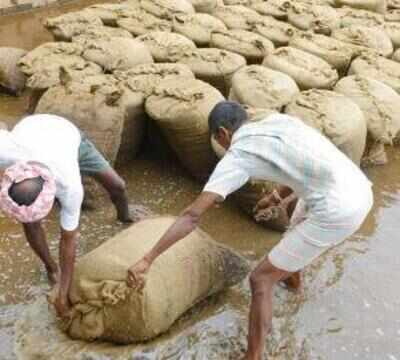
Unseasonal rains destroyed crops in several districts. (Representative Image)
Kolhapur: Farmers who decided to take up paddy cultivation along the Panchganga river bank are now counting their losses.
The below average monsoon for two years had prompted many farmers to take up paddy cultivation in the areas close to river. However, heavy rains and subsequent flooding over the past two months caused havoc on the region and has ruined paddy crop over 10,000 hectares in the district.

The district faced major floods during the first week of July and August, when most farmers had completed their cultivation. The farms remained under water for more than a week period, which has affected the growth of plants. The damage assessment has already begun and would reveal the actual extent of damage.
The damage assessment is done by officials from district agriculture department, talathis and senior revenue officers. The district agriculture department records stated that paddy cultivation in the district has been on 1,08,520 hectares, but the incessant showers in the first week of July and August raised the river water level and submerged adjoining areas.
Five tehsils - Karvir, Panhala, Gaganbavda, Radhanagari and Shahuwadi - along with some parts of Chandgad and Ajara tehsils are known for paddy cultivation. These areas were flooded and the water spread across the river banks.
Officials from district agriculture department pointed out that flood water was spread for more than five days in these tehsils and all the saplings planted a fortnight before were submerged. The saplings did not get required sunlight for a long time and excess exposure to the water caused major damage.
The high intensity of the showers during the current monsoon season meant that the district received 47% of its average rainfall for August in just three days. With such heavy downpour, the water levels of most rivers went up drastically and paddy fields got submerged.
Suresh Magdum, deputy director of district agriculture department, said, "Many farmers took up paddy cultivation near the river despite knowing that these areas get affected during heavy rain. Unfortunately, now, there is no mechanism to help improve the condition of the affected paddy fields. Another round of sowing is also risky because it is a water-intensive crop."
"The damage assessment is also going on for other crops such as sugarcane, soyabean and groundnuts. It would take another week to get final damage assessment," he said.

About the Author
Nikhil DeshmukhEnd of Article
FOLLOW US ON SOCIAL MEDIA









Hot Picks
TOP TRENDING
Trending Stories
In City
Entire Website
- Why has the iconic Tupperware Brands filed for Chapter 11 bankruptcy?
- Meerut Metro: India’s ‘Fastest’ Metro Service Unveiled! Check Top 10 Features, Stations, Route & More
- Several people feared trapped after house collapses in Delhi's Karol Bagh
- 'Putting an end to all the masala': Virat Kohli and Gautam Gambhir leave fans stumped
- Massive tech layoffs at Apple, Dell, IBM are a wake-up call for IT professionals: Why upskilling is the key to survival
- 'Biggest security breach': 1000s of pagers explode across Lebanon, many Hezbollah fighters hurt; 9 dead
- Maharashtra schools closed on Sep 18: Here’s why
- Schools to be closed tomorrow in these states: Here’s why
- 'Prophet Muhammad who taught us to...': Pakistan batter Babar Azam turns to faith amid poor form
- Sukanya Samriddhi Yojana: What are the latest guidelines for SSY accounts? Check here
- 3-5 grams explosives, 5,000 pagers: How Israel carried out covert strike on Hezbollah
- 'One nation, one election' cleared by Union cabinet
- What IPO-bound startups learnt from Paytm’s costly mistakes
- Indus Water Treaty: India serves formal notice to Pak, seeks modification
- 'MSP legal guarantee & caste survey': Congress releases Haryana manifesto
- LG proposes Atishi's swearing-in ceremony on September 21
- Why Isro needs a new approach to realise its lunar ambitions
- Fired techie shares his 'survival story' on LinkedIn, post viral
- 'Subah bheege badam khate ho?': Virat to Gambhir
- Gaganyaan tracking station site finalised at Cocos Islands

Popular Categories
Hot on the Web
Top Trends
India Fastest Metro ServiceVince McMahonNPS Vatsalya LaunchDonald TrumpKolkata Doctor Rape CaseShreyas IyerTaiwan PagersGautam Gambhir Press ConferenceUGC Net ResultVirat KohliSukanya Samriddhi YojanaIsrael Hezbollah WarNEET UG Admission CriteriaDelhi CM's ListPager Attack in LebanonDMK StalinLive Cricket Score
Trending Topics
Living and entertainment
Latest News
Throwback: When Aishwarya Rai said that dignity is 'extremely precious' to her; 'The way I have been brought up.....'Shilpa Shetty just rolled out the latest sari trend 'a rainbow sari''Could restore sight': FDA grants 'breakthrough status' to Musk’s Neuralink 'Blindsight' implant. What it meansCM Punk to Step In as Guest Referee for NXT Title Match at WWE NXT Chicago EventWaterborne disease cases spiked after flood in VadodaraThe man who wants to 'cancel' Adani from Sri LankaSuriya to play the antagonist in 'Dhoom 4', here's what we know11 get new lease of life with organs from two in SuratMrBeast aka Jimmy Donaldson, Amazon sued by ‘Beast Games’ contestants over sexual harassment and chronic mistreatment allegations - reportsAmazon India appoints new country headBigg Boss Tamil 8: Actress Sachana Namidass to participate in the upcoming season?India 'very big abuser' of trade ties with US, says Donald TrumpJr NTR's 'Devara: Part 1' to have early morning showsGrieving mom's heart-wrenching letter blames toxic culture for daughter’s deathRicky Ponting is new Punjab Kings head coachA lot at stake as Mohun Bagan get ready for Asian footballHeart problem? Smart stetho can sense it in just 15 secsWhy am I feeling irritable? Common causes of mood swings and how to manage them
Copyright © 2024 Bennett, Coleman & Co. Ltd. All rights reserved. For reprint rights: Times Syndication Service