
- News
- City News
- jaipur News
- Rajasthan panchayati raj dept 'turf war': Only DOP can issue adversary order like barring an officer from attending or holding meetings, say legal experts
Trending
This story is from May 12, 2020
Rajasthan panchayati raj dept 'turf war': Only DOP can issue adversary order like barring an officer from attending or holding meetings, say legal experts
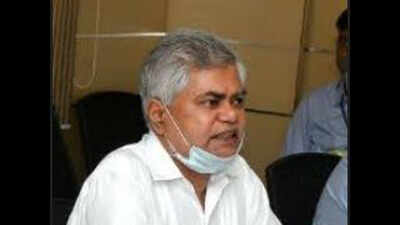
Additional chief secretary (ACS), Rural development and Panchayati Raj, Rajeshwar Singh

While some say, an adversary order (like debarring an officer from holding or attending official meetings) can only be issued by the department of personnel (DOP) and that the officer should have been issued a show-cause notice first and disciplinary action initiated, others say any official who enjoys decision-making power can debar a subordinate officer from attending or holding meetings.
“The head of any department can ask the juniors to send the files directly to him/her. However, one cannot issue an adversary order against a subordinate/junior officer stating that he/she cannot attend or organise meetings or video conferences. Only, DOP has the power to issue an adversary order with the approval of the government (who is the employer). In this case, the special secretary has virtually been put on APO (awaiting posting order). The power to suspend or put someone on APO only comes under the jurisdiction of DOP,” said a senior legal expert, who did not wish to be named.
A senior IAS official said, “The order issued by ACS is blatantly illegal. One cannot seize or dilute the powers of an IAS officer even if he/she is junior to the him/her. If one starts doing that then the whole administrative and government system will start functioning in this manner. If someone is not following the orders (like clearing the files and meeting the target of the schemes) or responding to calls or misbehaving with the juniors, then disciplinary action should be initiated against the officer and must be issued showcause notice. The officer should be given the chance of hearing. But, nobody has the power to dilute/seize one’s administrative powers as per the rules of business. One cannot be asked not to come to the meeting.”
However, another IAS officer said, “Any official who enjoys decision-making power in a department can debar a subordinate or junior officer from holding or attending meetings. He/she is well within rights to take such action.”
Chief secretary D B Gupta had raised the matter with principal secretary to the chief minister Kuldeep Ranka. The final decision on the issue will now be taken by chief Minister Ashok Gehlot.
End of Article
FOLLOW US ON SOCIAL MEDIA









Hot Picks
TOP TRENDING
Trending Stories
In City
Entire Website
- UPS vs NPS Calculator: Is A Switch From National Pension Scheme to Unified Pension Scheme Really A No-Brainer? Check Calculations, Benefits - Top Points
- Monster vs Monster: WWE announced massive match for this week's Monday Night Raw
- UPI transaction limit to change from September 16! Here are the new limits for various UPI payments
- File movement linked to weight of money: Nitin Gadkari
- Apple's biggest 'iPhone update' for year 2024, iOS 18, rollout starts today - September 16: India time and how to prepare your iPhone for iOS 18 download
- Arvind Kejriwal's resignation: Who will be next Delhi CM? Atishi seen as top choice
- UP medical aspirants converting religion to secure MBBS seats: A look at NEET UG admission criteria around minority reservation rules
- Protests against students wearing hijab in school play, principal forced to apologize for promoting religious harmony
- Pitru Paksha 2024 Date and Time: Know Significance of Shradh Paksha
- Andhra suspends 3 IPS officers for 'framing', arresting Mumbai actress
- Kolkata police commissioner, two health officials removed after Mamata's meeting with docs
- BAPS swaminarayan temple vandalised in New York; 'unacceptable', says Indian consulate
- Will Atishi replace Arvind Kejriwal as Delhi CM?
- 'Look at own record': India condemns remarks by Iran's Supreme Leader Khamenei
- Watch: BJP MLA falls on rly tracks while flagging off Vande Bharat train
- 'Political rivals but ... ': BJP's reaction on Bittu's Rahul 'No. 1 terrorist' remark
- Cow vigilantes killing a Brahmin is the wake-up call India needed
- Apple's biggest 'iPhone update' for year 2024 rollout starts today
- MHA to open Kendriya Police Kalyan Bhandars for civilians in Manipur
- UPS vs NPS Calculator: Switch a no-brainer? Not really! Check top points

Popular Categories
Hot on the Web
Top Trends
Prince HarryWho is Ryan RouthUPI Transaction LimitArvind Kejriwal ResignationNEET UG Admission CriteriaKolkata Doctor Rape CaseUS Presidential ElectionsRohit SharmaSports Stars Turned Power CouplesIBPS RRB Clark PO ResultDonald TrumpCristiano RonaldoIndia vs Korea HighlightsBMW Accident Madhya PradeshUPS vs NPS CalculatorMiami Dolphins OwnerLive Cricket Score
Trending Topics
Living and entertainment
Latest News
Who was Illia 'Golem' Yefimchyk, the Belarusian bodybuilder who consumed 2.5 kg of meat and 108 sushi pieces daily before his death at 36?Vempalle Shareef's story is now a lesson for degree students in Andhra PradeshGovt launches programme to tackle glacial lake outburst flood threat in Himalayas, all 190 high-risk lakes to be monitoredKhatron Ke Khiladi 14: Shalin Bhanot hosts a fun party for his co-contestants Krishna Shroff, Abhishek Kumar, KaranVeer Mehra and othersAstrological Influence on Zodiac Signs' Career ChoicesBike rally held to raise voter awareness in Jammu and Kashmir's Doda ahead of assembly electionsFalcons' Predictable Offense and Cousins' Prime-Time Woes Spell Trouble in PhiladelphiaLiza Colon becomes 1st Latina to win Best Supporting Emmy Award'Oh no!': Hilarious goof-up leads to missed catch, leaves bowler in smile. WatchJr NTR on shooting under water scene for 35 days in 'Devara Part 1': It is an important sequence!Top NFL Superstars Who Are Vegan: Derrick Morgan, David Carter, Theo Riddick and moreKSCA Invitational: Arjun Tendulkar takes match haul of 9 wickets in big Goa CA XI winAbhishek Kumar shares selfies with Alia Bhatt; recalls the time when he worked as a crowd artist in ‘Humpty Sharma Ki Dulhaniya’Jessica Gunning wins her 1st Primetime Emmy for 'Baby Reindeer'Shocking! Man celebrates birthday by lying among massive PythonsSohum Shah says 'Tumbbad 2' will be different from 'Munjya' and 'Stree 2': 'They are not making dadi-nani ki kahaniyaan'1031 candidates to contest Haryana Assembly Elections to be held on October 5: CEO J AgarwalSathiyan set to partner Sreeja in mixed doubles
Copyright © 2024 Bennett, Coleman & Co. Ltd. All rights reserved. For reprint rights: Times Syndication Service