
- News
- City News
- jaipur News
- Non-utilisation fund by government hits mining workers’ welfare
Trending
This story is from October 16, 2018
Non-utilisation fund by government hits mining workers’ welfare
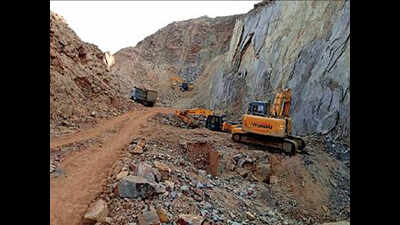
Representative image
In a PIL filed in Rajasthan High Court, Jodhpur, petitioner Shiv Kumar Pandey has also alleged that whatever little money has been spent so far, most of it has been diverted to activities that do not come under the provisions enshrined in the District Mineral Foundation Trust, 2016 of Mines and Mineral (Development and Regulation) Act.

“The factum that improper utilization of the funds by the respective District Mineral Fund Trust (s) and a complete disregard shown towards the District Mineral Fund Trust Rules, 2016 and the functioning of the said District Mineral Fund Trust (s) is totally contrary to the objective of the trust as stated in Rule 4 of the said rules,” the petitioner mentions in the PIL making Union mines secretary, Rajasthan government, state director of mines and geology and trusts as respondents.
As per the information collected through RTIs, the District Mineral Fund Trusts in Bhilwara, Rajasamand, Udaipur and Jodhpur have received about Rs 400 crore by September 2017 while only Rs 110 crore of the corpus has been spent. Sources said If one adds funds from districts like Ajmer and Barmer, the amount can go up to Rs 600 crore.
Rana Sengupta, managing trustee of mine, labour, protection campaign (MLPC), said that like in the construction industry, there is a need for a mine workers welfare board. “Fifty per cent of the total fund should be dedicated to this board for the welfare of the over 25 lakh miners working in over 33,000 mines in the state. And the rest 50% should be spent areas mentioned in the Act.”
Mining companies are contributing about 30% of the royalty to the fund besides spending for other CSR activities. The objective of the fund is to mitigate the adverse effects of mining on people and areas. Mining-related operations such as excavation, blasting, and beneficiation affect the natural environment of the area, be it soil, vegetation, air, etc. Similarly, it also affects the health of the people directly who are engaged in mining operations.
End of Article
FOLLOW US ON SOCIAL MEDIA









Hot Picks
TOP TRENDING
Popular Categories
Hot on the Web
Top Trends
Trending Topics
Devara CollectionNavya Naveli NandaPawan KalyanJungle SafariStree 2 OTT ReleaseRose GardenDevara CollectionOTT Release MovieMasala OmeletteEmergencyDevaraTaaza Khabar 2 Twitter ReviewDevara Movie ReviewHealthy RaitasSwatantrya Veer SavarkarColdplay India tour 2025Smartphone DealsApple Macbook Air M1Amazon SaleWordle Answer
Living and entertainment
Latest News
WWE Superstar The Rock's Daughters: Everything You Need to Know About Simone, Jasmine, and TianaThe Power of Color: Zodiac Signs and Their Energetic HuesAir Arabia launches early bird promotion on 500,000 seats from INR 5,727!'That was the last time I saw my friend': Rahul Gandhi remembers Sitaram YechuryTulsi Gabbard calls Kamala Harris shameless as VP inspects US-Mexico border: 'No conscience'Guneet Monga says, 'films with American distributors should be sent for competition'Scrap dealer dad celebrates son's board exam success by gifting multiple iPhones | Watch videoForeign investment hits record high with Rs 23,600 crore inflows this weekWatch: Pakistan Test team head coach Jason Gillespie to make changes only after...Queen Camilla does not want King Charles to meet Prince Harry because...Congress leader Pawan Khera asserts people of Haryana want change ahead of assembly electionsChennai corporation raises property tax by 6%, oppn sees redHow Nick Sirianni's game-changing call turned out to be a turning point in Parris Campbell’s careerChennai corporation allows private burial grounds, crematoriums to avoid crowdingZodiac Signs as Barbie Dolls: Finding Your Cosmic DollAnupam Kher, Ranvir Shorey express their delight as Khosla Ka Ghosla returns to theatres after 18 years: 'A new generation will experience its magic'Money mania! For IPL players, Jay Shah introduces a whopping match fee of Rs...Grab incredible deals on industrial tools, medical supplies and much more during Amazon Great Indian Festival 2024
Copyright © 2024 Bennett, Coleman & Co. Ltd. All rights reserved. For reprint rights: Times Syndication Service