
- News
- City News
- jaipur News
- 3 injured leopards shifted to Nahargarh for rehabilitation
Trending
3 injured leopards shifted to Nahargarh for rehabilitation
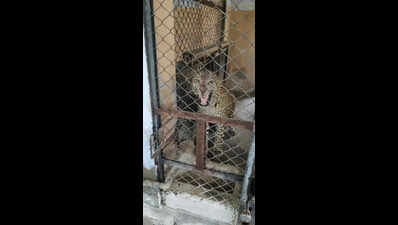
These wild cats will be housed at the park's rescue centre for rehabilitation. In total, four leopards were captured during the operation, though one recently escaped, the remaining three have now been relocated. These leopards were held by the forest department for over a month, during which they sustained injuries to their claws, canine teeth, and foreheads.
Senior veterinarian Dr. Arvind Mathur said, "Two males and one female have been brought here and are now kept in a larger enclosure at the rescue centre. Due to their aggressive behaviour while caged, they sustained injuries. Treatment has commenced, and we hope for their full recovery soon."
Experts alleged that the prolonged captivity led the leopards to injure themselves, and that the forest department's negligence resulted in their extended confinement.
An official mentioned that both male leopards are estimated to be 17-18 years old, while the female is around 12. "The males lack functional canine teeth which could make them prone to attacking humans if released. The female also exhibits signs of aggression. A higher authority will decide their future, but they will remain here until fully recovered."
Sources said the close proximity of the trap cages in Udaipur heightened the leopards' aggression.
"Also, keeping them caged for so long has made it unfeasible to rewild them, as they will not be able to hunt. They hurt themselves and became aggressive, posing a potential threat to humans if released. Additionally, having been brought here, 400km away, these leopards will remain in captivity and are unlikely to be rewilded."
End of Article
FOLLOW US ON SOCIAL MEDIA




Photostories

Hot Picks
TOP TRENDING
Popular Categories
Hot on the Web
Top Trends
IPL 2025 RetentionMumbai Indians Retention ListKing CharlesUP Police Constable ResultUS Election 2024 LiveIPL 2025 Full Retention ListKamala HarrisCSK Retention ListDiwali 2024 LiveKKR Retention ListDelhi Capital Retention ListRCB Retention ListDelhi AQI TodayZac TaylorIPL Remaining PurseIsrael Iran WarDiwali 2024World Test Championship
Trending Topics
Diwali WishesSalman KhanDiwali 2024 WishesTop Diwali WishesAmaran Social ReviewDiwali 2024 Puja TimingKaun Banega Crorepati 16Diwali Pooja TimingDevara OTT ReleaseVicky Vidya Ka Woh Wala Video CollectionAbhishek BachchanAnanya PandayRishad Yusuf Death NewsSmriti MandhanaOptical illusionDiwali Bank HolidaysMaroon 5Wordle Answer
Living and entertainment
Latest News
Diwali 2024: When festival of lights played a major role in Hindi movie scenesDreame Technology Hair Glory hair dryer review: Get stylish and healthy hairWill 'Agatha all along' be renewed for season 2? Here’s what fans should knowShraddha Arya thanks Hina Khan for ‘inspiring everyone’ amid breast cancer diagnosis; says, “Wish you life full of miracles”Horoscope Today, November 1, 2024: Read your today's astrological predictionsWatch: Continuing tradition, PM Modi spends Diwali with soldiers in Gujarat’s KachchhI cannot say just the batters have let us down: Gautam Gambhir on India debacle against New ZealandWho is Karthik Naralasetty? Indian-American tech innovator who could be Texas’s youngest mayorNo proposal to revise 'Shakti' free bus travel scheme for women: Karnataka CM SiddaramaiahAmericans brace for gridlock amid talk of voter fraud and stolen electionSamir Soni opens up on Neelam Kothari's triumphant return in 'Fabulous Lives of Bollywood Wives'; 'she was scared of what people would say about aging'Rajesh Khanna's special Diwali connection with Supriya Pathak's father'Breaking party to obtain power was inappropriate': Sharad Pawar slams Ajit Pawar's factionOur skill against spin has not gone down: Gautam GambhirGT Retention List 2025: Full list of Gujarat Titans Players retentions before IPL 2025 mega auction'It's black day for us': Mehbooba Mufti on J&K's UT foundation dayTrump rides garbage truck to troll Harris and Biden: The best memes and jokesTabu takes over New York in a crushed silk Angrakha by Abu Jani Sandeep Khosla
Copyright © 2024 Bennett, Coleman & Co. Ltd. All rights reserved. For reprint rights: Times Syndication Service