
- News
- City News
- itanagar News
- Mobile connectivity set to become a reality in Arunachal Pradesh's border villages
Trending
This story is from April 23, 2023
Mobile connectivity set to become a reality in Arunachal Pradesh's border villages
As part of the joint efforts of the Centre and Arunachal Pradesh, about 336 border villages of the frontier state scattered near the LAC with China will for the first time be brought under mobile telephony connectivity with the government on Saturday launching 254 4G mobile towers for the region.
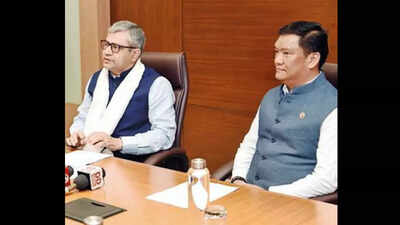
Union minister Ashwini Vaishnaw with Arunachal Pradesh CM Pema Khandu at a press meet in New Delhi on Saturday (Photo: ANI/PIB)
At a function held in New Delhi, Union minister for communications, railways and electronics and IT Ashwini Vaishnaw said the installation of these towers in difficult terrain, overcoming practical difficulties is a clear example of "sabka prayas".

Vaishnaw further said new rail projects are lined up for Arunachal Pradesh and promised that the work on these will be taken forward promptly.
Union law and justice minister Kiren Rijiju, who was also present on the occasion, said security forces and people in the border area used to depend on mobile SIMs of a Nepalese company for communication but things changed after he informed Prime Minister Narendra Modi about the situation.
"Today's launch has happened mostly in border areas. By and large, most of the villages will be in border areas. Our district headquarters like Itanagar are already connected. The target is to reach out to unconnected and unreached locations," he said.
The minister said that thinning of the population because of the non-availability of basic infrastructure had become a major concern. But now facilities like drinking water, electricity and roads are reaching remote and border areas.
The 4G towers have been installed by BSNL in the border area, Rijiu said.
Under the project, the government has connected remote areas of Tawang district where there have been frequent incursions of Chinese troops.
Arunachal Pradesh chief minister Pema Khandu tweeted, "Besides providing seamless connectivity to about 70,000 people of the area, the facility will create immense opportunities showing a path for brighter tomorrow."

About the Author
Prabin KalitaEnd of Article
FOLLOW US ON SOCIAL MEDIA










Hot Picks
TOP TRENDING
Popular Categories
Hot on the Web
Top Trends
Trending Topics
Devara CollectionNavya Naveli NandaPawan KalyanJungle SafariStree 2 OTT ReleaseRose GardenDevara CollectionOTT Release MovieMasala OmeletteEmergencyDevaraTaaza Khabar 2 Twitter ReviewDevara Movie ReviewHealthy RaitasSwatantrya Veer SavarkarColdplay India tour 2025Smartphone DealsApple Macbook Air M1Amazon SaleWordle Answer
Living and entertainment
Latest News
India vs Australia: Can Akash Deep make the difference Down Under?Historic North Carolina village submerged under water after Hurricane Helene brings heavy rainRs 40.87 crore cash, goods seized since inception of mode code: DGP KapoorTulsi Gabbard calls Kamala Harris shameless as VP inspects US-Mexico border: 'No conscience'SC handbook lists terms to be avoided to refer to persons with disabilities, provides alternativesEx-WWE Writer Vince Russo Voices Frustration Over Triple H's Handling of LA KnightQueen Camilla does not want King Charles to meet Prince Harry because...Mapusa rain surges past 4,000mm markAnanya Panday calls new mom Deepika Padukone 'the most beautiful woman ever'Congress leader Pawan Khera asserts people of Haryana want change ahead of assembly electionsRG Kar case: West Bengal junior doctors to resume 'cease work' following SC hearing on MondayGovernment unveils draft rules to take terminally ill off life supportIt’s ‘karma’ that Pakistan ills are consuming its own society: Jaishankar in UNGAMadhya Pradesh: 6 people killed, several injured as bus collides with parked dumper in MaiharShots in the air, wails and disbelief in Beirut after Hezbollah head killedWeekly Horoscope, September 29 to October 5, 2024: Read weekly astrological predictionsMS Dhoni to be 'uncapped' player as IPL retention rules announced ahead of mega auctionMayank Yadav picked for Bangladesh T20Is
Copyright © 2024 Bennett, Coleman & Co. Ltd. All rights reserved. For reprint rights: Times Syndication Service