
- News
- City News
- itanagar News
- Arunachal region highly prone to seismic trigger, says NGRI study
Trending
This story is from January 5, 2024
Arunachal region highly prone to seismic trigger, says NGRI study
A study by NGRI reveals that even tiny stresses can cause seismic triggering in Arunachal Pradesh. The researchers have identified triggered seismicity in the form of microearthquakes and non-volcanic tremors during remote mainshocks. The region, located in north-east India, is vulnerable to seismic activities due to its location at the collision zone of tectonic plates. The study highlights the complexity of faults, fractures, and geological characteristics in the area. Global studies suggest that triggering can lead to significant earthquakes with magnitudes over 5.5.
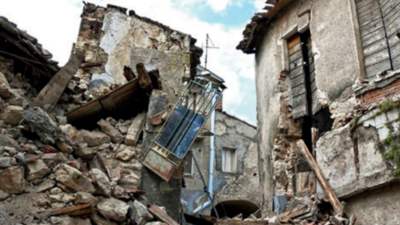
CSIR-NGRI analysed 34 large earthquakes across the globe, generating dynamic stresses of 1 kilopascal and more in the Arunachal Himalaya
NGRI scientists, who investigated dynamic triggering in Arunachal using data of 34 significant remote and distant earthquakes, have identified triggered seismicity in the form of microearthquakes and non-volcanic tremors during six remote mainshocks.

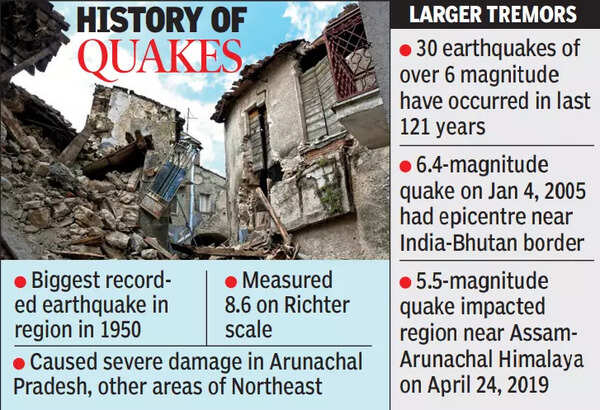
Abhey Ram Bansal, one of the authors of the study, titled ‘Tiny stresses are capable of triggering earthquakes and tremors in Arunachal Himalaya’ published in Scientific Reports journal, said, “The region is highly vulnerable to seismic activities due to its location at the collision zone of Indian and Eurasian tectonic plates. The area is prone to earthquakes because of the complex structure of faults and fractures. The region is also well known for the complexity of its geological characteristics.”
Speaking to TOI, Tony Saini, the lead researcher, said that he plans to carry out a study for the whole Himalayan belt, which will help find stress thresholds and identify sensitive regions there. Bansal said: “Static, quasi-static and dynamic stresses are vital in triggering earthquakes in an area. We have studied seismic triggering while passing large earthquakes’ surface waves, which occurred in faraway places. This triggering is known as dynamic triggering or remote triggering.” CSIR-NGRI analysed 34 large earthquakes across the globe, generating dynamic stresses of 1 kilopascal and more in the Arunachal Himalaya. NGRI has found that earthquakes and tremors are triggered even with a small amount of dynamic stress of 1 kilopascal when certain conditions meet in the region.
Bansal said that global studies have found that triggering could lead to even more significant earthquakes with magnitudes of more than 5.5 on Richter scale. When an earthquake occurs, the seismic waves travel all across the globe. Researchers said the study has the potential to identify vulnerability in north-east India and help understand the seismic hazard in the area.

About the Author
U Sudhakar ReddyEnd of Article
FOLLOW US ON SOCIAL MEDIA









Photostories
Hot Picks
TOP TRENDING
Popular Categories
Hot on the Web
Top Trends
IND vs AUS Live ScoreBaba Siddique NewsVirat KohliRussell WilsonsBaba Siddique DeathBabar AzamWho was Baba SiddiqueBabar AzamNTA SWAYAM July RegistrationMahadev Betting AppAmazon LayoffsToday IND vs AUS MatchManagement Colleges of IndiaTop Medical Colleges of IndiaTop Engineering Colleges of IndiaTop Pharmacy Colleges of IndiaLive Cricket Score
Trending Topics
Diwali WishesDussehra 2024 QuotesDussehra WishesVettaiyan OTT ReleaseVettaiyan CollectionVettaiyan ReviewNatasa StankovicDevara CollectionBigg Boss 18Deepika PadukoneShraddha KapoorRatan Tata Passed AwayJigra Movie ReviewVettaiyan Movie ReviewSwatantrya Veer SavarkarDussehra 2024Star Health Hacker DemandedViral MemesUltimate Football Codes October 2024Wordle Answer
Living and entertainment
Latest News
Accused did recce of Baba Siddiqui's house, monitored him for months: Mumbai PoliceParas Mhambrey joins Mumbai Indians as bowling coachSalman Khan’s security beefed up after Baba Siddiqui’s murder; ‘Sultan’ star looked uncomfortable after visiting the late politician’s family at 3 amBaba Siddique may have died prior to hospitalisation, says doctorsKrushna Abhishek shares a heartwarming post for mama Govinda; says 'jab body mein adha blood supremely talented actor Govinda ka ho...'Zodiac signs likely to have soul connections'Points towards failure of CM': Sanjay Raut slams Maharashtra govt over Baba Siddiqui's killingMahela Jayawardene returns as Mumbai Indians head coachMidnight queues, long waits, bad advice: It's not easy getting therapy in IndiaLoneliness across generations: Why is it important to address this hidden danger?For 500 years, this village in Madhya Pradesh worships Ravan as ‘Kul Devta’Tom Brady is Likely to Become a Minority Owner of Las Vegas Raiders at the Upcoming NFL Fall Owners' Meeting'Rs 64L for errors': Maths teacher fined for totalling mistake of 30 marks in class X exam4.2 magnitude earthquake strikes Assam'Champion of friendship between our two countries': Netanyahu offers condolences on passing of Ratan TataThe Great Indian Kapil Show 2: Kareena Kapoor reveals hubby Saif Ali Khan is jealous of her bond with sister Karisma; says, “He thinks I talk to her more than him”Accused were paid in advance to kill Baba Siddique: Mumbai PoliceMammograms and breast cancer treatment: Separating facts from myths
Copyright © 2024 Bennett, Coleman & Co. Ltd. All rights reserved. For reprint rights: Times Syndication Service