
- News
- City News
- indore News
- Police get ready to fight crime with tougher Bharatiya Nyaya Sanhita now
Trending
This story is from June 30, 2024
Police get ready to fight crime with tougher Bharatiya Nyaya Sanhita now

From registering dummy FIRs to sending Indian Penal Code (IPC)/ Bharatiya Nyaya Sanhita (BNS) hand booklets and PDFs to officers, senior officials are making sure that the constabulary is prepared for July 1.

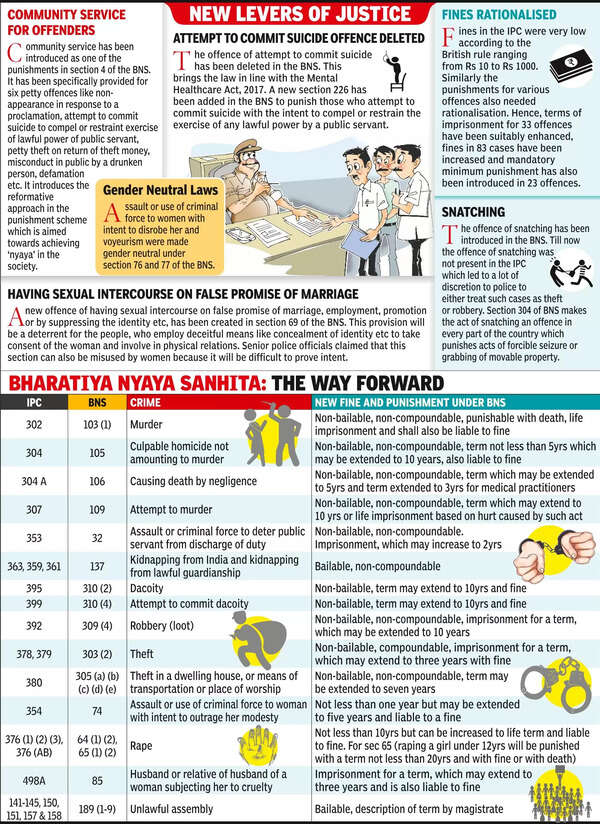
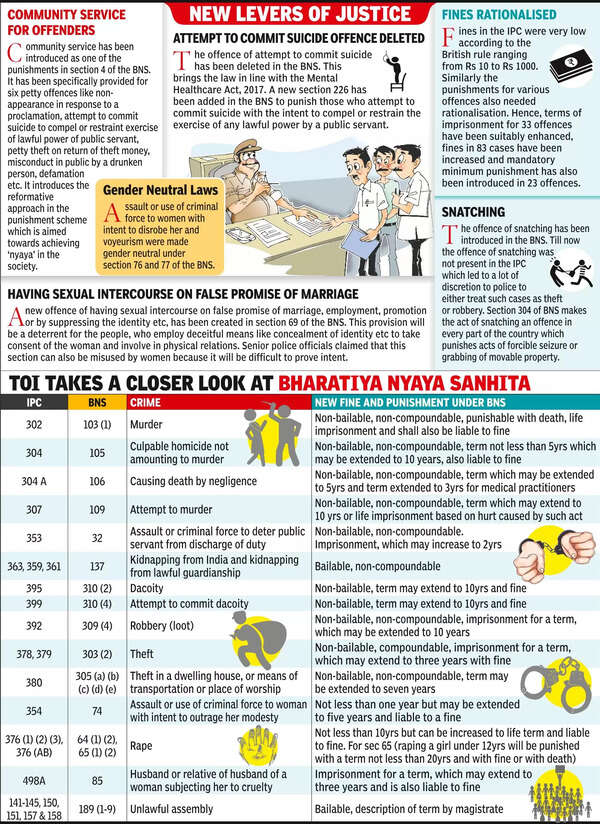
“All FIRs of the cases lodged on and after July 1 will be registered under section 173 of the Bharatiya Nagrik Suraksha Sanhita (BNSS) in place of section 154 of the Code of Criminal Procedure (CrPC),” said commissioner Rakesh Gupta.
“The sections under Indian Penal Code (IPC) will replaced by BNS (Bharatiya Nyaya Sanhita) and the Indian Evidence Act, 1872 by BSA, according to the new criminal laws,” said Gupta.
Gupta added that the Indore police are prepared to enforce the three new criminal laws in the city, having completed phased training for 5,000 personnel. Training will continue for lower-level officers at the district and police station levels.
For cases lodged on or before June 30, the sections of the CrPC and IPC will still apply, even if the FIR is registered after July 1. For example, a theft committed on June 29 but reported after July 1 will be investigated under the IPC and CrPC. Charge sheets for incidents before July 1 will follow CrPC procedures while those after will adhere to BNSS procedures. Officials have also distributed pocket books, PDFs, and posted comparison charts of IPC and BNS sections at all police stations to make understanding easier. Dummy FIRs and trial investigations have been conducted to familiarize officers with the new procedures. It has been under practice in several districts.
Under the new laws, approximately 20 new crimes have been introduced, and the severity of punishment has increased for 33 types of criminal cases. Key features of the new laws include mandatory zero FIRs, compulsory forensic inspections for crimes with sentences exceeding seven years, the introduction of community service as a punishment, and stricter measures against organised crime.
“The new laws incorporate more digital and technical processes to streamline operations, and our officers are ready for this transition,” Gupta stated while talking to TOI.
Officers have been informed about dedicated applications like Sankalan, ICJS (Inter-operable Criminal Justice System), Sakshya (evidence) application, e-Vivechna application, and E-Pramaan application. These tools will assist personnel in recording videos and audio of searches and seizures related to crime, facilitating compliance with the Bharatiya Sakshya Adhiniyam (BSA).
End of Article
FOLLOW US ON SOCIAL MEDIA










Photostories

Hot Picks
TOP TRENDING
Popular Categories
Hot on the Web
Top Trends
Baba Siddique Death News LiveRussell WilsonsBaba Siddique DeathMickey ArthurWho was Baba SiddiqueVirat KohliUGC NET ResultMahadev Betting AppAmazon LayoffsRatan Tata DiesCBSE Class 10 12 Practical ExamPopular Schools in Navi MumbaiManagement Colleges of IndiaTop Medical Colleges of IndiaTop Engineering Colleges of IndiaTop Pharmacy Colleges of IndiaLive Cricket Score
Trending Topics
Diwali WishesDussehra 2024 QuotesDussehra WishesVettaiyan OTT ReleaseVettaiyan CollectionVettaiyan ReviewNatasa StankovicDevara CollectionBigg Boss 18Deepika PadukoneShraddha KapoorRatan Tata Passed AwayJigra Movie ReviewVettaiyan Movie ReviewSwatantrya Veer SavarkarDussehra 2024Elon MuskDussehra Whatsapp StatusUltimate Football Codes October 2024Wordle Answer
Living and entertainment
Latest News
Sena vs Sena: Dusshera rallies in Mumbai turn political as Shinde, Uddhav take aim at each otherTaurus, Weekly Horoscope, October 13 to October 19, 2024: Focus on gains and accomplishmentsCan a dash of cinnamon in your coffee speed up belly fat loss?Roblox dismisses claims made by Hindenburg report: "...don't support their agenda"'Procrastination greatest thief of time': HC junks 'belated case'RSS chief Mohan Bhagwat: Hindus must take lessons from Bangladesh violenceTapSwap Daily Codes for October 13, 2024: Earn coins and cryptocurrency by completing tasks2 flee Uttarakhand jail. Did they escape as Ramlila ‘vanars’ looking for Sita?Scorpio, Weekly Horoscope, October 13 to October 19, 2024: Health and self-care are essentialNumerology Predictions Today, October 13, 2024: Read your personalised forecast for numbers 1 to 9Did you know NTR is the only actor to play both Lord Rama and Ravana?Loneliness across generations: Why is it important to address this hidden danger?For 500 years, this village in Madhya Pradesh worships Ravan as ‘Kul Devta’Leo, Daily Horoscope Today, October 13, 2024: Keep your plans and strategies to yourselfHurricane Milton triggers EF-3 Tornado in Florida's Palm Beach County, leaving seven injuredNIA charges Babbar Khalsa chief with VHP neta's murder'Ab ki baar 300 paar': Fans go crazy as India pile up 297 against Bangladesh'Really sympathetic...We want him bowling': Pat Cummins shows solidarity with Cameron Green during injury recovery
Copyright © 2024 Bennett, Coleman & Co. Ltd. All rights reserved. For reprint rights: Times Syndication Service