
- News
- City News
- Hyderabad News
- Whose alma mater? Only political alumni
Trending
This story is from April 15, 2017
Whose alma mater? Only political alumni
The unique academic idea and fascinating experience called Osmania University turns 100 on April 26.It's a major milestone that calls for grand celebrations.
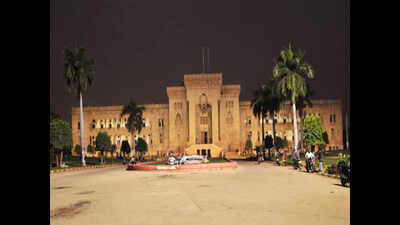
Osmania University

Ironically, their names do not even figure in the scroll of honour (distinguished alumni) on the centenary website of the university. The authorities could not make even a list of at least 100 distinguished alumni to mark the occasion. Of the 51 personalities listed in the scroll of honour, 23 are politicians including MLAs and MLCs. Only two figure in the literature category and eight in the scientists group.
The fact is Osmania University has produced hundreds of students, who made a mark in almost every sphere of life. There is no mention of Vainu Bappu, the only Indian after whom a comet has been named. Bappu was associated with Nizam College and Nizamia Observatory. Moulvi Abdul Haq, who is regarded as the father of Urdu, and Dr Raziuddin Siddiqui, theoretical nuclear physicist and mathematician, do not figure in the scroll of honour. Dr Raziuddin incidentally served as vice-chancellor of OU. Dr Hameeduddin, who was from the first graduation batch of Osmania in 1925, represented the princely state of Hyderabad in the League of Nations (United Nations). He translated the Holy Quran in French and authored over 400 books.
Two such unsung heroes, who live in Hyderabad, are Dr MK Hasnuddin Siddiqui and Dr Syed Fareeduddin. Dr Siddiqui did Bachelor of Science, Bachelor of Chemical Technology, Bachelor of Chemical Engineering and PhD from Osmania University between 1947 and 1958. His discovery of attapulgite clay in Telangana and other parts of India and the technology for purification of edible and fuel oils has resulted in a recurrent saving to the nation of about 2,000 crore a year. He was the first Indian scientist whose work was published by Pergamon Press Limited, Oxford. His books, Bleaching Earths and Palygorskite-Sepiolite, are the most quoted scientific works.
Eminent nuclear scientist Dr Fareeduddin, served as the director, Division of Nuclear Fuel Cycle, International Atomic Energy Agency (IAEA), Vienna. He was the founder-director of Heavy Water Projects (Heavy Water Board). His brainchild is the Nuclear Fuel Complex (NFC) that powers nuclear power stations across the country. The OU authorities have not extended invitation to these two old boys that brought laurels not only to the university but also to Mother India.

About the Author
Syed AkbarEnd of Article
FOLLOW US ON SOCIAL MEDIA










Photostories
Hot Picks
TOP TRENDING
Popular Categories
Hot on the Web
Top Trends
India Qualifying ScenarioBaba Siddique NewsPakistan Cricket TeamRussell WilsonsSpacex StarshipRahul DravidWho was Baba SiddiqueBabar AzamNTA SWAYAM July RegistrationLawrence BishnoiAmazon LayoffsTaylor SwiftManagement Colleges of IndiaTop Medical Colleges of IndiaTop Engineering Colleges of IndiaTop Pharmacy Colleges of IndiaLive Cricket Score
Trending Topics
Diwali WishesDussehra 2024 QuotesDussehra WishesVettaiyan OTT ReleaseVettaiyan CollectionVettaiyan ReviewNatasa StankovicDevara CollectionBigg Boss 18Deepika PadukoneShraddha KapoorRatan Tata Passed AwayJigra Movie ReviewVettaiyan Movie ReviewSwatantrya Veer SavarkarDussehra 2024Star Health Hacker DemandedViral MemesUltimate Football Codes October 2024Wordle Answer
Living and entertainment
Latest News
10 deadliest snakes in Australia and know their venom toxicityOver 70 injured at Devaragattu Banni stick festival during Dussehra celebrationsPassion missing, players don’t want to work hard, lament former intl’sHow tomato, potato, onion influence food inflationBiker’s death ignites village fury in Odisha's Boudh, massive traffic jam on NH-57Reliance Jio sends 'complaint letter' to telecom minister Jyotiraditya ScindiaWomen's T20 World Cup: Why India need Pakistan victory over New Zealand to secure semifinal berthSpaceX's fifth Starship test flight achieves historic booster catchCops probing Bishnoi gang's links to Siddique's murderNews brief: 'Who is listening? Modi?': Kapil Sibal takes a dig at RSS chief Mohan BhagwatPapankusha Ekadashi 2024: Date, Parana Time, Puja Rituals and SignificanceKenya's Ruth Chepngetich breaks women's world record at Chicago MarathonAI’S Oppenheimer'I truly believe ... ': What police said after third assassination attempt on Donald TrumpBaba Siddique murder case: Slum dispute that sparked ED inquest to be part of probeFor 20 years, Thar getting more rain than normalSpiritual fervour marks Bagh Savari festival held at TirumalaBigg Boss Tamil 8: Ravindar Chandrasekaran gets evicted from the house
Copyright © 2024 Bennett, Coleman & Co. Ltd. All rights reserved. For reprint rights: Times Syndication Service