
- News
- City News
- Hyderabad News
- This ACP’s unofficial beat includes saving trees too!
Trending
This ACP’s unofficial beat includes saving trees too!
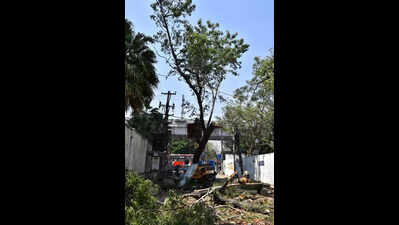
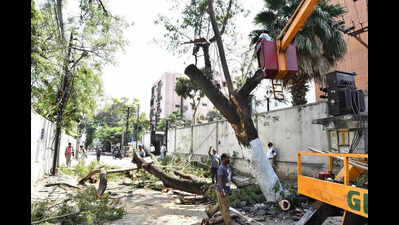

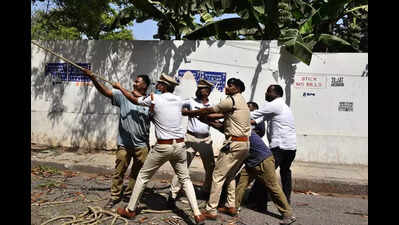
His latest initiative involves relocating two Peltophorum trees, aged 15 to 20 years, from Mayuri Marg to Hyderabad Public School. "The decision came after the branches of the trees extended onto the road, posing risks to commuters and worsening congestion in the high-traffic area, particularly with the presence of multiple schools nearby. Instead of cutting them down, we are giving them a second chance to thrive," ACP Raju said.
A similar effort is underway for two more Peltophorum trees in Patny, which are set to be moved to Mehboob Degree College, Secunderabad, pending final approvals from the forest department and college authorities.
For ACP Raju, this mission is about more than just relocating trees — it's about preserving Hyderabad's green heritage. "Urban development often comes at the cost of greenery, but we can find a balance. These trees take decades to grow, and with the right approach, we can save them instead of losing them forever," he said.
Partnering with him in this effort is Uday Krishna, founder of the Vata Foundation, an organisation dedicated to tree translocation and conservation. The foundation has successfully moved nearly 2,000 trees across the country and had also funded the Afzal Gunj tree relocation.
"Tree translocation is a viable alternative to urban deforestation," Krishna explained.
"Many assume trees must be cut for development, but with the right techniques, they can be relocated and continue to grow." He further emphasised that translocation is a delicate process, involving careful uprooting, transportation, and replanting under monitored conditions. "The best time for this is between June and Jan when cooler temperatures improve survival rates," he added.
ACP Raju's commitment stands as a testament to how individual efforts can shape a greener, more sustainable city — one tree at a time.
Stay updated with breaking news, weather updates, bank holidays and upcoming public holidays in march.
End of Article
FOLLOW US ON SOCIAL MEDIA
Visual Stories









Photostories

Hot Picks
TOP TRENDING
Explore Every Corner
Across The Globe
IND vs NZWayne GretzkyTaylor SwiftCam NewtonBlake LivelyGisele BndchenBrad MarchandAnthony EdwardSidney CrosbyJordyn WoodsBrady TkachukAaron JudgeSteph CurryNBA Buyout RumorsNBA HalftimeAuston MatthewTaylor Swift AlbumWWE Elimination Chamber ResultRhea RipleyKevin OwensRoman ReignsLiv MorganThe RockErin AndrewsMicrosoft Outlook OutageBank HolidaysBank Holidays in MarchChampions Trophy ScheduleChampions Trophy Points TableICC Champions Trophy Live Streaming
Hot on the Web
Heart Blockage SymptomsChia Seeds BenefitsKrushna AbhishekTaarak Mehta Ka Ooltah ChashmahIbuprofen GuidePeppermint Oil For HairMagnesium Oil BenefitsKomodo Dragon vs King CobraWater Weight Loss TipsTanmay BhatGovindaElon MuskRanveer AllahbadiaOptical IllusionWall Sits BenefitsDoomsday FishRajinikanthMere Husband Ki Biwi CollectionChhaava Box Office CollectionChhaava Movie ReviewSadhguru Diet HabitsAshwagandha for Hair GrowthMorning Brain ExercisesUS National ParksUnique AnimalsBig Cat Safari DestinationFatty Liver Reducing FoodsBig Cats IndiaBaby Girl NamesDates Benefits
Trending Topics
India vs New ZealandCarlo ColaiacovoLamelo BallNodirbek YakubboevBrett FavreJimmy ButlerGiannis AntetokounmpoTravis KelceJoe BurrowTaylor SwiftLogan PaulTom BradyErin AndrewRob GronkowskiTravis HunterSouth Africa Cricket TeamChampions Trophy SemifinalMHT CET LLBUS National Anthem BooedVivian RichardNyt ConnectionsKing Legacy CodesDa Hood CodesWordle HintsInzamam Ul HaqDonald TrumpIndia vs New Zealand ScorecardChampions Trophy Points TableChampions Trophy ScheduleICC Champions Trophy 2025 Live Streaming
Popular Categories
HeadlinesSports NewsBusiness NewsIndia NewsWorld NewsBollywood NewsHealth+ TipsIndian TV ShowsTechnologyICC Champions TrophyIPLTravelEtimesHealth & FitnessHollywood NewsWeb SeriesWWEUS NewsNFLHow to watch IPL 2025How to watch IPL in CanadaHow to watch IPL in USACBSETechnology NewsInternational SportsAstrologyPublic HolidaysBank HolidaysIndia vs New ZealandWeather Today
Latest News
Taylor Swift to finally address Blake Lively "dragging" her into the Justin Baldoni drama but in her own wayNBA Offseason Rumors: Los Angeles Lakers might sign 8x All-Star and NBA Champion; possible reunion with Luka Doncic?Imran Khan reveals how he met his girlfriend Lekha Washington: 'Her then-partner actually was an old, old school friend of mine'Kunj Anand addresses box office failure of Junaid Khan and Khushi Kapoor’s 'Loveyapa': 'Audience will connect with it once...'Irrfan Khan's son Babil Khan clarifies his mother Sutapa Sikdar solely built the farmhouse in Maharashtra village 'Hero Chi Wadi': 'These were the dreams Baba couldn't fulfill'Elon Musk's internet: So based, much wow. So cringe?When Jackie Shroff revealed he felt heartbroken after Madhuru Dixit got married to Shriram Nene'One moment we were sleeping, the next thrown like puppets': Avalanche survivors recall moment disaster struckThis Player Is Going Viral at the NFL Combine for Being Jalen Hurts’ Long-Lost TwinAshutosh Gowariker shows off his dance moves as he performs Mitwa from Lagaan at son Konark Gowariker's wedding sangeet: Watch videoWayne Gretzky's controversy takes a new turn as a new video emerges amid ongoing Team Canada support backlashBhagyashree opens up on gender equality at home; says she didn’t believe in leaving her kids Abhimanyu and Avantika with nannies: 'I was far too young to manage both worlds'Alia Bhatt spends time with fans at Mumbai meet-and-greet; check pics“The Only Way to Pay Off Student Loans Is by Dating Him”: SNL Roasts Bill Belichick's Relationship with 24-Year-Old Jordon HudsonEC statement on duplicate EPIC numbers confirms voter list anomalies in Bengal: TMCBride abducted on MP highway, rescued by copsThe Most Awarded Actors in Oscar HistoryTrump isn’t the first US president to lose patience with Zelenskyy — Biden did too, 2022 report reveals
Copyright © 2025 Bennett, Coleman & Co. Ltd. All rights reserved. For reprint rights: Times Syndication Service