
- News
- City News
- Hyderabad News
- The great Kakatiyam conundrum
Trending
This story is from February 11, 2017
The great Kakatiyam conundrum
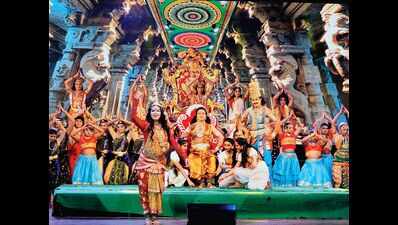
Does Telangana need a new dance form
Does Telangana need a new dance form

Classical dance forms don't surface overnight
The creation of a new dance style or form is an organic and lengthy process. It evolves over centuries,with generations of artistes dedicating their lives to the growth of the style. Take for instance, Bharatanatyam or Kuchipudi, or for that matter any of India’s many classical styles — They evolved over centuries: early records can go back many many centuries and later find support and patronage in the late medival period.
Also, when you are taking about creating a new dance form, you need to first sit and figure out what the tenets are. Each dance form, much like a sport, has its own grammar, rules, methodology, content etc, which is derived from written texts, oral learning, cultural learning, gurus and more. If a new style is to be created or invented, then it must be submitted to critical analysis, peer review and due diligence where every new movement or content must be critically looked and analysed, after which will come the transmission and repertoire building that really requires due diligence, analysis and research. There should be a clear understanding between what makes a dance form and what is just a production. Just because I have 25 productions does that mean I will market it as 25 dance styles?
The form also needs to be accepted and recognised by peers, like in a scientific process. Now take for instance the Andhra Natyam and Vilasini Natyam, peer reviews continue even today in these forms. An individual dancer may only be able to trigger the process, and hope that one day long after our deaths, this form will be accepted, as classical form.
Now coming to the acceptance, or recognition, any dance form can only be accepted by the artistes themselves and the rasikas or viewers, and not by administrative authorities and processes. No art can or should be identified by a GO. Would we do it with sports? Or for that matter with any other field?
Art and artists are beyond boundary, and to try to contain it by geography, and identity will be only counter-productive, for the art and the artists
— Ananda Shankar Jayant
----
To say that a dancer will create a new classical form is a mockery
It’s not a joke to even claim to create a new dance form. It takes ages, a lot of hard work, blood and tears to firstly even think of formualting a new form, and then it will the scholars who sit, discuss and analyse these forms. If you want to create a new production and call it “my way of expression”, no one will stop you. But to say that you are creating a new, and that too a classical, form all together sounds like a mockery of not only the rest of the classical forms but also the stalwarts who have spent their whole life getting the dances forms its dur recognition.
When Raja Reddy started performing in Delhi, it wasn’t easy for him to get Kuchipudi the due recognition. They would call it a “nakra”. It took him a lot of hard word to rid that word off the dance form.
I think dancers should first try to cherish, appreciate and even preserve these dance forms that have been recognised over so much strife and not give into petty motives. After all, India is one. And we should not have of regionalistic aspirations. Take for instance, Balamurali Krishna gaaru, he is a carnatic icon, but he wasn’t even a Tamilian. How do these divisions matter when it comes to art?
— Kausalya Reddy, Kuchipudi dancer
----
Just because we are divided politically, doesn’t mean that art and artists should be divided
Nritta Ratnavali, an authoritative Telugu work on dance was written by Jayapa of the Kakatiya kingdom, now in Andhra Pradesh. Back then, when Warangal was the Kakatiya capital, artists from Vijayawada and Nellore came to Warangal. Also, Kuchipudi found patronage of last Golconda ruler Abul Hasan (or Tana Shah). This dance form is a dance of all Telugu people, that was reiterated again by MA Naidu at the World Telugu conference. Now, just because politics divided the state, doesn’t mean that art and artists should be divided.
— Raja Reddy, Kuchipudi legend
--
Does this mean that tomorrow I can wake up and say that I have discovered new dance form and everyone should
follow it?
There was a time when only Bharatanatyam was considered the dance form of the South and Kathak, the form of the North. It took dancers, scholars centuries to get the due recognision for Kuchipudi. And it’s only natural, because at the very beginning any art form is fluid, it is still taking shape. Over time, the technique, the grammer, the concept, the philosophy becomes solid. And with that the art form gets associated with its salient features.
Also, every form is based on a treatise, which will in turn be examined by scholars. Of course, each scholar will look at it differently, but then there will be a common thread that comes out of it, that’s what makes a classical art form.
Yes, if you want to conceptualise a new dance form, go ahead. But you need to let people learn, let people teach, let the art form grow into recognition. Things shouldn’t be done in a hurry. One day, we hear that Perini is the official dance form of Telangana and then something new mushrooms up. No government should thopo a style and tell us this is THE style.
If this is the way things are run, then one day I can go to sleep, overnight think of something new and wake up and say this is the new form and we should follow it. Will that work?
— Dr Alekhya Punjala, dancer, HoD of Dance department in Potti Sreeramulu Telugu University
---
No one can master an art form in one lifetime, let alone create a new one
I have been practising and performing Kuchipudi for 45 years now. And I still feel like a student. I am just a drop in the ocean. Learning an art form is a life-long process, and mastering it is a whole other ball game. One can’t just click their fingers and say ‘Oh, here I am creating a new dance form’. The question really is, why do we even need this new dance form. Kuchipudi has roots in Telangana just as much as Andhra — one of the biggest proofs to that is the fact that the Golconda ruler Abul Hasan Taneh Shah was so fascinated by the art that he gifted the village to the artistes after being enthralled by their performance. And that kind of patronage and acceptance from not only the authorities, but also from people will come only after generations of artistes have performed it and scholars have researched it for centuries. For Kuchipudi, people had to go present papers, debate, perform and so much more to the Sangeet Natak Academy, that’s what a dance form needs to be considered in the first place. How to distinguish it from other styles with a proper methodology, idiom and grammar is essential. A dancer just can’t create one production and call it a new art form.
— Deepika Reddy, dancer
---
Firstly, no art form has any geographical boundaries
Today we perform Odissi, Kathakali everywhere in Hyderabad, and also the dance forms have been internationally travelling and have made their identity. I don’t acceptging by geographical boundaries. Secondly, it’s the Golconda nawabs who have given patronage to Kuchipudi by giving Kuchipudi village to the nomadic performers of Brahmin community. So how can Telangana deny its own contribution to Kuchipudi. I feel it’s ironical, had they been given a land in Hyderabad, it would have become a Telangana art form today. Since land was available on the coastal area it now belongs to Andhra! It’s not right to disown our own contribution, our ancestors’ and rulers’ contribution towards that art. Moreover, I have seen the YouTube videos of Kakatiyam, I see Padmaja Reddy’s contribution as a great contribution to the history of Kakatiyas. But I don’t think it can become the dance form in itself. I only accept it as a dance drama presentation.
— Aruna Bhikshu, Professor of HCU
Telangana already has several ancient traditions that needs to be promoted and nourished
When you look at the history of any art form, it has taken several years to evolve. The dance forms we see as classical today are at least a few hundred years old. Take the case of Perini Shivatandavam, even now it has not gained the reputation of being classical, neither is it nationally recognised despite the efforts made by Dr Nataraja Ramakrishna. It takes a long time for a tradition to evolve and get established. Generally, when a new state is formed, there is an effort from all fronts to establish an identity of its own. When Andhra Pradesh formed in 1956, there was an effort to promote an identity and culture became an important facet. And since dance is an important visual art form, Kuchipudi was promoted as the identity factor in the initial stages. But there is no hard and fast rule that every state has to have a classical dance form. In that case none of the North Indian states have a classical dance form. Telangana is already rich culturally, it doesn’t need to establish itself as rich. There are several ancient traditions that needs to be promoted and nourished, like great Devdasi tradition that existed in the temples of this particular area of Telugu region, its folk songs, the chakka bhajanas, Chindu Bhagvatam. And it’s not an individual’s doing. It’s a contribution of several coming together to practice something which gets established over a period of time. Just the way Odissi came into being as one of the classical dance forms.
— Anuradha, Professor of HCU
Kuchipudi doesn’t only belong to Andhra, it is very much a part of Telangana and its history
Firstly Telangana has a classical dance form which is Kuchipudi, it does not just belong to Andhra because Kuchipudi was given patronage by Golconda nawabs. Kuchipudi is as much the classical dance form of Telangana as Andhra.
Secondly what Pdmaja Reddy has done cannot be termed as classical dance of Telangana at all. What she did, that too badly, was a loose collage of different kind of dances mentioned in Nritta Ratnavali without any technique. To claim that she has reconstructed something that can become the classical dance form of Telangana is absolutely insane. A collage of forms mentioned in Nritta Ratnavali cannot be a classical dance form. Despite years of efforts and research of Nataraja Ramakrishna, Perini dance form till today doesn’t have a proper pedagogy or complete technique with very few dancers. For example, the Odissi dance form in the 1950s did not have any shape. Under an organisation called Jayantika, the gurus of Odissi came together and went through gotipua, mahari dance, sculptures and decided upon the technique and repertoire and named it as Odissi. After years of vigorous academic investigation and reconstruction it became a classical or traditional dance form of that state. Padmaja Reddy’s production was just like a school annual day function. To tag it with identity of Telangana and claiming it as a classical dance form of Telangana based on Nritta Ratnavali is not acceptable. If such a thing has to be undertaken, can be undertaken by Creative Centre for Kakatiya Performing Arts. There are 15 dance forms that needs elaborate research. Scholars and performers have to come under one umbrella and then extract only if something can be extracted. Because there is no evidence. We don’t know how they were performed. The brief description in Nritta Ratnavali is not enough to create an entire dance form. A lot of it is a conjecture. So if she calls this a production, it’s all right, if she tries to establish as a classical dance form of Telangana, it has to be contested. Especially because Padmaja Reddy is a known non-dancer. Her Sangeet Natak Akademi Award is a farce which even the state government apart from some bureaucrats agree. The production was a proof of her incompetence. Her dance itself was very very below average. We are in hurry to establish the identity of Telangana, and anything named Kakatiyam or Telangana should not be pounced upon saying that this is giving an identity of the state. If it’s not contested, we will only keep cribbing about falling standards of our culture without realising that we are responsible for it because we did not react to it.
— Madhavi Puranam, dance critic
End of Article
FOLLOW US ON SOCIAL MEDIA






Photostories

Hot Picks
TOP TRENDING
Popular Categories
Hot on the Web
Top Trends
Stock Market TodayBasit AliBrittany MahomesRavichandran AshwinBabar AzamKanpur Test Match RecordsUGC NET Result 2024Tirupati LadduIndia T20 WC SchedulePPF CalculatorBryonna Burrows Net WorthWomen T20 World Cup Points TableWomen T20 World Cup ScheduleIND vs PAK T20 WC MatchDiddyTop Management Colleges of IndiaLive Cricket Score
Trending Topics
GovindaNavratri Colours 2024Solar Eclipse 2024 TimesNavratri WishesGandhi Jayanti WishesDevara CollectionGOAT OTT ReleaseGandhi Jayanti 2024Rajinikanth Health UpdateNavratri HistoryDevaraGovinda NewsDevara Movie ReviewHealthy RaitasSwatantrya Veer SavarkarColdplay India tour 2025Upcoming Smartphones In OctoberAmazon SaleSony Bravia 55 inch 4k Ultra HD TVWordle Answer
Living and entertainment
Latest News
Japanese artist’s tribute to Indian classical dance formAnanya Panday unveils her Amol Palekar-inspired look in quirky BTS PICS from 'CTRL’Sanjay Dutt celebrates 'Gandhigiri', shares a scene from 'Lage Raho Munna Bhai'Women's T20 World Cup 2024: Teams, format, venues, defending champions and more FAQs answeredGovinda's bullet injury: Mumbai police not convinced with actor's version but rule out foul playGovt proposes to bring motorcycles under ‘contract carriage’ by amending MV ActHaircuts and colours to try out this PujoTriptii Dimri denies skipping the Jaipur event after allegations of charging an appearance feeMaharashtra assembly polls: Deputy CM Ajit Pawar meets Union home minster Amit Shah amid Mahayuti tensions over NCP, seat-sharingWatch: Orry channels Aishwarya Rai in a hilarious tribute to Shah Rukh Khan and Amitabh Bachchan starrer 'Mohabbatein'NFL insider reveals Raiders’ asking price for star wide receiver Davante Adams amid trade speculationAnanya Panday on being called the upcoming Alia Bhatt: I can't touch what she has doneWhy you must run in the morning on an empty stomachManipur CM Biren Sing bats for political talks to resolve crisis in stateSolar eclipse 2024 date and time: When is Surya Grahan in October? Will it be visible in India?Best anti-ageing workouts for strength and flexibilityArya's film faces controversy for not paying junior artists on timeGomathi Priya and Vetri Vasanth's 'Siragadika Asai' completes 500 episodes
Copyright © 2024 Bennett, Coleman & Co. Ltd. All rights reserved. For reprint rights: Times Syndication Service