
- News
- City News
- Hyderabad News
- Health scare: Zika mimics brain proteins
Trending
This story is from September 2, 2018
Health scare: Zika mimics brain proteins
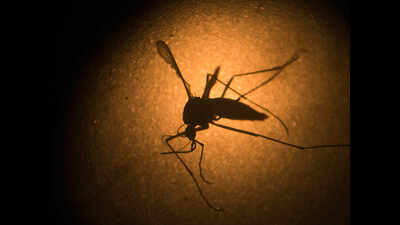
Image used for representational purpose only
At least five of the proteins of Zika virus are like those present in nerves, city researchers have found. The virus was also found to be interacting with proteins in human tissue. The research study revealed similarities in Zika virus proteins and human nerve tissue proteins.
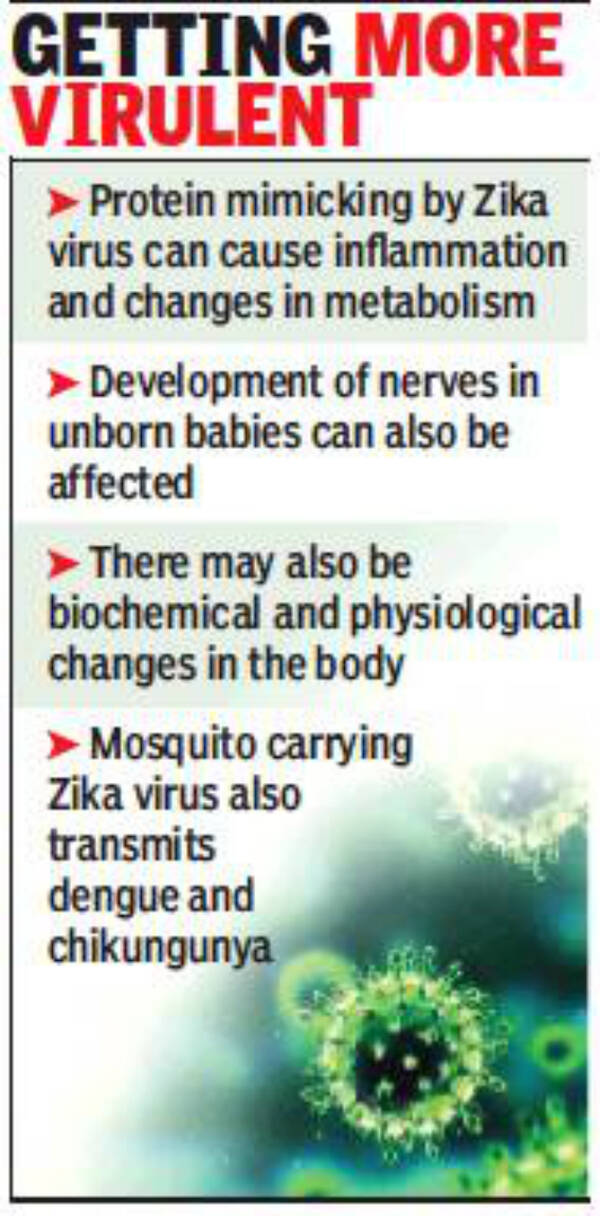
As part of the research as many as 63 human nerve proteins were screened for similarities with Zika virus. The researchers found that five of them - Neuromodulin, Nestin, Galanin, Bombesin, Calcium-binding protein - were like the polyprotein C of the virus. Polyprotein C regulates pathogenic or disease-causing interactions between the virus and human beings in case of Zika virus.
The research was conducted by a team drawn from the city-based CODEWEL Nireekshana ACET, York University, Canada, LSU Health Sciences Centre, Centre for Cardiovascular Diseases and Sciences Shreveport, USA, and Presidency College, Chennai-05. The result of the study was published in the recent issue of the science journal, Bioinformation. The study gains significance as Zika virus is an emerging disease in Hyderabad and other parts of Telangana and Andhra Pradesh. Earlier studies have shown that the Asian strain of the virus has mutated.
Zika virus is notorious for causing birth defects. Several cases of Zika virus were reported from Telugu states. Incidentally, Aedes aegypti, the mosquito that carries the Zika virus, also transmits dengue and chikungunya infections in human beings. Zika virus shows interest in attacking neural stem cells. This reduces the protection of new neurons.
“Structural similarities between the Zika virus and host nerve peptides could directly or indirectly impact the pathogenesis of the disease…,” the researchers said.

About the Author
Syed AkbarEnd of Article
FOLLOW US ON SOCIAL MEDIA




Photostories
Hot Picks
TOP TRENDING
Explore Every Corner
Across The Globe
Popular Categories
Hot on the Web
Top Trends
Paul HeymanVirat KohliMaha Kumbh StampedeTrish StratusRichest People Educational Qualification2025 Mens Royal Rumble MatchIsabella StrahanTax CalculatorBudget 2025 Income TaxCBSE Social Science ExamOKC Thunder vs Golden State WarriorsTNPSC Group 2 Mains Admit CardTyler SabapathyUnique IdiomsWWE Female SuperstarsBudget 2025 Income TaxSunita Williams QualificationLive Cricket Score
Trending Topics
Emergency Box Office CollectionGame Changer Box Office CollectionLunar New Year WishesBeetroot Chickpea KebabsNational ParkVasant Panchami 2025Mauni Amavasya 2025Happy Chinese New Year WishesHappy Chinese New Year MessagesGBS SymptomsDeepseekWildlife SafariDonald TrumpGopalakrishnanemergency Box Office CollectionNYT ConnectionsBill GatesGaurav TanejaTOI News
Living and entertainment
Latest News
NCLT orders action against RP of Byju'sDOJ official monitors Chicago raids amid sanctuary city crackdown: ReportILT20: Desert Vipers beat Gulf Giants to confirm a top-two finishMI Cape Town book maiden SA20 playoff spot with dominating win over Sunrisers Eastern Cape'Over 50% owners in small business manufacturing are women'‘Rekhachithram’ OTT release: Asif Ali starrer to start streaming on THIS platform; reportsSky Force box office collection Day 6: Akshay Kumar and Veer Pahariya starrer crosses Rs 80 crore markMinistry of heavy industries, auto companies seek GST cut for CNG vehicles60 bureaucrats, 10 police officers shifted in Manipur‘Dominic and the ladies’ purse’ box office collections day 7: Mammootty’s film only collects Rs 35 lakhsPune woman 2nd GBS casualty, Kolkata reports 2 deathsDid Nikki Garcia Really Want Full Custody? Inside the Legal BattleWas Artem Chigvintsev’s Arrest the Final Straw or Just One of Many Issues?Local brands add fizz to Coke portfolioIs Dominik Mysterio and Liv Morgan’s WWE Link Creating Drama in His Marriage?How finance minister can simplify tax regime for individualsWho is Ahmad al-Sharaa? Islamist rebel leader named Syria’s interim presidentWas Logan Paul’s WWE Title Shot a Result of His Social Media Influence Rather Than His Wrestling Skills?
Copyright © 2025 Bennett, Coleman & Co. Ltd. All rights reserved. For reprint rights: Times Syndication Service