
- News
- City News
- Hyderabad News
- Government shield allows corrupt babus to flourish, law can’t touch them
Trending
This story is from March 6, 2018
Government shield allows corrupt babus to flourish, law can’t touch them

An excise superintendent, K Narasimha Reddy, was booked for possessing assets disproportionate to his known sources of income (DA case). Instead of initiating action, the government not only dropped charges against him, but treated his suspension period as ‘On Duty’.

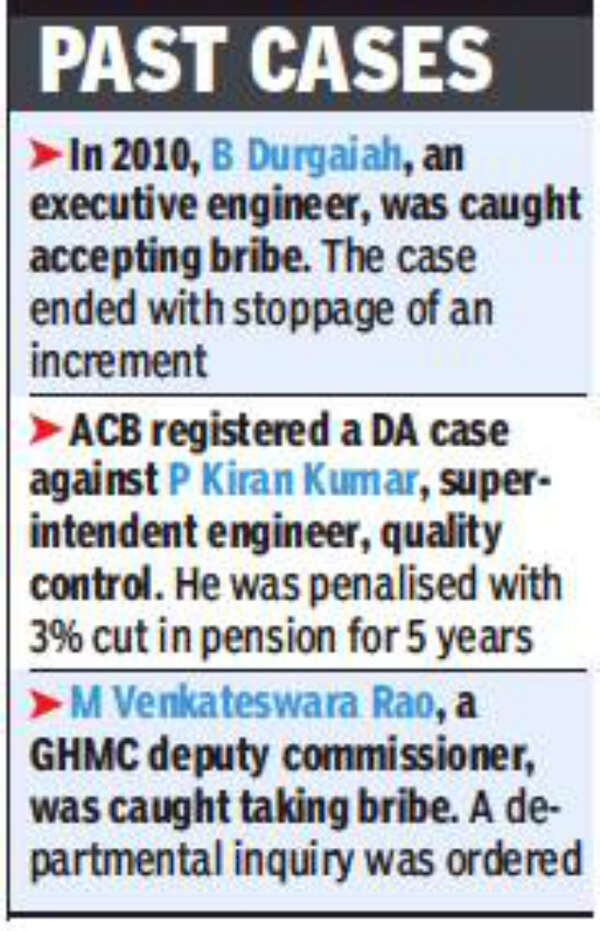
In another case, Anti-Corruption Bureau (ACB) director-general strongly objected to the government’s denial of prosecution. However, the government indirectly reprimanded the top cop not to raise objections and issued directions to transfer the case to the tribunal for disciplinary proceedings instead of criminal prosecution.
These startling revelations came to light in an RTI petition filed by Forum for Good Governance. M Padmanabha Reddy, a former IFS official and secretary of FGG, told TOI, “ACB after registering cases of corruption against government employees, seek permission to prosecute the accused officers.After dragging the case for a few years, the accused officer is let off with minor punishment. ”
Narasimha Reddy, a former prohibition and excise
superintendent of Nizamabad, was suspended on April 28 in 2008. After six years, the revenue department issued a GO in 2014 dropping further action.
“As if dropping charges is not enough, the suspension period was treated as ‘On Duty’, and for the delayed payment of his emoluments, an interest of Rs 5,483 was paid to the officer. This is a classic example of how the administration is dealing with corruption-related cases,” Padmanabha Reddy alleged.
“Adilabad District Industries Centre general manager KP Krishna and another employee B Prithvi Raj were caught by ACB officials in 2015 for accepting Rs 30,000 for a favour. Later, they were suspended. Krishna was allotted to AP.
DGP ACB, while submitting his report, has stated that the evidence available on record is sufficient to substantiate the case and requested permission to prosecute accused. The government did not agree, instead entrusted it to the tribunal for disciplinary proceedings,” Reddy added.

About the Author
U Sudhakar ReddyEnd of Article
FOLLOW US ON SOCIAL MEDIA










Hot Picks
TOP TRENDING
Trending Stories
In City
Entire Website
- Howard University: 10 landmark firsts of the institution that shaped Kamala Harris
- Earthquake of magnitude 5.8 strikes Pakistan, tremors felt in Delhi, neighbouring areas
- Who were Barack Obama's challengers in 2008 and 2012 US presidential elections?
- 'A in INDIA alliance': Rahul Gandhi's slip-up during address to Indian-Americans goes viral
- Trump vs Harris: Betting markets reveal who’s expected to win the US presidential debate
- IGNOU December 2024 Term-End Exam: Registration Details, Important Dates, and Fee Structure
- Top 10 TED Talks to Boost Confidence and Success for Female Students
- Case against British Indian woman for Hindu prayers on beach collapses
- China refuses to sign agreement to ban AI from controlling nuclear weapons
- 'Not merely due to diet ...': Tammy Slaton on her weight loss journey after losing 226 kg
- Tussle in Mahayuti: Total seats 288, but BJP wants 160, Shiv Sena 100+ and NCP 60+
- ACT Hockey: India hammer Malaysia 8-1
- Six takeaways from US debate where Kamala ‘trapped’ Trump
- An Indian, not Columbus, found America, says MP education minister
- Malaika Arora's father Anil Arora dies by suicide
- Encounter breaks out between security forces and terrorists in Udhampur
- Why growing lure of protein supplements is worrying health experts
- Apple announces price cut on iPhone 15, iPhone 14 models: New prices
- Musk’s offer to ‘give child’ to Swift sparks outrage: ‘How low can one go?’
- Kejriwal's custody extended till Sept 25, bail granted to Durgesh Pathak

Popular Categories
Hot on the Web
Top Trends
Trending Topics
Deepika PadukoneMalaika Arora Father DeathArbaaz KhanJayram RaviAishwarya Rai BachchanSlat WaterWeight GainGOAT CollectionVikas Sethi DeathMalayalam ProducersIndia's Best Dancer 4Simi GarewalDilli BabuIndian National ParksLaung BenefitsVikas SethiiPhone 16Dubai Princess Sheikha MahraMG Windsor EvWordle Answer
Living and entertainment
Latest News
Manju Warrier expresses gratitude for birthday wishes: "Forever humbled and grateful"Haryana HPSC PGT admit card 2024 out at hpsc.gov.in: Direct link to download hall ticket here6,0,6,6,6 - Smashing Kieron Pollard rolls back the clock in Caribbean Premier League - WatchRelief for Amul in trademark war against Italian brandAfghanistan vs New Zealand: Why is Greater Noida stadium hosting a Test match?Shilpa Shetty and Raj Kundra spotted at the Siddhivinayak Temple; video insideDonald Trump and Kamala Harris shake hands as they meet for first time on debate stage: Watch the 'awkward' momentPrince William’s commitment to a lasting marriage with KateWhen Jaya Bachchan revealed she had a huge crush on Dharmendra, called him a 'Greek God' in front of Hema MaliniJr NTR starrer 'Devara: Part 1' completes censorship formalities; receives UA certificateGeorgia school shooting: Suspect's mom's call wasn't the only alert, multiple warnings overlooked before Apalachee high attack'Trump should not be telling a woman what to do with her body', says Kamala Harris on abortion rights during US presidential debateArbaaz Khan spotted outside Malaika Arora's house along with police after the tragic news of her father's demise by alleged suicide - WATCH VIDEOShivaji statue collapse: Sculptor’s custody extended till September 13Vijay Sethupathi and Trisha starrer '96' to have a sequel, reveals Prem Kumar7 Common veggies that are loaded with iron and essential nutrientsBengaluru techie pockets 1k cryptocurrencies of his company, lands in police netThe Luckiest Zodiac Signs: Who's Got the Midas Touch?
Copyright © 2024 Bennett, Coleman & Co. Ltd. All rights reserved. For reprint rights: Times Syndication Service