
- News
- City News
- gurgaon News
- Gurgaon Pollution: This November's AQI 3rd worst since 2016
Trending
This story is from December 1, 2023
Gurgaon Pollution: This November's AQI 3rd worst since 2016
This article discusses the alarming air pollution levels in Gurgaon during November. According to data from the Central Pollution Control Board (CPCB), November 2021 was the most polluted month with an average air quality index (AQI) of 357. This year, Gurgaon experienced three 'severe' days and 16 'very poor' days in November. The city's daily AQI deteriorated to 'very poor' at 316 on Thursday. Experts attribute the worsening air quality to a lack of coordinated efforts in addressing emissions from various sources like transport, industry, waste management, and power generation.
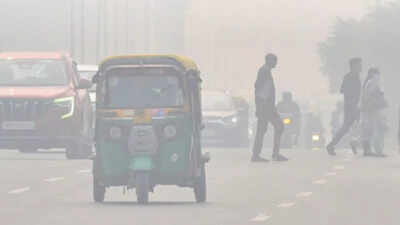
Gurgaon's most polluted November was witnessed in 2021, when the average AQI was 357, followed by November 2017 (356) and 2020 (304), according to CPCB data
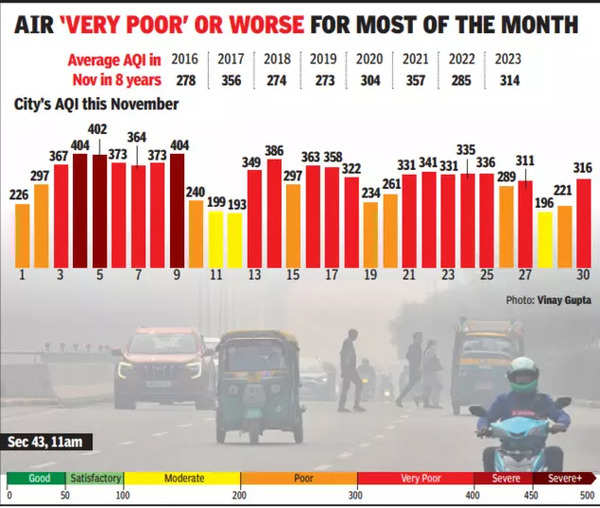
The city's most polluted November was witnessed in 2021, when the average AQI was 357, followed by November 2017 (356) and 2020 (304), according to CPCB data. For the same period last year, the average AQI was 285.
Track the pollution level in your city
This year, the city saw three 'severe' days in the month (when the AQI surpassed 400) and also 16 'very poor' days (AQI of 300-400). A total of three 'moderate' and eight 'poor' days were also recorded. In November 2022, the city saw one 'moderate', two 'severe', nine 'very poor', and 18 'poor' air days.
Meanwhile, the city's daily AQI deteriorated to 'very poor' at 316 on Thursday, from 221 (poor) the day before.
According to experts, the region witnessed less rain and winds with low speeds this November, while local sources of pollution remained the same, which led to worsening of the air quality as pollutants couldn't be dispersed.
"Despite the urgent need for coordinated efforts to address emissions from various sources like transport, industry, waste management, and power generation within both the city and the larger airshed area, systematic actions have been lacking in the past years. The concerning reality is that hazardous pollution has now become a regular and recurring occurrence," said Sunil Dahiya, analyst at the Centre for Research on Energy and Clean Air (CREA).
"Specifically, sectors like transportation within the city, power generation and industries in the broader airshed stand out as persistent challenges where we have struggled to reduce significant emission loads. The continual influx of new vehicles on roads and the recent regressive revisions to the Graded Response Action Plan (GRAP) have contributed to this failure. The revised GRAP excludes certain polluting sectors, such as coal-based power stations and industries, from the list of actions across different AQI categories. These were previously mandated to cease operations in the past years."
Haryana State Pollution Control Board (HSPCB) officials said the suspension of road dust due to vehicular traffic and waste burning are of special concern in the city. "Over the years, highly polluting industries have moved out of NCR. We have changed rules regarding the use of diesel gensets and also put a ban on biomass burning. These have definitely given some results, but we still need to strengthen the public transportation system and control construction and demolition waste and road dust," said a senior HSPCB officer.
Meanwhile, after a brief respite, Delhi's pollution levels again hovered at the 'near-severe' level throughout the day further before turning 'severe' by 7pm on Thursday. The average AQI was 398 against 290 a day earlier.
According to the Indian Institute of Tropical Meteorology's air quality early warning system, Delhi-NCR's AQI will remain at the 'very poor' level. This forecast stayed the hand of Commission for Air Quality Management in invoking Graded Response Action Plan Stage III measures, which restrict construction and demolition activities and prohibits BS-III petrol and BS-IV diesel cars on NCR roads.
End of Article
FOLLOW US ON SOCIAL MEDIA








Photostories

Hot Picks
TOP TRENDING
Explore Every Corner
Across The Globe
Tesla Cybertruck FireNew Orleans AttackTaylor SwiftStock Market TodayICC Champions Trophy 2025 Schedule
Top 10 US CollegesTaylor Swift NecklaceLucknow Hotel MurderQB Matthew StaffordHighest Innings Totals
Popular Categories
Hot on the Web
Top Trends
Turo AppGate Admit Card 2025 DateGautam GambhirManu BhakerIndian Team Dressing RoomAkash DeepJEE Main Admission ScheduleJasprit BumrahAir India Wifi Internet ServicesIND vs AUS Playing 11WTC Final QualificationKevin PietersenJanuary Bank HolidaysOrleans Attack VictimsTMC Leader Babla SarkarRajasthan Borewell Girl DeathOAV Admit CardLive Cricket Score
Trending Topics
Yearly Horoscope 2025Reduce Uric AcidKanha National ParkKidneys HealthyArmaan Malik Wedding PhotoRajiv KapoorBaby John Box Office CollectionPink Colour AnimalMutton SnacksRed Colour AnimalParenting TipsJim Corbet National ParkLong Weekends 2025Relationships TipsKrishna KR Death NewsNYT ConnectionsElon MuskSuchir Balaji
Living and entertainment
Latest News
Why pooping before exercise could boost both your speed and sharpnessICEA suggests lower taxes and simpler tariffs to boost electronics manufacturingIND vs AUS 5th Test Live Streaming: How to Watch India vs Australia Match Online in India, US and AustraliaTomarket secret daily combo for January 2: How to unlock combo and moreHyundai Creta goes electric! Two battery options, 0-100 kmph in 7.9 seconds'Exaggerated, imposed history': How Bangladesh is redefining 1971 Liberation War narrative after Sheikh Hasina's exitWhat would you do if you had a million dollars? Leave the country?'All of us should be ashamed': Madras high court criticises politicisation of Anna University rape caseThe Dwindling Revival of Single Screens:Will Akshay Kumar's Skyforce , Shahid Kapoor's Deva and Kangana Ranaut's Emergency light up screens ?Manu Bhaker, D Gukesh to be conferred Major Dhyan Chand Khel Ratna Award'Shot in head multiple times': West Bengal CM Mamata Banerjee's 'close associate' murdered in MaldaCars and SUVs set to launch in January 2025: Hyundai Creta EV, MG Cyberster and more'No discrimination in allotment of duty on basis of caste': Centre amends prison manual rulesRadhika Muthukumar cherishes her journey as Vrinda in Main Dil Tum Dhadkan; says ‘It was my first time portraying a mother’Complete list of winners of Khel Ratna, Arjuna Award, Dronacharya Award: Bhaker, Gukesh and moreEmpty stomach walk vs post meal walk; which is better for weight loss?Bigg Boss Tamil 8 Preview: Pavithra and Manjari's heated clash rocks the Ticket to Finale task‘They are sending goons and murderers’: Mamata alleges BSF facilitating entry of infiltrators to destabilise West Bengal
Copyright © 2024 Bennett, Coleman & Co. Ltd. All rights reserved. For reprint rights: Times Syndication Service