
- News
- City News
- gurgaon News
- Domestic helps seek wage board, better conditions
Trending
This story is from November 22, 2017
Domestic helps seek wage board, better conditions
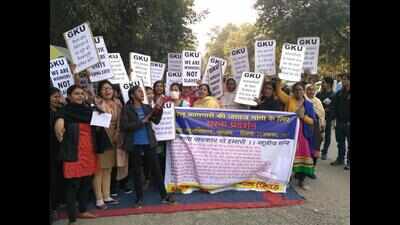
Workers said they face problems daily due to the govt’s apathy
According to members of Gharelu Kamgar Union, the organiser of the protest, there are over 10,000 domestic workers in Gurgaon who work in upscale residential neighbourhoods, but are regularly denied their basic rights.

She added that across the city, there is no parity as far as wages of domestic workers is concerned. While someone is getting Rs 1,200, another domestic help gets Rs 4,000 for the same work.
“I was working in Magnolias for Rs 16,000, whereas other people were getting paid Rs 20,000 for the same job, hence I quit,” said Priya Boro, one of the domestic workers who took part in the protest.
Another big problem workers said they face is that they are banned from societies as soon as they have any kind of altercation with one of the residents or the employer.
“These employers dictate terms and conditions, forcing domestic workers to do forced labour,” said John. Members of the union also submitted a list of their demands to the district administration through the city magistrate Manisha Sharma, as the deputy commissioner was unavailable.
When approached on the matter, deputy commissioner Vinay Pratap Singh said, “I have not yet seen their petition and will be only able to comment on the matter after going through their concerns.”
Workers said they have to face daily problems due to the state’s apathy and lack of measures to ensure their basic rights. Irregular payment of wages, making them do extra chores than agreed, the practice of arbitrarily reducing wages and not allowing weekly off and sick leave, are some of the major problems faced by them.
Apart from these problems, the protesters said employers often don’t pay them by simply stopping their access to a housing society. Physical assault by employers is also a common practice.
End of Article
FOLLOW US ON SOCIAL MEDIA





Hot Picks
TOP TRENDING
Trending Stories
In City
Entire Website
- 'We were treated like slaves, made to work for 15 hours a day': Tricked into Ukraine war, 3 from Karnataka return home
- 'My father was on the flight': Jaishankar opens up about 1984 Air India hijack
- Airtel CEO Gopal Vittal sends letter to Reliance Jio, Vodafone-Idea, Tata Tele and BSNL CEOs; here's what he said
- Prince Harry to celebrate 40th birthday away from Meghan Markle
- Haitian immigrant pet-eating row: Ohio woman accused of eating cat is US citizen, video is not from Springfield
- Kejriwal out of jail; 'CBI arrest only to frustrate ED case bail': SC judge
- Donald Trump reveals what Laura Loomer is to his campaign: 'I don't control her'
- Hamster Kombat Daily Cipher Codes and Combo Cards for September 14, 2024: Unlock up to 1 million coins
- Laura Loomer's photo with Donald Trump viral. People ask where's Melania, where's wedding ring
- Garena Free Fire MAX redeem codes for September 13: Win in-game goodies and rewards
- Didi goes to protest site, doctors go to her house, but no talks
- Opposition offered to back me as PM, I refused: Gadkari
- Is govt’s attempt to reverse Green Revolution a good idea?
- Canada sees dip in post-secondary Indian students
- Neeraj finishes 2nd, misses title by 0.01 meters at DL Final
- 'Not eligible': Economist Ranade removed as VC of Gokhale Institute
- Did doctors make a mistake in making Mamata wait for 2 hours?
- Bengaluru woman sparks controversy with comments about Swiggy delivery executive
- Trump defends 'loony' Laura Loomer amid MAGA meltdown
- State's duty to compensate owners for land acquired: SC

Popular Categories
Hot on the Web
Top Trends
Trending Topics
World Largest HorseEID WishesGreen Apple BenefitsPriyanka Chopra TattooKottukkaali OTT ReleaseNarendra ModiGhaziabad Juice SellerHair LossSudha MurtyMalayalam ProducersIndia's Best Dancer 4Simi GarewalDilli BabuIndian National ParksLaung BenefitsVikas SethiApple iPhone 16Donald TrumpAadhar Card UpdateWordle Answer
Living and entertainment
Latest News
This Strange Eventful History: Claire Messud's Ambitious Novel Spanning Generations and ContinentsNew season begins with renewed hope for BlastersPremier League: Erling Haaland hits another two in Man City's come from behind win over BrentfordMeerut building collapse: 3 dead; rescue operations continueDon’t rethink pink. Plane truth is we need women-friendly seatsWWE NXT Star Reunites With Father At TNA Victory Road'Nafrat ki dukaan pe ...': PM Modi attacks Congress over 'brutality' in USKashmir will soon get a government, but those blinkers are going to stay‘There is no affordable transport currently, the biggest problem in Goa is taxis’IIM Jammu hosts 'Fostering Academia and Industry Partnerships' event at BengalaruMP Bharat, TDP Andhra President Srinivas promise action to safeguard protection of steel plant workersLiverpool slump to shock 1-0 home defeat by Nottingham ForestHimanta urges banned ULFA(I) chief not to indulge in activity jeopardising future of Assam's youthActivists complain as showroom burns old papers; NMMC penalizes Rs 250 onlyVinith Venkatesh scores in ISL debut as Bengaluru FC edge past East BengalJitendra Jorwal takes charge as new Ludhiana deputy commissioner, vows seamless delivery of servicesGeorge R.R. Martin praises 'A Knight of the Seven Kingdoms' spinoff after criticising 'House of the Dragon'Ananya Panday urges all industries to form Hema Committee': 'Clearly, no one else is doing it but women'
Copyright © 2024 Bennett, Coleman & Co. Ltd. All rights reserved. For reprint rights: Times Syndication Service