
Trending
This story is from October 8, 2018
When Olive Ridleys swam to the land of goddess Morjai
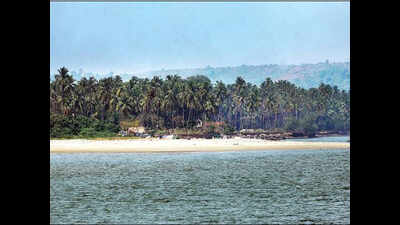
This white-sand beach is famous as the nesting place where Olive Ridley turtles lay their eggs. It is also known for its cleanliness and draws tourists from October to March
Morjim, also spelt as Morgim, is surrounded by two water bodies, the Arabian Sea and the Chapora river on one hand, and the Chapora hill on the other.
“Morjim evokes in me the imagery of an enchanted place - the land of my ancestors, the meeting point of a tri-junction.

Centuries ago, like the neighbouring village of Mandrem, Morjim, too, was home to many Muslims who left the village when Pernem was added as a new conquest by the Portuguese in the 18th century. “A number of properties still carry names that denote a Muslim connection such as ‘Piranchem Khazan’. Legend has it that Morjim was a trading post for bringing in Arabian horses,” says Fernandes.
According to mythology, the term ‘Morjim’ owes its origin to the name of a girl who was transformed into a village goddess after she wasrescued from drowning and given shelter in the village by a local deity. “Morjim is derived from ‘Morjai’ who was one of the eight siblings (7 sisters and 1 brother) of a poor family hailing from Shirgao, Bicholim. Morjai’s parents had passed away and she was punished by her elder sister Lairai, for disobeying her, by throwing her into the river/sea.
Morjai was saved by the deity, Satpurush, who brought her to a hill in the village, locally known as ‘Khind’. Even Our Lady of Milagres is one of the six sisters of Morjai,” says Ramnath Pawar of Modhlovaddo.
Like other Goan villages, Morjim is also facing an onslaught of concretization. “Morjimkars (residents of Morjim) should leave a lasting legacy for posterity and should not sell the land to outsiders,” says Cyril Fernandes, a resident of Temb Vaddo.
The village traditionally has its own gaunkari/village comunidade. It also has a nine-ward panchayat. Its traditional wards are Vitthaldas Vaddo, Gaude Wada, Munang Wada, Mardi Wada, Neu Wada, Dhabolkar Wada, Molekar Wada, Urmalbag, Warcha Wada, Bhati, Watha Wada, Deul Wada, Poke Wada, Naroji Wada, Bhattir, Varna Wada, Bhag Wada, Shirodkar Wada, Kannaik Wada, Temb Vaddo, Modhlo Vaddo, Kanchole Vaddo, Katte Wada, Bandekar and Pandir Wada.
End of Article
FOLLOW US ON SOCIAL MEDIA







Photostories

Hot Picks
TOP TRENDING
Popular Categories
Hot on the Web
Top Trends
Haryana Election ResultNew UPI Transaction LimitHurricane MiltonRBI Monetary Policy MeetingWorld First Top 10 TrillionairesStock Market TodayKerala Lottery ResultElection Results 2024Biblical TreeJammu Kashmir Election ResultIsrael Hezbollah WarHardik SinghManagement Colleges of IndiaTop Medical Colleges of IndiaTop Engineering Colleges of IndiaTop Pharmacy Colleges of IndiaLive Cricket Score
Trending Topics
Navratri 2024 AshtamiBigg Boss Tamil 8 Contestants ListTP Madhavan DeathNavratri Colours 2024Sanjay Leela BhansaliDurga Puja 2024Bigg Boss 18 House PhotoDevara CollectionBigg Boss 18Deepika PadukoneShailesh LodhaDevaraColdplayNational Film Awards 2024Swatantrya Veer SavarkarColdplay India tour 2025Watch NFL Live StreamDress To ImpressCall Of Duty Black Ops 6Wordle Answer
Living and entertainment
Latest News
Hurricane Milton: Why Tampa area is so vulnerable to stormsBeard Trimmer with Titanium Blades: Style Your Beard to Perfection with Unmatched SharpnessTHE World University Rankings 2025: IISc Leads India , Check the List of Top 10 Indian Institutes HereA daughter lost without her father, old alliances: How NC came back with a bang in J&KAre HDFC Bank, Axis, Kotak a value buy or value trap for investors?Ethel Kennedy, widow of Senator Robert F Kennedy Sr suffers stroke in sleep, hospitalisedRanbir Kapoor's UNSEEN BTS pic from 'Shamshera' goes viralSum 41’s Deryck Whibley accuses former manager of sexual abuse in new memoirHyundai aims to raise up to $3.3 billion in record India IPOPrabhas starrer 'Kalki 2898 AD' gears up for its release in JapanMan declares income of Rs 9.6k, pays tax on Rs 43.5L after US earnings addedPatanjali Foods gets CCI nod for Rs 1,100-crore buyout of parent's home & personal care businessWho is Aniruddhacharya Maharaj? Know more about Pookie Baba’s life journey and net worthWill Allu Arjun be able to beat Prabhas in North America with Pushpa 2?Nagarjuna takes legal action against Konda Surekha; Records statement in Rs 100 crore defamation caseKarnataka Cong MLA booked for rape, kidnapping and criminal intimidationStunning images from space shows Hurricane Milton swirling over Earth2nd Youth Test: Harvansh shuns Canadian dream to shine for India
Copyright © 2024 Bennett, Coleman & Co. Ltd. All rights reserved. For reprint rights: Times Syndication Service