
Trending
This story is from July 17, 2019
Goa gets wealthier but citizens’ health plummets
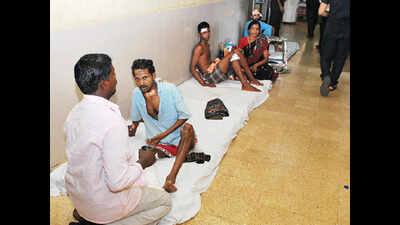
One of the major reasons that Goa fares so poorly is incompetence and wildly misplaced priorities

The new report is just the latest useful contribution by the National Institution for Transforming India (thus NITI) since its establishment in 2015, with an express mandate “to better serve the needs and aspirations of the people of India” than its predecessor, the 1950-established Planning Commission. There is much to be learned from a situation where “health outcomes of some states are comparable to that of some upper middle-income countries and high income countries (for example, neonatal mortality rate (NMR) in Kerala is similar to that of Brazil or Argentina), while some other states have health outcomes similar to that in the poorest countries in the world (for example, NMR in Odisha is close to that of Sierra Leone)”.
What kind of state gets visibly richer, even while the welfare of its citizens plummets amid decline of the overall quality of life? Much the same is true of almost all of urban India, which functions as the main engine of “the world’s fastest growing big economy”.
One reason Goa fares so poorly is incompetence, and wildly misplaced priorities. No state in India squanders so many advantages, and performs so poorly in areas that directly affect every citizen. The government will regularly fire through thousands of crores on infrastructure projects that no one wants or needs, while conspicuously neglecting to improve simple healthcare, water and transportation systems.
There are some complicating factors in Goa, such as the rapid demographic displacement that is skewing the population towards an overwhelming majority of new migrants from distressed states. But it should be noted the exact same set of circumstances prevails in neighbouring states which are doing much better in facing them. Karnataka and Maharashtra both surged ahead in the Health Index scores, with the latter leapfrogging three places ahead in the standings. Meanwhile, the number one spot in the country is comfortably retained by Kerala.
The Niti Aayog health index is incontrovertible, and resistant to political spin. It demonstrates that tiny and highly-privileged Goa has wasted every opportunity to institute well-conceived progressive measures. Future generations will never forgive this abject dereliction of duty, where immense wealth fails to translate to any appreciable kind of health at all.
The views expressed are personal.
End of Article
FOLLOW US ON SOCIAL MEDIA






Hot Picks
TOP TRENDING
Trending Stories
In City
Entire Website
- 'We were treated like slaves, made to work for 15 hours a day': Tricked into Ukraine war, 3 from Karnataka return home
- 'My father was on the flight': Jaishankar opens up about 1984 Air India hijack
- Airtel CEO Gopal Vittal sends letter to Reliance Jio, Vodafone-Idea, Tata Tele and BSNL CEOs; here's what he said
- Prince Harry to celebrate 40th birthday away from Meghan Markle
- Haitian immigrant pet-eating row: Ohio woman accused of eating cat is US citizen, video is not from Springfield
- Kejriwal out of jail; 'CBI arrest only to frustrate ED case bail': SC judge
- Donald Trump reveals what Laura Loomer is to his campaign: 'I don't control her'
- Hamster Kombat Daily Cipher Codes and Combo Cards for September 14, 2024: Unlock up to 1 million coins
- Laura Loomer's photo with Donald Trump viral. People ask where's Melania, where's wedding ring
- Garena Free Fire MAX redeem codes for September 13: Win in-game goodies and rewards
- BJP expels functionary for posting clip of man’s apology to FM Sitharaman on GST
- Opposition offered to back me as prime minister, I refused: Nitin Gadkari
- Why you should not be fooled by ‘20-year SIP crorepati’ dream
- Taj Mahal's dome leak due to cracks in metal set due to rust: ASI
- Recruitment drive for 10,000 Israel jobs to start tomorrow
- 9 killed after three-storey building collapses in Meerut
- The new ‘green revolution’ will not feed India
- Melinda Gates reveals the 'best part' of not working with ex-husband Bill Gates
- 'Tu suicide kar le': Paralympics champion Navdeep
- Happy Onam 2024: Top 50 wishes, messages and quotes

Popular Categories
Hot on the Web
Top Trends
Trending Topics
World Largest HorseEID WishesOnam WishesPriyanka Chopra TattooKottukkaali OTT ReleaseEngineers Day WishesGhaziabad Juice SellerHair LossSudha MurtyMalayalam ProducersIndia's Best Dancer 4Simi GarewalDilli BabuIndian National ParksLaung BenefitsVikas SethiApple iPhone 16Donald TrumpAadhar Card UpdateWordle Answer
Living and entertainment
Latest News
Premier League: Erling Haaland hits another two in Man City's come from behind win over BrentfordMeerut building collapse: 3 dead; rescue operations continueTCS teams up with Tata Electronics for ‘made-in-India’ chipsWWE NXT Star Reunites With Father At TNA Victory RoadKashmir will soon get a government, but those blinkers are going to stay‘There is no affordable transport currently, the biggest problem in Goa is taxis’IIM Jammu hosts 'Fostering Academia and Industry Partnerships' event at BengalaruMP Bharat, TDP Andhra President Srinivas promise action to safeguard protection of steel plant workersLiverpool slump to shock 1-0 home defeat by Nottingham ForestVinith Venkatesh scores in ISL debut as Bengaluru FC edge past East BengalJitendra Jorwal takes charge as new Ludhiana deputy commissioner, vows seamless delivery of services'Hindi must be made acceptable, not imposed'37 year old beats fatty liver condition with unbelievable weight lossCong holds protests on second anniversary of MLA defectionsCouncillor's bro, 4 others held for hurling stones at Vande BharatCancer, Weekly Horoscope, September 15 to September 21, 2024: Encounter a busy week filled with unexpected challengesDoctor posts morphed clip of med classmate, held in Tamil NaduNeed to urgently tackle rogue drones, online frauds: Amit Shah
Copyright © 2024 Bennett, Coleman & Co. Ltd. All rights reserved. For reprint rights: Times Syndication Service