
Trending
This story is from October 9, 2018
Despite deficit rain, water reservoirs close to 100% full

Picture used for representational purpose only
The overall monsoon may have witnessed a shortfall, but heavy bouts of rainfall received in July led the reservoirs to peak fast and make up for the deficit of the later months.

The Anjunem reservoir, located on Costi Nadi in Anjunem village in Sattari, has seen its water level rise by over 20m since June 1. This is the sharpest rise of all five reservoirs in Goa.
The dam which draws water from a tributary of the Valvanti located in the Mhadei basin, is currently 98% full. At 92.9m, the reservoir is less than a meter short of its full capacity.
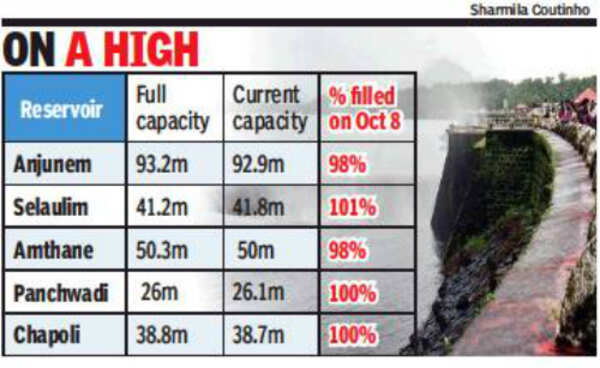
The Selaulim reservoir at over 100% is still seeing its water spillover through the dam’s unique duck spillway. The project is located at Sirga, 5km from Sanguem town, in the Zuari river basin. The dam is on the Selaulim river (also known as Sanguem).
While the dam’s full capacity is 41.15m, the water level is currently at 41.82m.
The Amthane reservoir stands currently at 50ms, which is 98% of its full capacity. Amthane dam is one of the important sources of drinking as well as irrigation water to areas from Bicholim and Bardez.
The smaller reservoirs of Panchwadi and Chapoli are 100% full, with water levels at 38.7m and 26m currently, respectively.
The Panchwadi reservoir in Mhaisal, Ponda, caters to the irrigation and drinking supply requirements of the villages in the neighbourhood.
Meanwhile, the water in Chapoli supplies raw water to the PWD to provide potable water to residents of Canacona.
End of Article
FOLLOW US ON SOCIAL MEDIA







Photostories

Hot Picks
TOP TRENDING
Popular Categories
Hot on the Web
Top Trends
Stock Market TodayBasit AliBrittany MahomesRavichandran AshwinBabar AzamKanpur Test Match RecordsUGC NET Result 2024Tirupati LadduIndia T20 WC SchedulePPF CalculatorBryonna Burrows Net WorthWomen T20 World Cup Points TableWomen T20 World Cup ScheduleIND vs PAK T20 WC MatchDiddyTop Management Colleges of IndiaLive Cricket Score
Trending Topics
GovindaNavratri Colours 2024Solar Eclipse 2024 TimesNavratri WishesGandhi Jayanti WishesDevara CollectionGOAT OTT ReleaseGandhi Jayanti 2024Rajinikanth Health UpdateNavratri HistoryDevaraGovinda NewsDevara Movie ReviewHealthy RaitasSwatantrya Veer SavarkarColdplay India tour 2025Upcoming Smartphones In OctoberAmazon SaleSony Bravia 55 inch 4k Ultra HD TVWordle Answer
Living and entertainment
Latest News
The Amazing Spider-Man films starring Andrew Garfield now streaming for freeMahima Chaudhry reveals she begged Ajay Devgn and Prakash Jha to keep her near-fatal car accident secret: 'I feared industry boycott'Vijay's 'GOAT' gets an OTT release; official date announced!Xionism In Lux: Why global luxury biz bosses will obsess over China’s communist bossNavratri Day 1 colour: How to style the shade of OrangeManipur: Congress MP writes to Amit Shah for safe release of 2 'abducted Meitei youths'Qualifier Yash upsets second seed Manish at Fenesta OpenAquarius, Daily Horoscope Today, October 03, 2024: Romantic life may experience a few bumpsPopulation of Hindus & tribals declining in Jharkhand, says PM ModiChange Begins Here, as TOI shines a spotlight on hope and impactNasa switches off instrument on Voyager 2 spacecraft to save powerKTR reason for Naga-Samantha divorce, says Telangana minister; sparks rowVivek Ramaswamy to run for Ohio Governor? He says would 'consider' but ...Indian cinema has a rich legacy of storytelling: Rana DaggubatiAre 3 senior Karnataka mantris jockeying for chief minister's chair?Why record gold loan growth has RBI worriedIndian businesses view UK as key market for expansion: ReportKundali Bhagya actress Shalini Mahal pays homage to Gandhi Ji’s principles on his 155th birth anniversary
Copyright © 2024 Bennett, Coleman & Co. Ltd. All rights reserved. For reprint rights: Times Syndication Service