
Trending
This story is from January 28, 2018
A folk drama that eulogises Bal Krishna
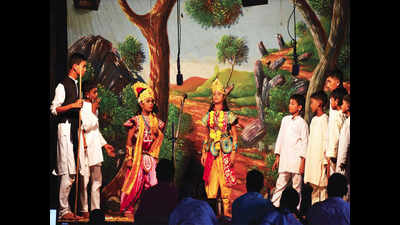
The drama traces its history back to more than 100 years, to the time when entertainment was limited and innovative means had to be found to impart cultural knowledge.

Pandurang Gaonkar, 70, from Vaigini, Bicholim, who directs the music for these plays, says: “In the absence of other mediums of entertainment, the ‘Gavlan Kala’ not only imparted cultural values, but also gave children a hero like Lord Krishna to look up to.”
As a culture it is very much a part of the Konkan ethos and in Goa, temples put up the ‘Gavlan Kala’ on the second day of their respective ‘zatras’.
On that day, in broad day light (in a deviation from the usual temple tradition of staging folk dramas at night), children relive the antics and heroic exploits of the child god. Whether it is defeating the evil designs of Bal Krishna’s uncle King Kansa, or stealing butter from the homes of unsuspecting ‘Gopis’ or simply dancing, all the mythology related to Lord Krishna’s childhood in Gokul is played out through dialogues and songs.
Senior folk artiste, Anand Mhaskar, 65, from Tulshimala, Poriem-Sattari, who in his more than four-decade old career has started many-a cultural groups and groomed them in the ‘Gavalan Kala’ performance, shares the sad story of the decline of this once thriving art.
“There was a time when this folk drama would be performed in many temples in Goa. Now-a-days, most temples opt for other mediums of entertainment. There is a need to provide the tradition with an impetus,” he says.
Reference to the dramatic genre can also be found in folklorist Vinayak Khedekar’s book ‘Loksarita’ (1993). About the ‘Gavlan Kala’, he says: “Krishna’s role was generally given to a beautiful girl.” Musical instruments like harmonium, tabla and cymbals were used, he writes.
Cultural troupes from Marcel, Khandola, Mardol and Pilgao, famed for their ‘Gavlan Kala’ presentation, would be invited by various temple committees to perform and were traditionally paid an honorarium. However, since the play is dependent on a child cast, and children today are increasingly involved in school activities, very few troupes continue.
Like the ‘Gavalan Kala’, the other folk forms like the ‘Dashaavtar Kala’, ‘Gopal Kala’ and ‘Raat Kala’ are also disappearing.
End of Article
FOLLOW US ON SOCIAL MEDIA





Hot Picks
TOP TRENDING
Trending Stories
In City
Entire Website
- Amid Shannon Sharpe Viral Video, Former ESPN Host Michelle Beadle Reacts Claiming It Was Not Her
- 2 Army officers thrashed, their female friend gang-raped in Madhya Pradesh
- Ayushman Bharat insurance scheme expanded to cover elderly above 70
- 'Will be demolished if... ': Himachal minister's assurance amid Shimla mosque row
- Mumbai's Haji Ali and Mahim dargahs cancel Eid shamiana
- Garena Free Fire MAX redeem codes for September 11, 2024: Win free room cards, skins, diamonds, pet skins, and more rewards today
- GK for students: Top 8 Largest Mammals in the World
- Glut in milk production leaves Karnataka govt in spot of bother
- A tiny flower nearly killed a tiger habitat, until a snip in time saved it
- 6 failed attempts later, Assam boy cracks CDS; posted in Siachen
- Supreme Court pulls up Punjab & Haryana HC for sacking judicial officer over 'affair'
- Sensex crosses 83,000 for first time, surges over 1,500 points; Nifty above 25,400
- Why India is now insisting on an immediate ceasefire in Gaza
- ACT Hockey: India stay unbeaten, beat Korea 3-1
- 'Unfair and imbalanced': Jaishankar on India's trade ties with China
- ‘Millennials in India top spenders on travel, beat Gen Z, Gen X, boomers’
- By endorsing Kamala, Taylor Swift turns the tables on AI abusers
- What Airtel CEO Gopal Vittal wrote in letter to Jio, Vi, Tata Tele and BSNL CEOs
- ‘Apraadh, appeasement, arrogance’: BJP on what INDIA bloc's 'A' stands for
- ‘Heart of Pune’: SC stays NGT order of 30-people cap on 'dhol-tasha' groups

Popular Categories
Hot on the Web
Top Trends
Trending Topics
Alia BhattMalaika Arora Father DeathArbaaz KhanNatasa StankovicMr Bachchan OTT ReleaseNational Parks In IndiaSelena GomezGOAT CollectionVikas Sethi DeathMalayalam ProducersIndia's Best Dancer 4Simi GarewalDilli BabuIndian National ParksLaung BenefitsVikas SethiiPhone 16Dubai Princess Sheikha MahraMG Windsor EvWordle Answer
Living and entertainment
Latest News
Epilepsy medication shows promise of treating sleep apnoea symptoms: StudyDigest this: Unhealthy gut may be linked to Parkinson’s disease'Played a big role in turning the cricket around': Ricky Ponting applauds Virat Kohli’s brilliance as India’s former captainExclusive- Saurabh Gumber reveals joining a new show during Ganeshotsav says, "I consider it as Bappa's small gift and believe he has great plans for me ahead"Mahindra Thar Roxx with VIN 0001 to be auctiond for charity: How to registerVijay Sathya-starrer 'Dhil Raja' to release in SeptemberHarvard University Sees Drop in Black Freshman Enrollment Post-Supreme Court Ruling on Affirmative ActionTrump's claim about sending Taliban leader Abdul his house photo fuels social media frenzyFinding divinity in a world addicted to noiseTovino Thomas praises Prithviraj Sukumaran as director: "One of the brilliant directors I have ever worked with"Border Gavaskar Trophy: When Sourav Ganguly's Brisbane heroics set the tone for an enlivening seriesNTR Jr’s Devara crosses US $1 million mark for its premiere shows in USA with 15 days to release8 animals that reproduce without matingIt will take time to get back to the top: Pakistan coach ZamanThe Luckiest Zodiac Signs: Who's Got the Midas Touch?EXPLAINED: What India need to do in next 10 Tests to qualify for World Test Championship finalWatch: Car stuck in massive crater as road caves in at Mumbai's DadarVirgo, Daily Horoscope Today, September 12, 2024: Experience mental clarity and emotional relief
Copyright © 2024 Bennett, Coleman & Co. Ltd. All rights reserved. For reprint rights: Times Syndication Service