
- News
- City News
- delhi News
- Why anger could bring stroke of bad luck
Trending
This story is from May 6, 2024
Why anger could bring stroke of bad luck
Recurrent anger episodes negatively impact cardiovascular health, leading to chronic endothelial dysfunction, atherosclerosis, and increased risks of heart attacks, strokes, heart failure, and retinopathy. Managing anger triggers and enhancing the autonomic nervous system are crucial for health.


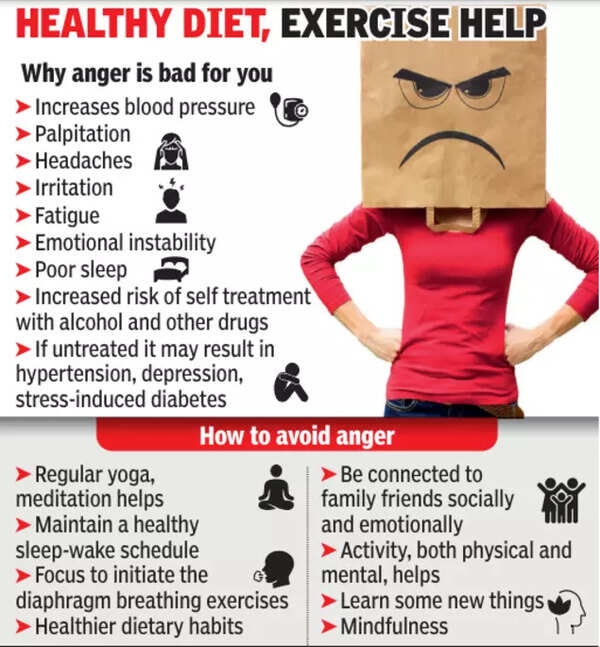
The study, published in the Journal of the American Heart Association, however, states that no statistically significant adverse effects of provoked “anxiety and sadness” were found on endothelium-dependent vasodilation, which is a crucial mechanism for regulating blood flow and maintaining cardiovascular homeostasis. Anger stimulates body harming hormones which cause heart rate to increase, blood pressure to shoot up and the inner lining of blood vessels going to the heart to get damaged. This causes platelet and lipid deposition on the damaged vessel, ultimately causing heart attacks.
Pointing out the harms that can be caused by repeated episodes of anger, Dr Vanita Arora, senior consultant, cardiac electrophysiologist and interventional cardiologist at Indraprastha Apollo Hospital, said, “Repeated episodes of anger can have cumulative negative effects on cardiovascular health. Chronic endothelial dysfunction, as a result of recurrent anger episodes, can contribute to the development and progression of atherosclerosis (the buildup of plaque in the arteries), hypertension and an increased risk of cardiovascular events such as heart attacks and strokes. Anger may also contribute to cellular injury and impaired repair mechanisms, intensifying vascular damage, increasing the risk of coronary artery disease and associated complications like kidney disease, retinopathy, reduced exercise tolerance, and an increased risk of heart failure.”
According to Dr Anshu Rohtagi, senior consultant in the department of neurology at Sir Ganga Ram Hospital, it is essential to acknowledge anger as a common but detrimental emotion. He advises individuals to “try and recognise anger as a normal but negative emotion and look for specific reasons for anger outbursts.” By identifying the triggers and underlying causes of anger, people can better understand and manage their
emotional responses.
Since sadness and anxiety did not show the same effect in the study, this could be due to differing physiological and psychological responses to each emotion, said Dr Amar Singhal, senior consultant, interventional cardiologist, Sri Balaji Action Medical Institute. “Anger triggers an intense stress response with hormone release and increased sympathetic activity, whereas sadness and anxiety may prompt different reactions. Moreover, individuals may handle sadness and anxiety in less harmful ways than anger,” he said. However, he added that chronic or severe sadness and anxiety still pose health risks, including cardiovascular problems.
Prof Nand Kumar from the psychiatry department at AIIMS said that frequent anger episodes need to be taken as an alarm because they can affect any system of the human body if unaddressed. The best way to manage is to cut down the associated factors, and perhaps more relevant is to make the autonomic nervous system more resilient by using various modalities. One of the most important steps could be deep diaphragm breathing that modulates the autonomic nervous system, in addition to healthier dietary habits.
“Regular yoga, meditation also help. Try to move away from the triggering situation/person and try to enhance the parasympathetic tone by engaging in slow and deep breathing, drinking some water. Also, maintain a healthy sleep-wake schedule along with some regular exercise,” said Dr Sameer Malhotra, director and head of mental health and behavioural sciences at Max Super Speciality Hospital, Saket.
End of Article
FOLLOW US ON SOCIAL MEDIA









Photostories

Hot Picks
TOP TRENDING
Popular Categories
Hot on the Web
Top Trends
India Qualifying ScenarioBaba Siddique NewsPakistan Cricket TeamRussell WilsonsSpacex StarshipRahul DravidWho was Baba SiddiqueBabar AzamNTA SWAYAM July RegistrationLawrence BishnoiAmazon LayoffsTaylor SwiftManagement Colleges of IndiaTop Medical Colleges of IndiaTop Engineering Colleges of IndiaTop Pharmacy Colleges of IndiaLive Cricket Score
Trending Topics
Diwali WishesNara RohithBaba SiddiqueShraddha KapoorVettaiyan CollectionVettaiyan ReviewNatasa StankovicDevara CollectionBigg Boss 18Deepika PadukoneShraddha KapoorRatan Tata Passed AwayJigra Movie ReviewVettaiyan Movie ReviewSwatantrya Veer SavarkarDussehra 2024Star Health Hacker DemandedViral MemesUltimate Football Codes October 2024Wordle Answer
Living and entertainment
Latest News
10 deadliest snakes in Australia and know their venom toxicityOver 70 injured at Devaragattu Banni stick festival during Dussehra celebrationsPassion missing, players don’t want to work hard, lament former intl’sHow tomato, potato, onion influence food inflationBiker’s death ignites village fury in Odisha's Boudh, massive traffic jam on NH-57Reliance Jio sends 'complaint letter' to telecom minister Jyotiraditya ScindiaWomen's T20 World Cup: Why India need Pakistan victory over New Zealand to secure semifinal berthCops probing Bishnoi gang's links to Siddique's murderKrushna Abhishek shares a heartwarming post for mama Govinda; says 'jab body mein adha blood supremely talented actor Govinda ka ho...'Papankusha Ekadashi 2024: Date, Parana Time, Puja Rituals and SignificanceAI’S OppenheimerRajveer Singh’s inspiring transformation on completing a decade in the TV Industry, says 'My passion for becoming an actor fueled my determination'Former Pakistan PM Imran Khan's sisters shifted to Jhelum jail on judicial remand'I truly believe ... ': What police said after third assassination attempt on Donald TrumpHow Ratan Tata started India's romance with ZaraBaba Siddique murder case: Slum dispute that sparked ED inquest to be part of probeFor 20 years, Thar getting more rain than normalSpiritual fervour marks Bagh Savari festival held at Tirumala
Copyright © 2024 Bennett, Coleman & Co. Ltd. All rights reserved. For reprint rights: Times Syndication Service