
- News
- City News
- delhi News
- Delhi: ‘Pulwama strike planned to avenge personal loss’
Trending
This story is from March 23, 2019
Delhi: ‘Pulwama strike planned to avenge personal loss’
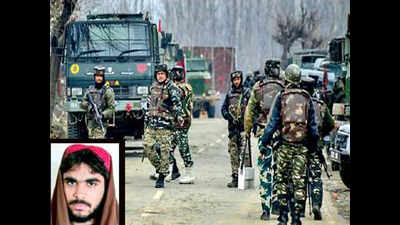
A CRPF convoy was attacked on February 14 in which 40 personnel died; (inset) Usman Haider was a nephew of Masood Azhar killed in J&K
The roots of the Pulwama attack lay in this encounter and the people associated with it, investigation has indicated.
Top Picks For You
Top Jaish operative nabbed in Walled City
Mudassir had been elevated as a commander after Noor Mohammad Tantray, a four feet tall terrorist also known as Noora Trali, was killed in 2017. Tantray was arrested in 2003 by special cell and sentenced to life in 2011. He got a 15-day parole in 2015, which he jumped. He was gunned down on December 26, 2017 after he emerged as the chief architect of numerous strikes including an attack on a BSF camp near Srinagar airport in October 2017 and a grenade attack on a minister’s cavalcade in Tral in September.
At a press briefing post his encounter, J&K Police had said that Tantray and his associates were planning to attack a convoy on the Srinagar-Jammu highway which had been foiled.
With Mudassir as chief, JeM operatives carried out a suicide attack at an army camp in Sunjawan, Jammu on February 10, 2018. Then on April 25, security forces gunned down the Jaish module involved in the attack. Among the four dead terrorists was Ishfaq, brother of Sajjad Khan. Ishfaq and Mudassir were close friends.
Barely six months later, Mudassir lost his second friend, Shaukat, in another encounter. Mudassir took these deaths personally and vowed revenge. And so did Masood Azhar, who released two statements regarding this. After the killing of Talha Rasheed in 2017, Usman was the second nephew that Azhar lost.
And thus, planning of the “biggest ever” attack began in November first week. Azhar sent in a number of force multipliers for Mudassir through POK-based launchpads. They were identified as Abdul Rasheed Ghazi, an Afghan war veteran and an IED specialist, Kamran, Umair and Ibrahim Lambu — an Afghan warrior who was earlier the bodyguard of Azhar’s brother, Rauf Asgar. They planned to carry out a vehicle-borne IED attack, something unheard of in the Valley, but something that was an improvisation of a plan originally conceived by Trali.
A relatively unknown terrorist named Adil Dar was chosen to execute it. So, Sajjad Bhat (also killed on March 11) procured an Eeco on February 4, 10 days before the Pulwama attack. It was a ‘safe’ vehicle as it had been sold seven times before. The rest, they say, is history.

About the Author
Raj ShekharEnd of Article
FOLLOW US ON SOCIAL MEDIA





Hot Picks
TOP TRENDING
Trending Stories
In City
Entire Website
- Malaika Arora's father Anil Arora dies by suicide in Mumbai
- 7 Key Reasons Why UPSC is the Toughest Exam in India
- 9/11 Remembrance Day: Key moments from the deadliest attack on US
- Howard University: 10 landmark firsts of the institution that shaped Kamala Harris
- Earthquake of magnitude 5.8 strikes Pakistan, tremors felt in Delhi, neighbouring areas
- Who were Barack Obama's challengers in 2008 and 2012 US presidential elections?
- 'A in INDIA alliance': Rahul Gandhi's slip-up during address to Indian-Americans goes viral
- Trump vs Harris: Betting markets reveal who’s expected to win the US presidential debate
- IGNOU December 2024 Term-End Exam: Registration Details, Important Dates, and Fee Structure
- Top 10 TED Talks to Boost Confidence and Success for Female Students
- 2 Army officers thrashed, their female friend gang-raped in Madhya Pradesh
- Centre seeks review of SC's mineral royalty judgment
- Kamala may have won debate. But election is still too close to call
- IIT-Guwahati academic affairs dean quits amid stir over student suicide'
- BJP netas would’ve been in jail had we got 20 more seats: Kharge
- ODI World Cup 2023 boosts India's economy by Rs 11,637 crore: ICC
- Why SIP investing for 20 years may not have a multiplier effect
- Apple iPhone 16 vs iPhone 15: Which iPhone to buy and why
- PM Modi sets target of $500 billion for electronics production in next 6 years
- Why Biden wore a 'Trump 2024 hat' at the 9/11 memorial event

Popular Categories
Hot on the Web
Top Trends
Trending Topics
Deepika PadukoneMalaika Arora Father DeathArbaaz KhanJayram RaviAishwarya Rai BachchanSlat WaterWeight GainGOAT CollectionVikas Sethi DeathMalayalam ProducersIndia's Best Dancer 4Simi GarewalDilli BabuIndian National ParksLaung BenefitsVikas SethiiPhone 16Dubai Princess Sheikha MahraMG Windsor EvWordle Answer
Living and entertainment
Latest News
Kapil Sharma gives fans a peek into his Ganesh Chaturthi festivities with wife GinniNot MS Dhoni and Rohit Sharma, Gautam Gambhir calls this Indian player 'Shahenshah'. WatchPolice registered 10 cases against Ganapati mandals for using laser beam lightsMIT researchers develop eco-friendly water filter to eliminate “forever chemicals” and heavy metalsThe Zodiac Signs Most Naturally Inclined to HealingWhy Banyan trees survive for centuries and spread indefinitely?Telangana government pushes for increased flood relief from CentrePolicy of 'Padak Lao, Pad Pao' will be implemented again for the sportspersons, says Deepender HoodaBest 20000mAh Power Banks To Power Your Devices Wherever You GoWalking dog in Goa? Mouth guard, leash soon to be mustDonald Trump and Kamala Harris shake hands as they meet for first time on debate stage: Watch the 'awkward' momentBRS pushes for disqualification of turncoat MLAs after High Court rulingKamala may have won debate. But election is still too close to callCommunal violence erupts in Karnataka during Ganpati Visarjan, section 144 imposedVarun Dhawan shares unfiltered reaction to Janhvi Kapoor's 'Daavudi' song from 'Devara: Part 1': 'So freaking good...''On basis of fairness and equality': Bangladesh seeks good relations with India, says YunusMpox kills two, six other confirmed cases in Cameroon: GovernmentTrump's claim about sending Taliban leader Abdul his house photo fuels social media frenzy
Copyright © 2024 Bennett, Coleman & Co. Ltd. All rights reserved. For reprint rights: Times Syndication Service