
- News
- City News
- delhi News
- Once a princely abode, now a monumental neglect
Trending
This story is from August 23, 2018
Once a princely abode, now a monumental neglect
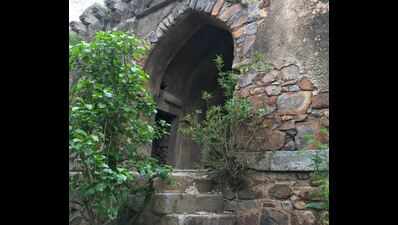
Over a year after the ‘Awadh prince’ died in his humble abode of Malcha Mahal, the 14th century Tughlaq hunting lodge which he called home for decades is withering away in neglect, completely forgotten by the outside world.
The 'last prince of Awadh’ or Ali Raza was found dead in the mahal on September 2, last year. Tucked deep inside the forest, the monument where Raza lived for decades is an ancient hunting lodge, where he moved in with his sister Sakina and mother Begum Wilayat Mahal. Raza claimed to be the last surviving member of a family that traced its lineage to the royals of Awadh, a claim that was never officially verified. Subsequently, the place came to be known as 'Malcha Mahal' for its close proximity to Malcha Marg, which houses the Delhi elite including diplomats, businessmen and authors. The family chose a life of isolation and notorious hostility such as letting loose a pack of ferocious dogs on outsiders who came knocking as they zealously guarded their royal status and only allowed a rare foreign journalist entry. However, over the years, the bloodhounds perished, as did the Begum and her daughter. The Prince was buried near Delhi Gate on September 5.
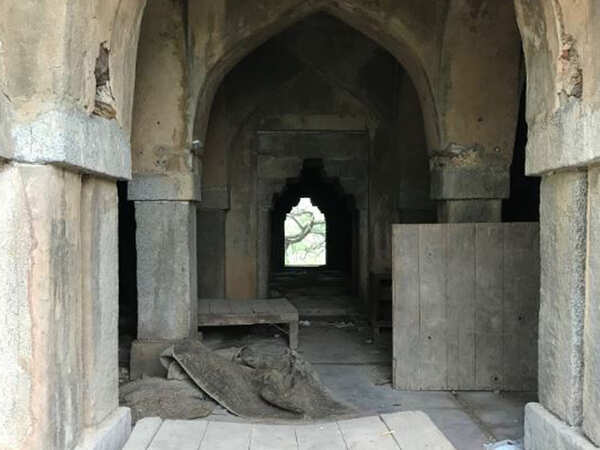
After serving as a home for the eccentric family for so many years, Malcha Mahal is now in a seriously deceript condition and desperately requires urgent attention. As per sources, Malcha Mahal was one of the 250 unprotected heritage buildings identified by the Delhi’s state archaeology department in 2008 to take up for conservation and protection. However, due to issues related to the monuments occupancy at that time, it was subsequently dropped from the list of 92 buildings eventually taken up. Many pointed out that since the monuments’ occupancy status had now changed and it was now abandoned, the department of archaeology should now take charge of the monument.
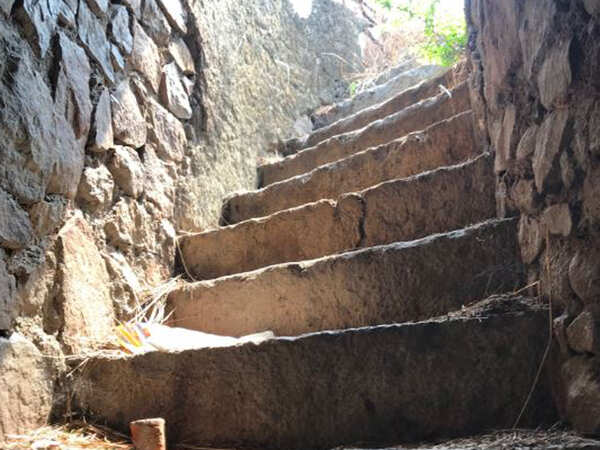
Access to the mahal could become nearly impossible in days to follow. When TOI visited the monument, the lone pathway to Malcha Mahal was already difficult to navigate amongst heavy shuberry and foliage. From the front side, the monument cannot even be seen though it just a few feet away. Towards the end of the pathway, Malcha Mahal stands proud, a striking architectural marvel with multiple arched entrances and a typical Tughlaq building style and arched bays. Structurally, the monument is in good shape and even access to the roof still stands. "As a Tughlaq era hunting lodge, the monument is a very important part of Delhi;s history. This structure has never been conserved by any agency and should be taken up. There is still a lot of interest around Malcha Mahal and the story of her former occupants and it would be an excellent place for tourists to visit," said a conservationist.
Those who can manage to visit the mahal can still see signs of the last occupant. In one side of the monument, the last belongings of the Prince can still be seen scattered on the floor. Shirts and pants, a few broken suitcases and broken utensils speak of his solitary lifestyle. Some rugged and worn out carpets in the centre of the monument tell a story of the Prince’s tastes for better living arrangements. Pieces of furniture like a broken wooden cot in a corner and broken wooden cabinet can also be seen. In spite of living a life as a recluse, the Prince obviously worried about security and a broken safe lying in corner probably houses his few precious belongings. There were also a large number of footwear dumped in corner, most of them in good condition though they were thrown away like waste. “At one point of time, many wanted to visit the mahal and see the eccentric family. Now that they have all perished, the monument has also been forgotten,’’ said conservationists.
End of Article
FOLLOW US ON SOCIAL MEDIA









Photostories

Hot Picks
TOP TRENDING
Explore Every Corner
Across The Globe
Popular Categories
Hot on the Web
Top Trends
Trending Topics
Emergency Box Office CollectionGame Changer Box Office CollectionSara Ali KhanNational Girl Child Day 2025Republic Day WishesSky Force ReviewRepublic Day Essay IdeasVirender SehwagTraffic Advisory for Republic DayMagnesium DeficiencyMemory SharpFatty Liver SymptomsBirthright Citizenshipemergency Box Office CollectionShark Tank India 4NYT ConnectionsAmazon SaleSatya NadellaTOI News
Living and entertainment
Latest News
'It's like you got hit by bomb', Donald Trump tells Gavin Newsom as he tours LA fire damageBorder app that became a salvation for migrantsTrump now says he'd 'rather not' put tariffs on ChinaSoon, coal could fuel AI demand23 anti-abortion activists pardonedOfficials move to quickly expel immigrants Biden allowed in temporarilyGame Changer box office Day 15: Ram Charan and Kiara Advani starrer struggles to reach 130 crore$3,000 for a used iPhone? In US, if it has TikTok, maybeMarch for Life: Donald Trump, masked neo-nazis, and thousands unite for anti-abortion rally in WashingtonEmergency box office collection Day 8: Kangana Ranaut's directorial inches towards the 15 crore mark in totalSA20: Skipper Aiden Markram leads from the front as Sunrisers Eastern Cape secure fourth consecutive winLaughter Chefs 2: Priyanka Chopra's mother Madhu Chopra graces the show to cheer Mannara; Bharti Singh asks, 'Whenever I'd go to LA, give us front row in your son-in-law Nick Jonas' concert'Tata Sons seeks CCI nod to buy 10% in Tata PlayWorld looking at India as global manufacturing hub: Ashwini VaishnawILT20: Alishan Sharafu, Jason Holder star as Abu Dhabi Knight Riders secure big win against MI EmiratesLTIMindtree names ex-prez Lambu as CEOAzaad box office collection Day 8: Rasha Thadani and Aaman Devgan starrer struggles to cross 7 crore in total collectionPatanjali recalls 4 tonnes of red chilli powder
Copyright © 2025 Bennett, Coleman & Co. Ltd. All rights reserved. For reprint rights: Times Syndication Service