
- News
- City News
- dehradun News
- <arttitle><strong>U’'khand has crucial role to play in tiger proliferation </strong></arttitle>
Trending
This story is from February 7, 2016
U’'khand has crucial role to play in tiger proliferation

Wildlife Institute of India (WII) in its latest report, titled ‘Status of Tigers, Co-predators & Prey in India 2014’, has talked about the role of Uttarakhand in the proliferation of tigers in this landscape.

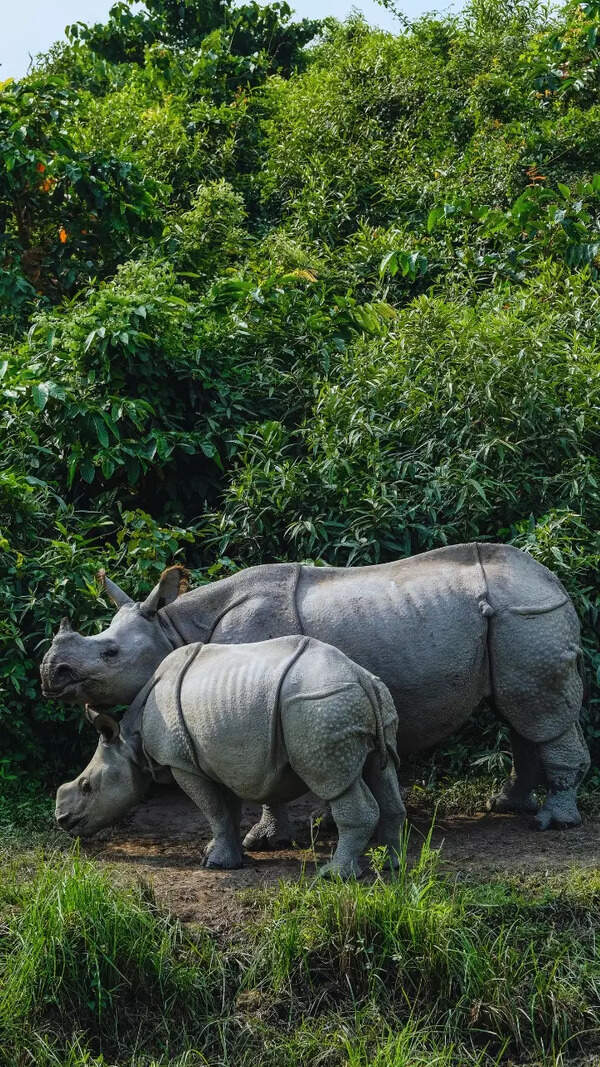
WII scientist YV Jhala told TOI, “This landscape would benefit from supplementation of tigers in Western Rajaji that will assist in the occupancy of Shivalik forests in Uttar Pradesh and Kalesar wildlife sanctuary in Haryana. Maintaining and enhancing trans-boundary corridor connectivity between India and Nepal is an essential element of tiger, elephant and rhino conservation in this landscape. This connectivity is threatened by the new India-Nepal border road and special care is needed to ensure that proper mitigation measures are in place.”
Another WII scientist, Qamar Qureshi, said that the Cobbett tiger reserve has immensely contributed in recovery of tiger population in this landscape. Most of the Uttarakhand landscape is connected through the Shivalik Hills and Lower Himalayas, for movement of tigers; but connectivity in the Terai is a concern especially for elephants.
“It is equally important to have connectivity of tiger reserves in Uttar Pradesh and Bihar with forests in Nepal since in many places it is not possible to have connectivity restored in the Indian part. Development such as border roads on either sides should be done with the inclusion of green infrastructure to avoid habitat fragmentation,” Qureshi said.
High human density, intensive agriculture, boulder mining and other development activities pose a challenge for tiger conservation. WII scientist Bivash Pandav said, “The tiger population west of Ganga in Uttarakhand has rapidly declined, with Dhokhand tiger population in Rajaji tiger reserve on the verge of local extinction. Urgent plan and attention is needed to supplement tigers in western part of Rajaji which has only two tigresses left since 2006.”
Jhala added that once Western Rajaji starts to act as a source of population, tigers would disperse across Shivalik forest division of Uttar Pradesh and Kalesar wildlife sanctuary in Haryana and possibly into the forests of Himachal Pradesh. “It is also crucial to develop plans to deal with human-animal conflict in this landscape. Loss of tiger presence in this landscape is recorded in Shivalik forest division of Uttar Pradesh, primarily due to Western Rajaji losing its status as a tiger source. The other area where tiger presence has declined is in the vicinity of Suhelwa wildlife sanctuary in Uttar Pradesh on the border of Nepal,” he said.
End of Article
FOLLOW US ON SOCIAL MEDIA








Hot Picks
TOP TRENDING
Trending Stories
In City
Entire Website
- 7-year-old boy stripped, beaten, given electric shocks by teacher for forgetting bag in Aligarh
- Mahalakshmi murder: Man suspected of killing Bengaluru woman, chopping up body in 59 pieces found hanging in Odisha
- Is Musk dating Meloni? Tesla CEO says 'we are ... '
- 9 Brain Exercises to Help Boost Memory and Creativity in Students
- Heavy rains in Mumbai: Trains, flights disrupted; 2 killed by lightning
- 'Bangladesh has reached its limits': Yunus says repatriation of Rohingyas 'only solution'
- Top 7 Inspirational Classics Every Student Should Read
- IMD's red alert: Mumbai, Thane and Raigad brace for extremely heavy rain
- Diddy tunnel: Did Feds find underground bunker at Sean Comb's LA mansion?
- Putin issues nuclear warnings to the West over strikes from Ukraine
- Cabinet hands Rs 5cr plot to Maharashtra BJP chief trust despite finance dept’s objections
- Siddaramaiah row: Yediyurappa’s resignation in 2011 also came after a Lokayukta probe
- How Gandhigiri helped Norway become an electric-first car market
- 50 commonly used drugs found substandard, companies say products spurious
- Watch: Virat smashes big & long as India hit the nets in Kanpur
- Mumbai rains: PM Modi's visit to Pune today has been cancelled
- How love for India is bringing NRIs back to real estate market
- Ranveer Allahbadia’s YouTube videos deleted: Read what the message said
- Tirupati laddu row: Jagan Reddy gives 'pooja' call to cleanse 'sin' committed by Naidu
- SC grants bail to former TN minister Senthil Balaji in money laundering case

Popular Categories
Hot on the Web
Top Trends
Trending Topics
Living and entertainment
Latest News
Why do kangaroos box and drown predators?Kerala lottery results: Karunya Plus KN-540 winners for 26 September 2024; first prize Rs. 80 lakhs, second prize Rs 10 lakh and third prize Rs. 1 lakhShankar to bring Chiyaan Vikram and Suriya together for a film on the Velpari novelLeo, Daily Horoscope Today, September 26, 2024: Positive developments are expected in love lifeChennaiyin FC eye second win on the trot in Indian Super LeagueChina conducts rare publicised test launch of ICBMVijay Deverakonda extends best wishes to Jr NTR’s 'Devara' team head of releaseRobert Kraft acquires signed Tom Brady rookie card for a whopping $120,000 at auctionRam Charan's 'Game Changer' new single promo to be out of THIS date“I’m just taking every day, I can’t control” - WWE Star Big E's Return UpdateTaliban could face Hague tribunal for their treatment of women and girls“The Chiefs get way more calls”: Rob Gronkowski says that the Chiefs gets more favorable calls than the PatriotsJanel Grant’s lawyer says Mr. McMahon Netflix docuseries only “scratches the surface” of his personalityMaharashtra polls: Mumbai's Byculla & Versova seats are sticking points in MVA talksGujarat schoolboy Drona Desai scores 498 in Under-19 tournamentChinese Americans face racism, mental health risks amid tensionsRobert Lewandowski winner takes Barcelona past Getafe to extend unbeaten run in La Liga'Welcome to Washington': Biden's latest blunder in New York while addressing world leaders — watch
Copyright © 2024 Bennett, Coleman & Co. Ltd. All rights reserved. For reprint rights: Times Syndication Service