
- News
- City News
- chennai News
- When heritage has no market value
Trending
This story is from February 28, 2017
When heritage has no market value
The reek of fish is pungent, around the Kal Mandapam, but the stench of dereliction and neglect is heavier. Set in the heart of Royapuram in north Chennai, the market is said to date back to the British era, when it once thrived.
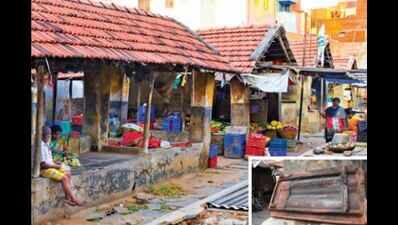
Kal Mandapam in Royapuram, built in the early 1900s, is in shambles now and may soon be torn down.
The market derives its name from the Kal Mandapam at the Angala Parameshwari Amman temple situated close by, says historian Vakula Varadharajan.

A once-bustling place that was spread over 17,000sqft, the market now finds itself tucked away in obscurity, in the middle of a busy street that threatens to engulf it. Nestled among crumbling buildings with exposed brick walls and layers of peeling paint, are 40-odd shops that sell fish, meat and vegetables and are still holding out. "It was very different 40 years ago," says Shenbagavalli, a fish seller who has been at the market her whole life. "She’s right, there was much more life. You should have seen the crowds," says Machagandhi, another fish seller. Proud of the place they point to the tiles, above a meat shop, which they say shows the history of the structure.
Sure enough, beneath the soot and dust blackening the script, the letters stand out- ‘Basel Mission Tile Works’ and ‘Patent 1865’. The firm was set up by German missionary Plebot in 1865 in Karnataka and was said to be the first of its kind in the country. Known as Mangalorean tiles, they were recommended for government buildings during the British period.
M Jayakumar, a tender coconut seller, sits in front of the rusted gate. "The land is owned privately, and embroiled in legal dispute," he says, adding that despite its history the market will never be considered a heritage structure.
End of Article
FOLLOW US ON SOCIAL MEDIA





Hot Picks
TOP TRENDING
Trending Stories
In City
Entire Website
- 2 Army officers thrashed, their female friend gang-raped in Madhya Pradesh
- Ayushman Bharat insurance scheme expanded to cover elderly above 70
- 'Will be demolished if... ': Himachal minister's assurance amid Shimla mosque row
- Mumbai's Haji Ali and Mahim dargahs cancel Eid shamiana
- Garena Free Fire MAX redeem codes for September 11, 2024: Win free room cards, skins, diamonds, pet skins, and more rewards today
- GK for students: Top 8 Largest Mammals in the World
- Glut in milk production leaves Karnataka govt in spot of bother
- A tiny flower nearly killed a tiger habitat, until a snip in time saved it
- 6 failed attempts later, Assam boy cracks CDS; posted in Siachen
- Hamster Kombat Daily Cipher Codes and Combo Cards for September 12, 2024: Unlock up to 1 million coins
- Bangladesh 'urges' pause in Durga puja activities during azaan, namaaz
- Naked woman’s headless body found on Kanpur highway with broken arms, legs
- Why you should not be fooled by ‘20-year SIP crorepati’ dream
- 2 orchestra dancers kidnapped at gunpoint, gangraped in UP
- BJP suggests link between Rahul's remarks and Chandigarh blast
- 'We admire Taylor's music but ... ' JD Vance on Swift supporting Harris
- Actor dies in his sleep. Why sudden heart attacks are killing Indians
- What Airtel CEO Gopal Vittal wrote in letter to Jio, Vi, Tata Tele and BSNL CEOs
- Bangladesh announce Test squad for India tour
- Sena case pending, CJI should recuse himself: Raut on PM-Chandrachud meet

Popular Categories
Hot on the Web
Top Trends
World Richest NFL PlayerAyushman Bharat Insurance SchemeKolkata Doctor Rape CaseStock Trading ScamUS Presidential DebateVinesh PhogatTech LayoffsIndia Team WTCIndia vs Korea LiveIBPS ResultEngineer RashidWolf Attack in BahraichPresVu Eye DropGSEB Question BanksJey USO Luxurious LifestyleCJI ChandrachudLive Cricket Score
Trending Topics
Alia BhattMalaika Arora Father DeathArbaaz KhanNatasa StankovicMr Bachchan OTT ReleaseNational Parks In IndiaSelena GomezGOAT CollectionVikas Sethi DeathMalayalam ProducersIndia's Best Dancer 4Simi GarewalDilli BabuIndian National ParksLaung BenefitsVikas SethiiPhone 16Dubai Princess Sheikha MahraMG Windsor EvWordle Answer
Living and entertainment
Latest News
Kapil Sharma gives fans a peek into his Ganesh Chaturthi festivities with wife GinniBest 20000mAh Power Banks To Power Your Devices Wherever You GoMichael B Jordan to direct and star in 'Thomas Crown Affair' remakeWhy and when a Google exec told colleague: We're both Goldman and NYSE, as per trial evidenceBhubaneswar man held for stalking, harassing woman doctor on social mediaTrump's claim about sending Taliban leader Abdul his house photo fuels social media frenzy'Understand the chronology': BJP suggests link between Rahul's remarks and Chandigarh blastTS PGECET 2024 first phase seat allotment result out at pgecetadm.tsche.ac.in: Direct link to download hereTNPSC Group 2 results declared: Check direct link hereFinding divinity in a world addicted to noiseMTV VMAs 2024's major highlights: Taylor Swift's tribute melts hearts, Eminem's performance gives a nostalgic dose and BLACKPINK's Lisa shines on the stageOmar fighting for chair, I’m fighting for people of Kashmir, says Engineer Rashid after walking out of TiharChandigarh: Police offers Rs 2 lakh reward for information on suspects in sector 10 blast caseTovino Thomas praises Prithviraj Sukumaran as director: "One of the brilliant directors I have ever worked with"Border Gavaskar Trophy: When Sourav Ganguly's Brisbane heroics set the tone for an enlivening seriesLive wire snaps, boy recalls science lesson, saves lives with sisterNTR Jr’s Devara crosses US $1 million mark for its premiere shows in USA with 15 days to releaseMalaika Arora’s mother Joyce breaks down in tears as the family leaves for Anil Mehta's last rites
Copyright © 2024 Bennett, Coleman & Co. Ltd. All rights reserved. For reprint rights: Times Syndication Service