
- News
- City News
- chennai News
- Extracting work is not sexual harassment: Madras high court
Trending
This story is from February 23, 2020
Extracting work is not sexual harassment: Madras high court
Woman employees cannot be allowed to misuse the Women at Workplace (Prevention, Prohibition and Redressal) Act, 2013, and harass someone with an ‘exaggerated or non-existent allegations’, the Madras high court has said.
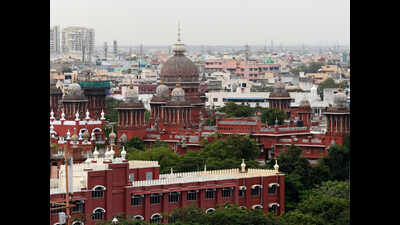
Madras high court
“Every office has to maintain a certain decorum...The administrative head or the chief has every right to extract work and he/she has his/her own discretion and prerogatives.

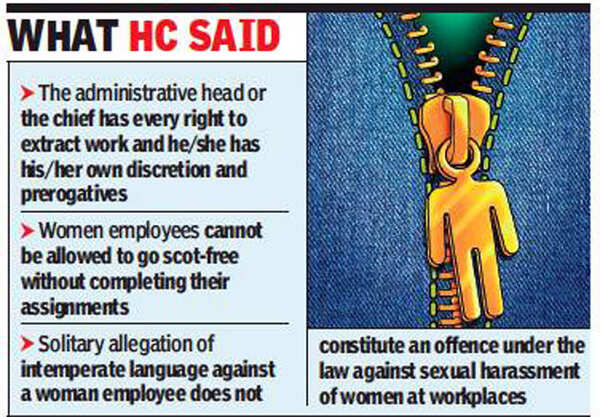
Though the Act is intended to have an equal standing for women at the workplace and to have a cordial workplace in which their dignity and self-respect are protected, women employees cannot be allowed to go scot-free without completing their assignments, said the judges. Referring to the present case, the judges said: “It gives an appearance that instructing a woman employee to do something officially or even scolding a woman employee itself is sexual harassment.”
Observing that a solitary allegation of intemperate language against a woman employee does not constitute an offence under the law against sexual harassment of women at workplaces, the bench quashed a Central Administrative Tribunal (CAT) order against V Natarajan, deputy registrar of trademarks and GI, Chennai, saying the tribunal had erred in arriving at the decision. The case relates to a woman officer’s complaint dated December 2, 2013, to the registrar and controller general of trademarks and GI, patents and design, about the ‘high-handedness’ of Natarajan and the ‘hurt to her self-respect due to his arrogant behaviour’.
The registrar constituted an internal complaints committee on sexual harassment at the workplace. Later she lodged another complaint narrating many incidents about the ‘rude behaviour’ of Natarajan. In this complaint she mentioned “sexual harassment” several times. She also wrote a complaint to the Tamil Nadu State Commission for Women saying the internal committee may not render justice.
The district social welfare officer, who conducted the inquiry, found a prima facie case was made out under Section 3(2)(iii)(iv)(v) of the Sexual Harassment of Women at Workplace (Prevention, Prohibition and Redressal) Act, 2013. The CAT, petitioned by the woman challenging the formation of ICC, ruled that a complaint against him can be probed only by a Local Committee. Assailing the findings, Natarajan moved the high court.
The bench quashed both the orders and found several procedural violations, such as non-serving of copies to Natarajan, in the proceedings. It then went through the complaints written by the woman official to various authorities and said: “The original complaint dated December 2, 2013 was generic in nature. It elaborated upon how Natarajan was authoritative and biased in his action and decisions. This is in sharp contrast to the written complaint dated February 17, 2016. The latter, though did not mention the date and sequence of events, talked about physical advances made by Natarajan and also his lewd remarks on her physical appearance. While the original complaint does not even give an iota of what is stated in the latter, the committee concluded that there is a prima facie case. One complaint repeatedly mentions the word ‘sexual harassment’ without describing it.”
The bench said: “The complainant, it appears, made a futile attempt to settle her personal score with the petitioner (Natarajan).”
End of Article
FOLLOW US ON SOCIAL MEDIA










Photostories

Hot Picks
TOP TRENDING
Popular Categories
Hot on the Web
Top Trends
Shantanu NaiduRussell WilsonsTom BradyAUS vs PAK Live ScorePakistan Cricket FanSuryakumar YadavNobel Peace PrizeMahadev Betting AppNew UPI Transaction LimitRatan Tata DiesPM ModiUGC NET Result 2024Management Colleges of IndiaTop Medical Colleges of IndiaTop Engineering Colleges of IndiaTop Pharmacy Colleges of IndiaLive Cricket Score
Trending Topics
Diwali WishesJigra ReviewDussehra WishesVettaiyan OTT ReleaseVettaiyan CollectionVettaiyan ReviewBlack Movie ReviewDevara CollectionBigg Boss 18Deepika PadukoneShraddha KapoorRatan Tata Passed AwayJigra Movie ReviewVettaiyan Movie ReviewSwatantrya Veer SavarkarDussehra 2024Elon MuskKing Legacy CodesUltimate Football Codes October 2024Wordle Answer
Living and entertainment
Latest News
Navratri 2024: Jaya Bachchan and Shweta Bachchan join Rani Mukerji at the Durga puja pandalOff Argentina's Patagonian coast, whales and their calves dive deep for foodApplications for new power connections among services moved exclusively onlineHappy Dussehra 2024: Top 50 Wishes, Messages, Images and Quotes to Share with Your Loved OnesFortified-food plan faces questions from two PM panel membersKrushna Abhishek shares a heartwarming post for mama Govinda; says 'jab body mein adha blood supremely talented actor Govinda ka ho...'Could Tyreek Hill Return to the Chiefs? Cryptic Posts Fuel Trade Speculation'Jigra' box office collection day 1 early estimate: The Alia Bhatt starrer faces tough competition with Rajinikanth's starrer 'Vettitan' and Rajkummar Rao's Vicky Vidya Ka Woh Wala Video'Robert Gronkowski Reacts to His Hilarious Impression in FX's American Sports Story: Aaron HernandezIf Rahul Gandhi fails to deliver, INDIA bloc may make LoP post rotational: BJP‘Kallanum Bhagavathiyum’: The Vishnu Unnikrishnan and Mokksha starrer is set to get a sequelAlia Bhatt, Bipasha Basu, Rhea Chakraborty and others seek blessings at Kajol and Rani Mukerji's Durga Puja pandal - See photosAI is having its Nobel moment. Do scientists need the tech industry to sustain it?Trapped leopard gasps to death as foresters wait 12 hours for dartsNoel Prize: Ratan’s half-brother named new Tata Trusts chiefSalami slicing: How China is eating into India’s territoryBELLY FAT BLUES: The Waistline Warning Sign of DiabetesHyundai India looks to 'Indianise' operations with its upcoming IPO: Official
Copyright © 2024 Bennett, Coleman & Co. Ltd. All rights reserved. For reprint rights: Times Syndication Service