
- News
- City News
- chennai News
- Chennai’s Port–Maduravoyal Expressway takes shape as double-decker corridor over Cooum
Chennai’s Port–Maduravoyal Expressway takes shape as double-decker corridor over Cooum
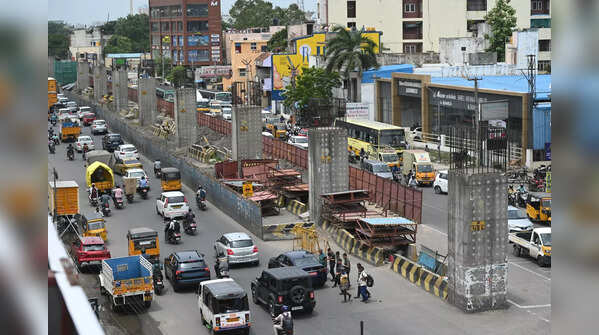
Double-Decker Expressway Through Chennai City
The 20.9 km Port–Maduravoyal Expressway is being built as a double-decker corridor, passing through key city areas and running largely above the Cooum River.
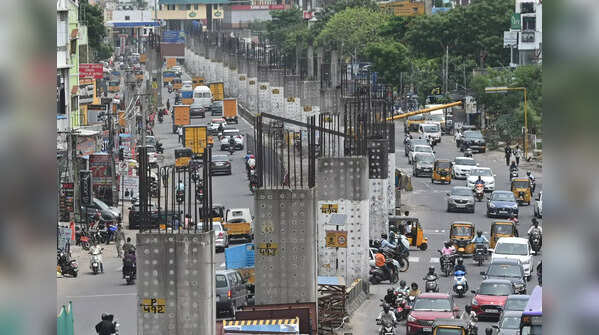
Single-Deck Stretch Along Poonamallee High Road
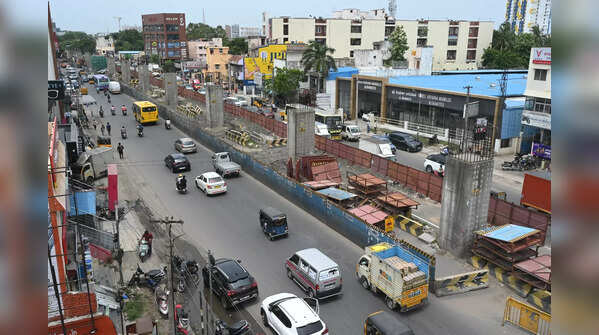
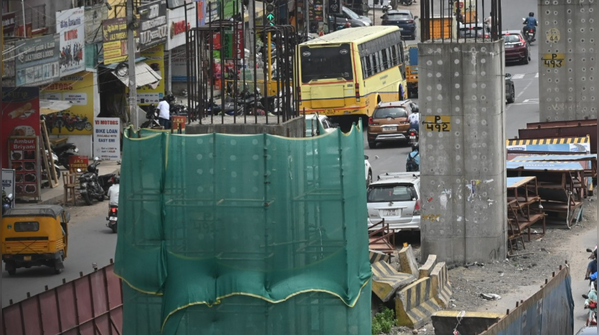
The first 5.7 km stretch from Vanagaram to Koyambedu will remain single-deck, as older pillars built in 2008 are being reused with existing foundations.
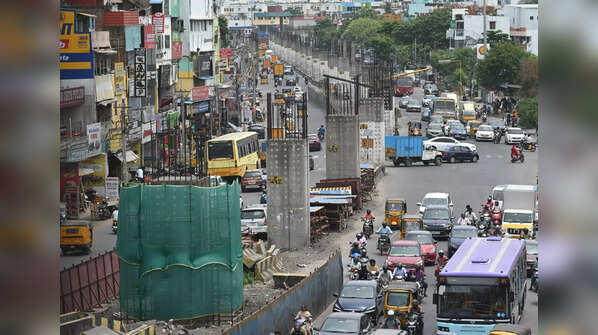
Retrofitting of Old Pillars for New Corridor
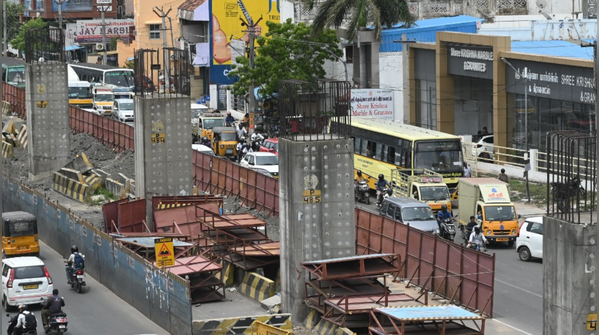
The old pillars are being strengthened with fresh concrete to support an 8-metre-high flyover, which later expands into a double-decker corridor inside the city.
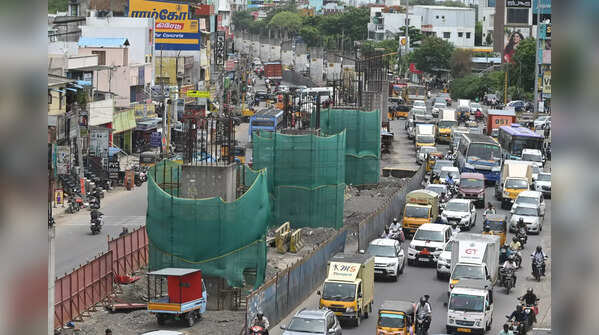
Transition to Double Corridor Near VR Mall
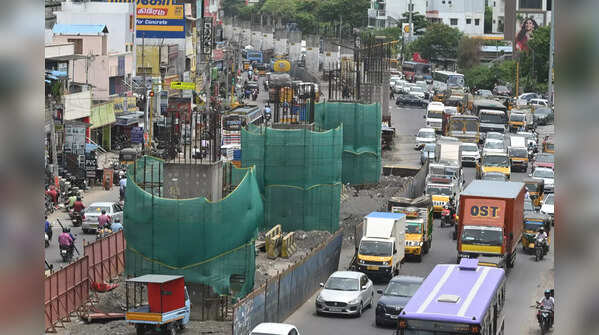
After entering the Cooum River at Padi Kuppam, the flyover expands into a second corridor at 16 metres height near VR Mall after crossing 100-Feet Road.
New Pillars Beyond Maduravoyal Interchange
Beyond the Maduravoyal clover-grade separator, new pillars have been constructed at 8 metres height, while retrofitting work continues on older pillars along the route.
Construction Progress Over the Cooum River
About 25 double-decker pillars have been placed across the Cooum River in areas like Egmore and Chetpet, where construction is faster due to minimal disturbance.
Separate Corridors for City and Port Traffic
The lower corridor will serve city commuters with exit ramps at key locations, while the upper corridor will provide uninterrupted connectivity directly to Chennai Port.
Toll Collection on Both Elevated Corridors
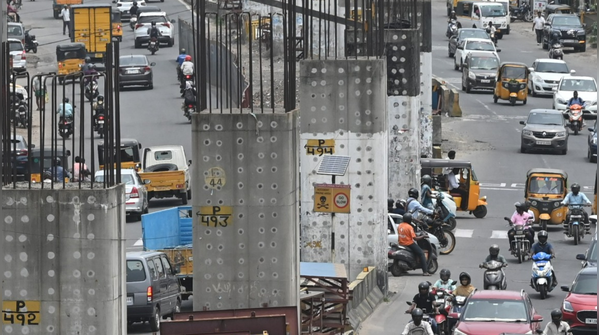
Both corridors will be toll-charged despite running within city limits, following a model similar to other elevated urban expressways in major Indian cities.
Segment Casting and Yard Operations
NHAI is casting around 2,000 segments at a 60-acre yard, with several segments already installed, especially near Shanthi Colony and Koyambedu areas.
Traffic Issues and Public Concerns
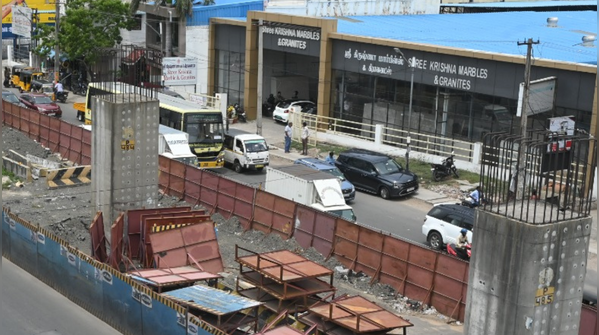
Barricades on Poonamallee High Road have reduced carriageway space for nearly two years, causing traffic issues, especially at night, with limited alternative routes provided.
Featured In City

