
- News
- City News
- chandigarh News
- SAZ, not SEZ, is need of the hour, says Green Revolution expert
Trending
This story is from April 14, 2017
SAZ, not SEZ, is need of the hour, says Green Revolution expert
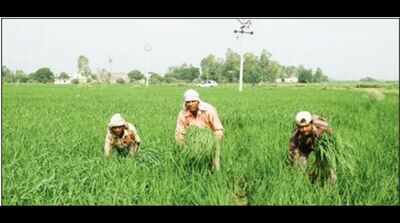
Renowned agri scientist M S Swaminathan, who was part of the team that raised yields in wheat and paddy cultivation, has advocated the formation of special agriculture zones (SAZs) where land will be pooled and utilised only for farming.

In an article written by the 91-year-old scientist in the ‘Elsevier Journal,’ which he shared with TOI, Swaminathan said, “Procedures and purposes for which farm land is to be acquired have become a subject of considerable public and political concern and controversy. The bottom line should be public good and not private profit. At the same time, the food security of the country has to be safeguarded, since in the coming years food grains will not be easily available in the international market and price volatility will be high. Therefore, there is need for all party consensus both on preserving good farm land for farming and for adequate consultation and compensation before farm land is acquired for other purposes.”
Prof Swaminathan, who worked closely with Nobel laureate agronomist and geneticist Norman Ernest Borlaug of the US to usher in the Green Revolution, said that in the interest of food security, there is a need to create SAZs where land will be only utilised for farming. “Unlike special economic zone (SEZ), where land is allotted for non-farm purposes, SAZ should be designed to conserve prime farm land so that we do not revert to a ship to mouth existence. The Punjab-Haryana agricultural area could be the first SAZ in the country,” he said in the article.
To set up the SAZ, the former director general of the Indian Council of Agricultural Research (ICAR) has suggested declaring areas characterised by fertile soils capable of sustaining two to three good crops a year as an SAZ. “SAZ identification and declaration may be made by state governments in consultation with farm men and women. Special facilities may be provided to farmers to maintain SAZ as the custodian of national food security,” Prof Swaminathan has observed.
The SAZ model, he said, would not only augment foodgrain production, it would help conserve rich soil in various regions which have the long-term potential for bumper harvests. “Aristotle said long ago that, ‘soil is the stomach of the plant’. If we do not attend to soil health and improvement, we will not be able to achieve the goal of ending hunger. No further time should be lost in establishing SAZ to save good agricultural soils for the present and future populations.”
End of Article
FOLLOW US ON SOCIAL MEDIA






Hot Picks
TOP TRENDING
Trending Stories
In City
Entire Website
- Amid Shannon Sharpe Viral Video, Former ESPN Host Michelle Beadle Reacts Claiming It Was Not Her
- 2 Army officers thrashed, their female friend gang-raped in Madhya Pradesh
- Ayushman Bharat insurance scheme expanded to cover elderly above 70
- 'Will be demolished if... ': Himachal minister's assurance amid Shimla mosque row
- Mumbai's Haji Ali and Mahim dargahs cancel Eid shamiana
- Garena Free Fire MAX redeem codes for September 11, 2024: Win free room cards, skins, diamonds, pet skins, and more rewards today
- GK for students: Top 8 Largest Mammals in the World
- Glut in milk production leaves Karnataka govt in spot of bother
- A tiny flower nearly killed a tiger habitat, until a snip in time saved it
- 6 failed attempts later, Assam boy cracks CDS; posted in Siachen
- Biryani row: Administration moves boy to new school, to waive Rs 37k in fees
- Mamata govt sends fresh letter to protesting doctors, calls for 5pm meeting
- How life froze near Delhi as a tiger walked and decided to stay
- 'Society and govt should be ashamed': Rahul after friend of Army officers gangraped
- Over 5,000 Maoists, including 1,000 women ultras, killed in 20 years
- Bomb scare: Suspicious bag found at RG Kar Medical College and Hospital
- Why are Bangladeshi Hindus in India for 50 yrs still not Indians?
- What Airtel CEO Gopal Vittal wrote in letter to Jio, Vi, Tata Tele and BSNL CEOs
- ACT Hockey Live: India 3 - 1 Korea in fourth quarter
- Sunil Gavaskar slams Vaughan on 'Root surpassing Tendulkar' comment

Popular Categories
Hot on the Web
Top Trends
Elon MuskAyushman Bharat Insurance SchemeKolkata Doctor Rape CaseStock Trading ScamUS Presidential DebateVinesh PhogatTech LayoffsIndia Team WTCIndia vs Korea LiveIBPS ResultEngineer RashidWolf Attack in BahraichPresVu Eye DropBangladesh SquadJey USO Luxurious LifestyleCJI ChandrachudLive Cricket Score
Trending Topics
Alia BhattMalaika Arora Father DeathArbaaz KhanNatasa StankovicMr Bachchan OTT ReleaseNational Parks In IndiaSelena GomezGOAT CollectionVikas Sethi DeathMalayalam ProducersIndia's Best Dancer 4Simi GarewalDilli BabuIndian National ParksLaung BenefitsVikas SethiiPhone 16Dubai Princess Sheikha MahraMG Windsor EvWordle Answer
Living and entertainment
Latest News
Epilepsy medication shows promise of treating sleep apnoea symptoms: StudyDigest this: Unhealthy gut may be linked to Parkinson’s disease'Played a big role in turning the cricket around': Ricky Ponting applauds Virat Kohli’s brilliance as India’s former captainExclusive- Saurabh Gumber reveals joining a new show during Ganeshotsav says, "I consider it as Bappa's small gift and believe he has great plans for me ahead"Trump's claim about sending Taliban leader Abdul his house photo fuels social media frenzyFinding divinity in a world addicted to noiseTovino Thomas praises Prithviraj Sukumaran as director: "One of the brilliant directors I have ever worked with"Border Gavaskar Trophy: When Sourav Ganguly's Brisbane heroics set the tone for an enlivening seriesNTR Jr’s Devara crosses US $1 million mark for its premiere shows in USA with 15 days to release8 animals that reproduce without matingIt will take time to get back to the top: Pakistan coach ZamanThe Luckiest Zodiac Signs: Who's Got the Midas Touch?EXPLAINED: What India need to do in next 10 Tests to qualify for World Test Championship finalWatch: Car stuck in massive crater as road caves in at Mumbai's DadarVirgo, Daily Horoscope Today, September 12, 2024: Experience mental clarity and emotional relief‘Ajayante Randam Moshanam’ actor Tovino Thomas gets emotional: We faced numerous challengesDemocrats claiming Florida Senate seat is in play haven't put money behind the effort to make it soPeru's former president Alberto Fujimori passes away after battle with cancer
Copyright © 2024 Bennett, Coleman & Co. Ltd. All rights reserved. For reprint rights: Times Syndication Service