
- News
- City News
- chandigarh News
- No age for arthritis
Trending
This story is from October 13, 2022
No age for arthritis
On world arthritis day today, prof aman sharma, a rheumatologist in internal medicine department of pgi, tells shimona kanwar about its unknown facts
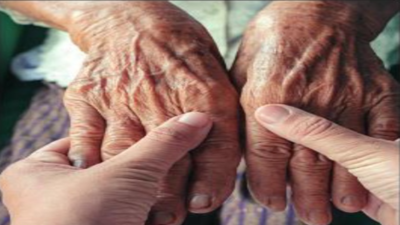
The major one is that arthritis is a single disease
How many arthritis patients does PGI see on a monthly basis ?
Around 50,000 in rheumatology clinic annually. The numbers have gone up. This is perhaps due to increased awareness amongst patients and also because of scarcity of trained rheumatologists in surrounding states.
Patients come at what stage of the disease? If there is delay, what are the common reasons?
We see patients from very early in the disease to a very late stage, when a lot of damage has already occurred.

What are the myths associated with the disease?
The major one is that arthritis is a single disease. The fact is that there are different types of arthritis and treatment type and duration depends upon correct identification of the type. The second one is that there is no treatment. This again is not true as so much advancement has occurred in this field in last so many years with various different highly effective therapies being available. Third myth is treatment has a lot of side effects. This again is not true as most patients tolerate the treatment well. There is a need for monitoring tests at some intervals and with those the risk of side effects is minimal
Another one is that these diseases only affect joints. While joints bear most of the perceptible brunt, the damage is not only confined to joints, other organs like eyes, lungs, kidneys can also be involved. There is increased risk of heart disease also. Also, arthritis can affect any age, starting from children to very old patients. Though contrary to commonly held belief that these are the diseases of elderly, they mostly affect young adults in their most productive years of life.
Can this disease be prevented? If yes, how?
There is a lot of research in areas like pre-clinical rheumatoid arthritis. As of now, we have not reached a stage where we can prevent it at this point of time but this might become a reality during our lifetime.
Are there some screening tests?
There are various blood tests and these depend upon the type of arthritis being considered amongst the diagnosis. The commonest of them all is rheumatoid arthritis for which tests like rheumatoid factor and anti CCP are done.
Who is at risk?
The persons with family history of inflammatory disease are at a relatively higher risk but that risk is not absolute. Smoking is a modifiable risk factor. Gingival infections are also considered to be a risk factor
Do patients come to a rheumatologist or do they see an orthopedic?
The general awareness about rheumatology as a separate specialty is not there in society. The patients should know that they should see a rheumatologist if they are suspected to be suffering from inflammatory arthritis
How crippling can arthritis be and is there some physiotherapy?
The untreated inflammatory arthritis like rheumatoid arthritis can not only be crippling but is also associated with decreased lifespan. While physiotherapy has an important role as an ancillary support system, it cannot be a primary mode of therapy for patients with inflammatory arthritis.
Please advise what signs to watch out for before the onset of the disease. Is it progressive?
If anyone has joint pains associated with significant early morning stiffness of at least half an hour and there is joint swelling, then one must see a rheumatologist immediately. Rheumatoid arthritis if untreated leads to progressive joint damage.

About the Author
Shimona KanwarEnd of Article
FOLLOW US ON SOCIAL MEDIA










Hot Picks
TOP TRENDING
Popular Categories
Hot on the Web
Top Trends
IND vs BAN Live ScoreCaleb WilliamsBilkis Bano CaseAnne AllanVince McMahon Netflix DocuseriesIPL Player RetentionHigh Paying Freelance JobsSean CombsIsrael Hezbollah WarNEET UG Paper Leak CaseKerala Lottery ResultsTamil Nadu NEET UG CounsellingTirupati LadduWest Bengal Teacher RecruitmentSoudi Al Nadak IslandKerala Bans Study NotesLive Cricket Score
Trending Topics
Living and entertainment
Latest News
Police add forgery, corruption charges against 17-year-old in Pune Porsche crash case“Goodbye Meta AI”: How over 600,000 people, including celebrities, fell for a fake message on Facebook, Instagram'It's been done 5 times already': Supriya Sule's jibe at PM Modi on Pune Metro inaugurationHC raps CCP for evicting 2 from fish mkt buildingTravis Kelce Shares His Excitement for His Acting Debut in Ryan Murphy’s Mystery Thriller GrotesquerieRhea Ripley’s husband comments on how much time she has left in the ringNayanthara and Vignesh Shivan share emotional notes on their twins Ulag and Uyir's second birthdayIsraeli strikes kill 600, displace 90,000 as Lebanese civilians flee in DesperationNavya Naveli Nanda reacts to Kolkata rape-murder case, calls for accountability and safer spaces for womenArijit Singh apologizes to his female fan as the security guard held her neck during his UK concert: 'I could not protect you'World tourism day 2024: Recreate your favourite filmi moments at these locales‘Laughter Chefs Unlimited Entertainment’:Team Ankita Lokhande and Team Jannat Zubair clash in culinary combatSearching for synthetic opioid rescue agents: Identification of atoxifent as a potent opioid agonist with reduced respiratory depressionKrithi Shetty shares a sneak peek of her birthday celebration - SEE PICSChennai court acquits customs officer in diamond misappropriation caseSaif Ali Khan admits that the ‘Adipurush’ controversy was 'unsettling'; says “you need to stay away from religion...'Valpoi torrential rainfall sets record, crosses 200 inchesWeight loss and more: 5 reasons to eat soaked methi seeds every morning
Copyright © 2024 Bennett, Coleman & Co. Ltd. All rights reserved. For reprint rights: Times Syndication Service