
- News
- City News
- chandigarh News
- Lahore roses for Golden Temple, ‘amrit’ for plant: Professor’s case for soft border
Trending
This story is from July 28, 2023
Lahore roses for Golden Temple, ‘amrit’ for plant: Professor’s case for soft border
Under Attari’s giant “Lahore 23 km” sign on a hot Thursday afternoon stood the small reception party for US professor, Tarunjit Singh Butalia, who was taking an empty, barricaded road from Punjab’s old capital and Amritsar’s once twin city. Many people cross this India-Pakistan border everyday but Butalia’s hour-long arrival trip was different — a “pilgrimage of love”.
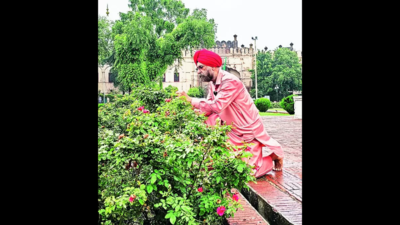
Professor Tarunjit Singh Butalia, who teaches civil engineering at Ohio State University, plucked two roses from the Hazuri Bagh royal garden that Maharaja Ranjit Singh raised in front of Badshahi Mosque in Lahore, and offered those at Harmandar Sahib.
Coming from Lahore’s Gurdwara Dera Sahib to Amritsar’s Harmandar Sahib (Golden Temple) — from a shrine associated with the martyrdom of Guru Arjan Dev to the one which the 5th Guru had built — he had stopped at the Hazuri Bagh royal garden that Maharaja Ranjit Singh raised in front of Lahore’s Badshahi Mosque, to pluck two roses and tuck them in his turban.

He offered those at Harmandar Sahib and took water from its amrit sarovar (holy tank) for the rose plant. A habitual ritual for the Lahore devotees had become a unique offering, a man’s prayer for love between hostile neighbours.
‘Foreign privilege’ in ‘own land’
Butalia, who teaches civil engineering at Ohio State University in the US, called this trip a “privilege” but what pained him was that only his US passport had made it possible.
For Indians and Pakistanis, who should be doing this pilgrimage, find it close to impossible.
There’s a case for soft borders between the two Punjabs — charhda (east) and lehnda (west) — separated by the world’s heaviest guarded fence but united by language, culture, history, and people.
In Butalia’s opinion: “Instead of being a divider, this border can be a unifier between the two countries if made soft.” His friends Pargat Singh, Parminder Singh, and Prateek Sehdev joined him on the trip.
His volunteer organisation ‘Jeevay Sanjha Punjab’ runs Gurmukhi classes in Pakistan and Shahmukhi (Punjabi written in Persian script) classes in India, and reunites Partition refugees with their parted families across the border.
He crossed the Wagah before the border closed at 4 pm. Back in Pakistan, he ended the trip in the evening by watering that rose plant in Lahore’s Hazuri Bagh with the ‘amrit’ from Amritsar — as if quenching a seven-decade thirst.

About the Author
Jaspreet SinghEnd of Article
FOLLOW US ON SOCIAL MEDIA










Photostories
Hot Picks
TOP TRENDING
Popular Categories
Hot on the Web
Top Trends
Shantanu NaiduRussell WilsonsTom BradyAUS vs PAK Live ScorePakistan Cricket FanSuryakumar YadavNobel Peace PrizeMahadev Betting AppNew UPI Transaction LimitRatan Tata DiesPM ModiUGC NET Result 2024Management Colleges of IndiaTop Medical Colleges of IndiaTop Engineering Colleges of IndiaTop Pharmacy Colleges of IndiaLive Cricket Score
Trending Topics
Diwali WishesJigra ReviewDussehra WishesVettaiyan OTT ReleaseVettaiyan CollectionVettaiyan ReviewBlack Movie ReviewDevara CollectionBigg Boss 18Deepika PadukoneShraddha KapoorRatan Tata Passed AwayJigra Movie ReviewVettaiyan Movie ReviewSwatantrya Veer SavarkarDussehra 2024Elon MuskKing Legacy CodesUltimate Football Codes October 2024Wordle Answer
Living and entertainment
Latest News
Navratri 2024: Jaya Bachchan and Shweta Bachchan join Rani Mukerji at the Durga puja pandalOff Argentina's Patagonian coast, whales and their calves dive deep for foodHappy Dussehra 2024: Images, Quotes, Wishes, Messages, Pictures and GreetingsApplications for new power connections among services moved exclusively onlineHappy Dussehra 2024: Top 50 Wishes, Messages, Images and Quotes to Share with Your Loved OnesFortified-food plan faces questions from two PM panel membersKrushna Abhishek shares a heartwarming post for mama Govinda; says 'jab body mein adha blood supremely talented actor Govinda ka ho...'Could Tyreek Hill Return to the Chiefs? Cryptic Posts Fuel Trade SpeculationHappy Dussehra 202: Top 50 Wishes, Messages and Quotes to share with your loved onesAmitabh Bachchan turns 82: Priyanka Chopra, Prabhas, Kajol, and other celebs extend heartfelt birthday wishes to the legendary starPutin won't discuss Ukraine peace with Germany's Scholz, Berlin saysKarnataka Congress faces backlash over case withdrawals linked to Hubballi riots'Jigra' box office collection day 1 early estimate: The Alia Bhatt starrer faces tough competition with Rajinikanth's starrer 'Vettitan' and Rajkummar Rao's Vicky Vidya Ka Woh Wala Video'Robert Gronkowski Reacts to His Hilarious Impression in FX's American Sports Story: Aaron HernandezIf Rahul Gandhi fails to deliver, INDIA bloc may make LoP post rotational: BJPAI is having its Nobel moment. Do scientists need the tech industry to sustain it?Trapped leopard gasps to death as foresters wait 12 hours for dartsType Soul codes October 2024: Redeem active codes to unlock benefits
Copyright © 2024 Bennett, Coleman & Co. Ltd. All rights reserved. For reprint rights: Times Syndication Service