
- News
- City News
- bhubaneswar News
- Oram move to get back India's first hand-written paper from London
Trending
This story is from August 7, 2016
Oram move to get back India's first hand-written paper from London
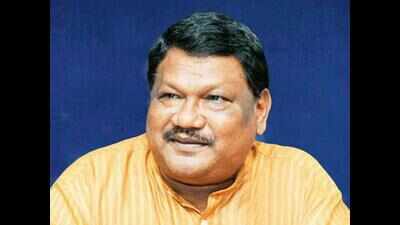
Jual Oram
At a recent programme organised by Sarala Sahitya Sansad in Cuttack to commemorate the 247th year of Kujibara Patra, Oram had said that he would request the British government to arrange for the return of Kujibara Patra and other related documents.

Kujibara Patra was the first venture started by warrior-turned-saint Sunder Das in 1769 to disseminate news and views on social and religious issues. That was 11 years before India's first printed newspaper, Bengal Gazette, by James Augustus Hicky, started. The contents of Kujibara Patra, hand-written on processed palm leaves, were read out at weekly marketplaces and hung outside palaces and intersections of roads in Cuttack for public viewing.
The saint had engaged five disciples to supervise the publication of the paper. A workshop for processing the palm leaves and content writing was set up. The paper was so popular that it was translated into Hindi and Marathi and sent to both rulers and people in high positions within and outside Odisha.
Rev. Amos Sutton, who founded the Baptist Church in Cuttack, translated Kujibara Patra into English and sent it to England in 1827.
Sunder Das was born on April 20, 1720 at Kumarpur village near Athagarh in Cuttack district. He lost his parents at an early age and grew up under the care of his father's brother. He studied the Vedas and related subjects at the village school. The local king was so impressed by Das's intellect and valour that he made him a soldier in his army. In no time, Das rose to become a commander.
Destiny, however, had something different for Das. He soon renounced his military life and became a saint and set up a mutt under a banyan tree at what is now known as Kujibara village, about 10 km from Cuttack.
Always in loin cloth, Das preached on religion and the importance of simple living, non-violence and vegetarian food. He attracted both kings and commoners.
As his name and fame grew, missionaries would seek his permission to preach the gospel, which he promptly gave.
Rev. Sutton, in his book, has said, "The Sahibs, who had just conquered Orissa, were to consult him as their spiritual guide." Recalling his first meeting with Das in October 1826, he said the saint "greatly excited our hopes."
Once Das was implicated in a false case and sent to jail. He was released after 45 days because the English rulers feared rioting by public. But, his mutt was kept out of bounds for people. All these deeply upset Das who told his disciples that it's time for him to leave the world. He askedthem to dig a pit, and then he sat inside it. He asked his disciples to cover him with earth. He died on April 16, 1838 at the age of 118.
"With him also died his Kujibara Patra," said Sukanta Kumar Mohanty, who, while on a visit to London earlier, had seenbooks on Das and palm leaves at Ambus Library.
Mohanty added, "Other libraries there and in other countries may have similar collections. I did not have much time to scan through the books nor the fragile palm leaves in London. But a government-government contact can help India retrieve its rich treasure."

About the Author
Rajaram SatapathyEnd of Article
FOLLOW US ON SOCIAL MEDIA



Photostories
Hot Picks
TOP TRENDING
Popular Categories
Hot on the Web
Top Trends
Ratan TataRatan Tata HospitalisedIND vs BAN Live ScoreRatan Tata DiesNew UPI Transaction LimitWorld First Top 10 TrillionairesStock Market TodayKerala Lottery ResultElection Results 2024Tom BradyIsrael Hezbollah WarSuryakumar YadavManagement Colleges of IndiaTop Medical Colleges of IndiaTop Engineering Colleges of IndiaTop Pharmacy Colleges of IndiaLive Cricket Score
Trending Topics
Diwali WishesBigg Boss Tamil 8 Contestants ListBhool Bhulaiyaa 3 TrailerDurga Puja WishesSanjay Leela BhansaliVettaiyan ReviewBigg Boss 18 House PhotoDevara CollectionBigg Boss 18Deepika PadukoneShailesh LodhaDevaraColdplayNational Film Awards 2024Swatantrya Veer SavarkarColdplay India tour 2025Watch NFL Live StreamDress To ImpressRatan Tata DeathWordle Answer
Living and entertainment
Latest News
CATS YouTube codes for October 9, 2024: Earn 500 CATS and know how to redeem the codesRatan Tata: The industry titan with a golden heartAre HDFC Bank, Axis, Kotak a value buy or value trap for investors?Triptii Dimri on emotional struggles following criticism for 'Animal’: Side effect of being in a mainstream filmDid the threat of ‘first Hindu CM’ help NC-Congress win J&K?Ranbir Kapoor's UNSEEN BTS pic from 'Shamshera' goes viralMudassar Aziz: A filmmaker needs to carefully study while pegging a film around the idea of stardomPrabhas starrer 'Kalki 2898 AD' gears up for its release in JapanOnly a true creative genius can spot the odd unicorn in 12 seconds!OnePlus 12 is available for Rs 35,314 only on Amazon; check exchange deal and bank offersIndian man goes ‘skinny-dipping’ at an Australia's beach that isn’t even on Google Maps | Watch video"We all still love him": TNA producer and former Knockouts Champion hopes for AJ Styles’ return to the company"She's garbage": Raheem Mostert's Wife, Devon, Calls Out Kamala Harris Over Controversial Hurricane Milton RemarksAnupama's 15-year leap: Toshu's transformation and new actor Manish Nagdev joins amidst dramatic fire crisisAamir Khan takes Amitabh Bachchan back to his Kolkata days300 kg tea adulterated with coconut shell powder seized in this citySurabhi Lakshmi on receiving praise from Akshay Kumar: I never imagined he would remember me; overwhelmed by his wordsThe surprising histories behind everyday items you use
Copyright © 2024 Bennett, Coleman & Co. Ltd. All rights reserved. For reprint rights: Times Syndication Service