
- News
- City News
- bengaluru News
- The master batsman as muse
Trending
This story is from November 18, 2017
The master batsman as muse
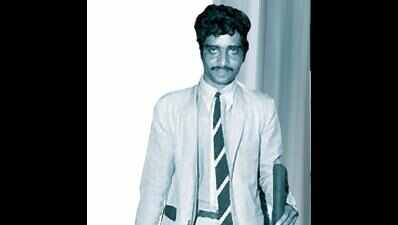
Cricket fans may have read Alan Ross extolling in verse Richie Benaud, and how leg-spinners “pose problems much like love”. And, of course, Arthur Conan Doyle’s 20-stanza account of how he once got the wicket of the grand old WG Grace.
Yet if there’s been a truly literary work about a cricketer, Kannada poet B R Lakshman Rao’s “Gundappa Viswanath” must be the one.

Critics cheered it. Poet H S Venkatesh Murthy, among the early readers of the poem, says it goes beyond being merely an ode to the cricketer and emerges as “a major triumph in the symbolism”.
Kannada writer and critic S R Vijaya Shankar says “Gundappa Viswanath” is essentially a contemplative poem. “It speaks of the relationship between an artist and a work of art. At some stage, he has to retire from it, because of loss of poetic strength, skill or age. But art is permanent. The creator is temporary. The creator feels a sense of loss. Nevertheless in a sort of resurrection another talent emerges from most unexpected quarters of life. As hope hangs in the air, a new creation is waiting to unravel itself – as the poet says, `A Balamurali in a bathroom or a Bendre in a bazaar’. No matter where it comes from, art endures.” The poem ends on a note of gratitude to the art and sympathy for the artist. Vijaya Shankar says the theme of the poem reminds him of the last stanza of “Ode on a Grecian Urn” by John Keats, particularly the message of the famous lines: “Beauty is truth, truth beauty – that is all / Ye know on earth, and all ye need to know”.
For Lakshman Rao, the memorable day was when he got to read out the poem to Viswanath. “Actor Srinath who knew him well arranged a meeting and I recited it to him. Venkatesh Murthy explained the nuances. Viswanath was happy about it and said he felt proud to be part of a poem that was part of a text for degree students.” And with his trademark wit, Visy had added, “You’ve even put me right up there in the title of the poem. I’m only a middle-order batsman.”
Last Saturday on November 11 – marking 50 years since Viswanath made his cricketing debut – Lakshman Rao called his favourite cricketer to say a few good words. That was ample demonstration of the poet’s deep attachment not only to the symphony of the square cut, but also to a gentleman cricketer.
Cricket’s poets
Poets have always celebrated beauty and passion. And sports has always been cause for both. Think of the Eden Gardens crowd on that day in 2012, when VVS Laxman and Rahul Dravid played against Waugh’s invincibles, and Laxman’s wristwork made casual mincemeat of Shane Warne’s bowling analysis. Think of the passion and joy as the crowd saw the match move from inevitable to defeat to improbable victory. Or just think of Michael Holding, running up to bowl, a sight so beautiful and terrifying that the West Indian was named the “Whispering Death”. Think of David Gower’s cover drive or Sachin’s flick. These are poems in their own right, and it is not surprising that cricket had its own poets.
The Gavaskar Calypso
Gavaskar, the original ‘Little Master’ burst on the scene in 1971. Four matches, eight innings, three Not Outs, a highest of 220, and the star of India’s first test series win against the West Indies. Gavaskar made such an impact that calypso singer Lord Relator sang:
Doyle on Grace
Dr William Gilbert Grace strode the cricketing world of the late 19th and early 20th centuries like a bearded colossus. People thronged to see him, and he did more to popularize the game than anyone ever did. Bowlers would apologize for getting the wicket of the man who famously said that he didn’t like batting defensively, “because you only get threes”. Sir Arthur Conan Doyle, when he wasn’t writing about red-headed leagues and Napoleons of crime or irascible professors or chivalrous knights and yeoman archers, also played cricket. Doyle was a member of a team called the Allahakbarries, a team founded by Peter Pan author JM Barrie, which also at different times featured Rudyard Kipling, HG Wells, Arthur Conan Doyle, PG Wodehouse, GK Chesterton, Jerome K Jerome, AA Milne, EW Hornung and others. Doyle once bowled to Grace, and took his wicket. The author wrote a poem celebrating the occasion.
“Once in my heyday of cricket,
One day I shall ever recall!
I captured that glorious wicket,
The greatest, the grandest of all.”
Wodehouse’s butterfingers
There’s a whole book about PG Wodehouse’s writing about cricket – “Wodehouse at the Wicket” – edited by cricket historian Murray Hedgcock. Wodehouse played cricket for his school and was quite a good fast bowler – playing alongside Conan Doyle in the Allahakbarries. Wodehouse wrote several cricket poems – including this:
In speaking of our cricketers,
This maxim guideth me,
If they win a match the’re England,
If they lose they’re MCC.
Wodehouse also wrote a long poem about the agony of being a fielder who dropped a catch – something that anyone who has fielded badly will know something about
“I heard in a stupor the bowler
Emit a self-satisfied ‘Ah!’
The small boys who sat on the roller
Set up an expectant ‘Hurrah!’
The batsman with grief from the wicket
Himself had begun to detach —
And I uttered a groan and turned sick. It
Was over. I’d buttered the catch.”
End of Article
FOLLOW US ON SOCIAL MEDIA





Hot Picks
TOP TRENDING
Trending Stories
In City
Entire Website
- Top fastest trains in the world: From China's CR Harmony to Germany's ICE
- Amid Shannon Sharpe Viral Video, Former ESPN Host Michelle Beadle Reacts Claiming It Was Not Her
- 2 Army officers thrashed, their female friend gang-raped in Madhya Pradesh
- Ayushman Bharat insurance scheme expanded to cover elderly above 70
- 'Will be demolished if... ': Himachal minister's assurance amid Shimla mosque row
- Mumbai's Haji Ali and Mahim dargahs cancel Eid shamiana
- Garena Free Fire MAX redeem codes for September 11, 2024: Win free room cards, skins, diamonds, pet skins, and more rewards today
- GK for students: Top 8 Largest Mammals in the World
- Glut in milk production leaves Karnataka govt in spot of bother
- A tiny flower nearly killed a tiger habitat, until a snip in time saved it
- Mamata says 'ready to resign' as standoff with doctors over RG Kar case continues
- 'Leading light of the Left': Sitaram Yechury passes away; PM Modi, Rahul condole demise
- Why you should not be fooled by ‘20-year SIP crorepati’ dream
- Watch: SpaceX conducts first private spacewalk; key details
- Engineer Rashid says ready to support INDIA bloc but on this condition
- Vijay’s party will pose challenge to Dravidian parties: H Raja
- Why this Kerala beach is divers’ envy, drivers’ pride
- What Airtel CEO Gopal Vittal wrote in letter to Jio, Vi, Tata Tele and BSNL CEOs
- Moin blasts Ramiz Raja for 'demoralising' son Azam
- Who is billionaire Jared Isaacman? First to undertake private spacewalk

Popular Categories
Hot on the Web
Top Trends
Trending Topics
Alia BhattMalaika Arora Father DeathArbaaz KhanNatasa StankovicMr Bachchan OTT ReleaseNational Parks In IndiaSelena GomezGOAT CollectionVikas Sethi DeathMalayalam ProducersIndia's Best Dancer 4Simi GarewalDilli BabuIndian National ParksLaung BenefitsVikas SethiiPhone 16Dubai Princess Sheikha MahraMG Windsor EvWordle Answer
Living and entertainment
Latest News
Epilepsy medication shows promise of treating sleep apnoea symptoms: StudyDigest this: Unhealthy gut may be linked to Parkinson’s disease'Played a big role in turning the cricket around': Ricky Ponting applauds Virat Kohli’s brilliance as India’s former captainAadhaar card update: Do you have to compulsorily update details on your Aadhaar every 10 years?Single Indians are now choosing slow, meaningful dates over-elaborate outings, reveals an online dating platform’s surveyExclusive- Saurabh Gumber reveals joining a new show during Ganeshotsav says, "I consider it as Bappa's small gift and believe he has great plans for me ahead"Pakistan: Bilawal cautions Shehbaz govt against political victimisation, points to Imran Khan's caseVijay Varma reveals he was DROPPED from 'Sacred Games' at the last minuteMahindra Thar Roxx with VIN 0001 to be auctiond for charity: How to registerVijay Sathya-starrer 'Dhil Raja' to release in SeptemberHarvard University Sees Drop in Black Freshman Enrollment Post-Supreme Court Ruling on Affirmative ActionFinding divinity in a world addicted to noiseTovino Thomas praises Prithviraj Sukumaran as director: "One of the brilliant directors I have ever worked with"Border Gavaskar Trophy: When Sourav Ganguly's Brisbane heroics set the tone for an enlivening seriesNTR Jr’s Devara crosses US $1 million mark for its premiere shows in USA with 15 days to release8 animals that reproduce without matingIt will take time to get back to the top: Pakistan coach ZamanThe Luckiest Zodiac Signs: Who's Got the Midas Touch?
Copyright © 2024 Bennett, Coleman & Co. Ltd. All rights reserved. For reprint rights: Times Syndication Service