
- News
- City News
- bengaluru News
- Remembering Gopalakrishna Adiga, the pioneer of Navya literature in Kannada
Trending
This story is from February 19, 2017
Remembering Gopalakrishna Adiga, the pioneer of Navya literature in Kannada
Gopalakrishna Adiga, the doyen of modernist literary (Navya) movement in Kannada, was also the first Kannada poet to contest the Lok Sabha elections in 1971. He jumped into the electoral fray just to oppose former Prime Minister Indira Gandhi.
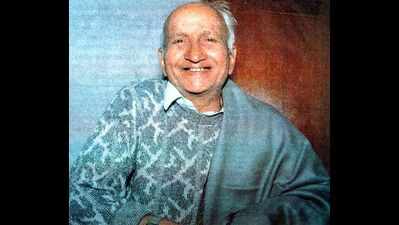
Gopalakrishna Adiga
The Kannada Sahitya Parishat is celebrating the birth centenary of the poet who “fought for artistic creativity.” He was born in a coastal village in Udupi district in 1918 and passed away in 1992.

Shamsundar Bidarkundi, critic and chairman of Dr Da Raa Bendre National Memorial Trust, recalled that contesting on a Jan Sangh ticket, Adiga was defeated by Congress candidate K Hanumantaiah. However after the elections, he was appointed the director of the National Book Trust. Later, he was appointed scholar for the Institute of Higher Studies, Shimla. That was the respect Adiga got from even his political opponents, said Bidarkundi.
Bidarkundi recalled that many of his contemporaries were disappointed by Adiga when he became the president of Akhila Bharat Kannada Sahitya Sammelana held at Dharmasthala in 1979. “Being a promoter of Navya poetry, Adiga was silent on Dalit and Bandaaya movements in Kannada literature. This was not because he did not like them but he felt Bandaaya (revolution) should spring from an individual ,’’ he added.
When one of his poems ‘Prarthane’ (Prayer) became the centre of a controversy and he was asked to meet the then chief minister S Nijalingappa. But Adiga wrote back saying he had no work with the CM, and if Nijalingappa wanted, he could meet him.
Adiga fought for artistic creativity even as he promoted dignity of labour. While he was serving at a college in Sagar in Shivamogga district, he took on the management when an attender was targeted.
“He was a regular at the Coffee House and was surrounded by youths. He groomed them with his literary sensibilities. He used to visit the century-old Devaraja Market to buy vegetables,” K N Ramachandra, septuagenarian residing in Mysuru, recalled.
Noted writer K S Bhagavan was a student at Maharaja’s College when Adiga was teaching at St. Philomena’s College. “He was an inspiration for youths, especially for those who loved poetry given that he used metaphors to convey his experiences and thoughts succinctly. Adiga was influenced by legendary writer T S Eliot and employed poetry to achieve different results unlike poets of his age,” he noted.
*He wanted readers to grow to understand his poetry
I was a final year MA Kannada student at Karnatak University when All India Radio, Dharwad, selected me and H M Amarnath of English department to interview Gopalkrishna Adiga for his message to usher in 1980. It was the time when both ‘Navya’ and ‘Navodaya’ forms of poetry were in transition stage. There was also a controversy regarding who was the founder of ‘Navya’ tradition. Some argued that it was V K Gokak.
We asked Adiga why he was writing in the complex ‘Navya’ form which the common reader could not comprehend. He shot back saying he was interested in writing ‘matured’ poetry and for the common man, there’s folk literature. “The reader should grow to understand my poems,” he said.
---Poet B Sukanya
*He tried to veer off trodden path
Adiga was a powerful writer who always sought to tread a new path. Writers like U R Ananthamurthy, Sumatheendra Nadig, P Lankesh and Poornachandra Tejaswi among others were influenced by his Navya poems written between 1950 and 1960. He used to say ‘Navya’ was a continuation of Navodaya. I feel ‘Shrirama Navamiya Diwasa’ is his best poem though ‘Kattuvevu Naavu Hosa Nadondanu’ is the most popular. He was more concerned about the use of correct language
Prof. G S Amur, critic
(With inputs from Gururaj Jamkhandi in Dharwad)
End of Article
FOLLOW US ON SOCIAL MEDIA










Photostories

Hot Picks
TOP TRENDING
Popular Categories
Hot on the Web
Top Trends
Shantanu NaiduRussell WilsonsTom BradyPakistan Cricket FanSuryakumar YadavHurricane MiltonMahadev Betting AppNew UPI Transaction LimitRatan Tata DiesPM ModiNarayana MurthyUGC NET Result 2024Management Colleges of IndiaTop Medical Colleges of IndiaTop Engineering Colleges of IndiaTop Pharmacy Colleges of IndiaLive Cricket Score
Trending Topics
Diwali WishesJigra ReviewDussehra WishesVettaiyan OTT ReleaseVettaiyan CollectionVettaiyan ReviewSalman KhanDevara CollectionBigg Boss 18Deepika PadukoneShraddha KapoorRatan Tata Passed AwayColdplayVettaiyan Movie ReviewSwatantrya Veer SavarkarDussehra 2024Elon MuskKing Legacy CodesUltimate Football Codes October 2024Wordle Answer
Living and entertainment
Latest News
NIA charges 5 with human traffickingHarris overtakes Trump among suburban voters: Reuters/Ipsos pollDisturbed sleep tops list of complaints received on mental health helplineSamantha Ruth Prabhu shares playtime with Chinmayi Sripaada's daughter, says 'It took her 4.5 seconds to disown her parents'TD Bank pleads guilty to money laundering violations, agrees to $3 billion penaltyDilip Kumar-Saira Banu wedding anniversary: How the legendary actor surprised all by marrying his belovedSpiritual fervour all around as Sun God steers Lord's chariot at TirumalaInfosys to no longer send job offer letters and attachments, the company will ...Jaggery vs honey: Which one is better for weight loss?National Cricket League raises concerns over regulations and standards: ReportSP-Congress alliance for UP bypolls intact: Akhilesh YadavHours after arrest, 1 of 2 Surat rape accused dies in custodyMy mother would love to have a swayamwar for me: Raj AnadkatHappy Dussehra 2024: Top 50 Wishes, Messages, and Quotes to Share with Your Loved OnesAnees Bazmee reveals Vidya Balan's first reaction after reading 'Bhool Bhulaiyaa 3' scriptRanji Trophy: Focus on Shreyas Iyer as Mumbai begin title defenceBigg Boss 18: Karan Veer Mehra's comment on Arfeen Khan converting his wife's religion sparks anger; Arfeen says, "Agar ye ghar mein nahi hota main iski band baja deta"Haaland becomes Norway's all-time leading scorer, then gives some big personal news
Copyright © 2024 Bennett, Coleman & Co. Ltd. All rights reserved. For reprint rights: Times Syndication Service