
- News
- City News
- bengaluru News
- Kannada theatre artistes protest to save Kala Soudha
Trending
This story is from July 15, 2017
Kannada theatre artistes protest to save Kala Soudha
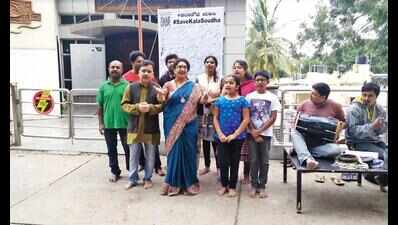
PD Satish Chandra of Prakasam Trust, which ran Kala Soudha till BBMP shut it down in February after the Trust refused to a rental hike, has a similar story.

At the forefront of this latest struggle over a performance venue are several aspiring actors and directors in their 20s and 30s, who have been nurturing their creative sides, either as a full-time career or a weekend passion project. The affordable 300-seater venue with AC, acoustics and lighting, has become a rallying point for Kannada theatre persons who say they could sustain their creative forays only because there was a venue to perform.
“When I started out in 2008, there were very few opportunities and theatre groups. That situation changed mainly because of Kala Soudha,” says Hanu Ramasanjeeva, a 28-year-old software developer. For one, performing at Kala Soudha was easy on the struggling theatre person’s pocket –– Rs 3,000 during weekdays and Rs 5,000 during weekends. “We could easily stage a play during the week and amateur groups made use of it,” says Ramasanjeeva, who was then part of Wemove theatre group.
By then Sanket Trust’s Ranga Shankara was also up and running. Theatre, which didn’t attract new talent in the 1990s due to the arrival of cable television, began to attract the hobbyist and those seeking a toe-hold in movies. Both venues were affordable compared to the prohibitive rates of Bangalore Town Hall and the privately-run Chowdiah Memorial Hall, says Raghunandan. ADA Ranga Mandira gave preference to theatre groups from PSUs while Ravindra Kalakshetra, the traditional haunt of theatre folks, had access issues. “You never know whether your programme was going to be pulled out at the last moment because there of a government function,” says Rohini Raghunandan, who started her theatre career in the 1980s. Four years ago, she remembers having to do a last-minute hunt for a venue to hold her music school’s annual show that was slated to be held at Ravindra Kalakshetra.
There are other halls and auditoriums in and around south Bengaluru but nothing fits the bill for staging plays like Kala Soudha, says Raghunandan. “The stage, wings and acoustics are good. It is well-equipped for plays. There is no need to have additional lighting unless you are doing something special,” says Rohini. The revival of interest in theatre led to the formation of many new groups, who could easily stage their rookie attempts at Kala Soudha. Ramasanjeeva, who quit his Infosys job to set up Pravara Art Studio in 2013, says it was easier to find a slot at Kala Soudha when compared to Ranga Shankara, which gave preference to experienced theatre groups. The best part? “By now people in the area know about Kala Soudha and we don’t have to struggle to fill the auditorium,” he says. Out of the 44 shows his group has done in the last four years, 60% of them were at Kala Soudha.
On Friday, artistes started the #SaveKalaSoudha protests by singing songs from plays outside the venue. The protests are slated to continue while many pin their hopes on the Monday meeting. “There is no profit in theatre if you are doing public shows as we spend a minimum of Rs 20,000 per production. Even if it is a full house, if the auditorium costs Rs 15,000, then there wouldn’t be anything left to put back into the next production. It is tough to survive,” says Ramasanjeeva.
For 25-year-old GV Shree Hari, the theatre stint gave him his first film role in award-winning Amaravathi. Kala Soudha is like a second home where he meets other artistes and discusses how to come up with innovative shorts and other projects. “It has helped me a lot – honed acting, taught about how to make films, produce show. It is painful that it is shut,” he says.
End of Article
FOLLOW US ON SOCIAL MEDIA





Hot Picks
TOP TRENDING
Trending Stories
In City
Entire Website
- Breathtaking cosmic catwalk! SpaceX makes history with first-ever private spacewalk
- 2 Army officers thrashed, their female friend gang-raped in Madhya Pradesh
- Bangladesh announce Test squad for India tour
- Top fastest trains in the world: From China's CR Harmony to Germany's ICE
- Amid Shannon Sharpe Viral Video, Former ESPN Host Michelle Beadle Reacts Claiming It Was Not Her
- Ayushman Bharat insurance scheme expanded to cover elderly above 70
- 'Will be demolished if... ': Himachal minister's assurance amid Shimla mosque row
- Mumbai's Haji Ali and Mahim dargahs cancel Eid shamiana
- Garena Free Fire MAX redeem codes for September 11, 2024: Win free room cards, skins, diamonds, pet skins, and more rewards today
- GK for students: Top 8 Largest Mammals in the World
- Govt to develop Mausam GPT in 5 years to share weather information
- Will Kejriwal get bail? SC to deliver verdict on Delhi CM's plea
- Why Rahul should talk more about jobs and less about ideology
- Nurse mutilates drunk doctor's private parts with blade, escapes rape bid
- Maharashtra BJP chief son's 2 friends confirmed drunk 7 hours after accident
- Afghan vs NZ Test washed out without ball being bowled at Greater Noida
- Actor dies in his sleep. Why sudden heart attacks are killing Indians
- Refund on iPhone 15 & 14: Apple's policy says conditions applied
- Virat & Rohit's successors: India cricketer picks these two 'special players'
- Adani Group denies fresh Hindenburg allegations of freeze on Swiss bank accounts

Popular Categories
Hot on the Web
Top Trends
Trending Topics
Alia BhattMalaika Arora Father DeathArbaaz KhanNatasa StankovicMr Bachchan OTT ReleaseNational Parks In IndiaSelena GomezGOAT CollectionVikas Sethi DeathMalayalam ProducersIndia's Best Dancer 4Simi GarewalDilli BabuIndian National ParksLaung BenefitsVikas SethiiPhone 16Microsoft 365 OutageCsir Ugc Net 2024Wordle Answer
Living and entertainment
Latest News
India successfully flight tests surface-to-air missileFintech Moneyview turns unicorn, 6th one this yearDigest this: Unhealthy gut may be linked to Parkinson’s diseaseCSIR UGC NET 2024 result declared: Steps to download scorecards at csirnet.nta.ac.inWho was Illia 'Golem' Yefimchyk, the Belarusian bodybuilder who consumed 2.5 kg of meat and 108 sushi pieces daily before his death at 36?WWE Star Discusses Why Sid Vicious Deserves a Hall of Fame SpotCatching up with sports stars in DelhiSalman Khan surrounded by bodyguards as he arrives at Malaika Arora's mother's house to offer his condolences - WATCHCMF Buds Pro 2 by Nothing review: Big delivery on a budgetMallika Sherawat makes big screen comeback in Rajkummar Rao's 'Vicky Vidya Ka Woh Wala Video'; director reveals why he cast herSiddhant Chaturvedi reveals he rejected Ranbir Kapoor, Alia Bhatt and Amitabh Bachchan starrer Brahmastra after father’s advice: 'He asked me, ‘Tujhe kaun dekhega?''EcoR unloads 100 million tons of goods in just 160 daysMan shot near Delhi's Greater Kailash-I gym, gang war suspectedTamil Nadu students prefer only two-language policy, minister Ponmudy saysHow a balanced pH helps maintain your skin’s youthful appearanceStree 2 box office collection: Shraddha Kapoor and Rajkummar Rao starrer clocks Rs 539 croreISL-11 opener: Familiar foes back in businessJanki Bodiwala stuns in traditional Gujarati attire at USA Navratri celebrations
Copyright © 2024 Bennett, Coleman & Co. Ltd. All rights reserved. For reprint rights: Times Syndication Service